UPDATED FOR 2025
Impact-Resistant Shingles: Are They Worth the Extra Cost?
Impact-resistant shingles cost more than regular shingles but offer added insurance and protection. So, are they worth the price? Find out.
Key Takeaways:
- Class 4 impact-resistant shingles cost 30-50% more than standard shingles ($550-750 vs. $450-600 per square installed), adding $2,000-3,000 to a typical Long Island roof
- Insurance discounts of 10-25% on Long Island (varies by insurer) typically pay back the premium in 3-8 years, with total savings of $8,000-20,000+ over 25 years
- Class 4 testing requires withstanding a 2-inch steel ball dropped from 20 feet TWICE on the same spot—simulating golf ball-sized hail hitting repeatedly
- Long Island benefits come primarily from wind-blown debris protection (tree branches, coastal storms) rather than frequent hail, which is rare here
- Wind resistance reaches 130 MPH with standard installation, outperforming standard shingles’ 110 MPH rating
- Longer lifespan of 20-30 years vs. 15-20 for standard shingles, plus significantly lower maintenance costs ($500-1,500 vs. $1,500-3,000 over 20 years)
- Best for homeowners with mature trees nearby, coastal exposure, 15%+ insurance discount, or those planning to stay 10+ years
Your neighbor’s roof got destroyed in a hailstorm. Yours didn’t.
Or maybe it’s the other way around. Either way, someone mentioned “impact-resistant shingles”—supposedly tougher roofing materials that withstand hail damage, wind-blown debris, and severe weather events.
Your insurance company might even give you a discount if you install them.
But Class 4 impact-resistant shingles cost significantly more than standard shingles. Are they actually worth the higher upfront cost? Do they perform as advertised? And do they make sense on Long Island, where hailstorms are rare?
County Roofing Systems has installed impact-resistant roof shingles across Long Island for years. We’ve seen them survive severe storms. We know the real costs. We understand which insurance companies offer discounts and how much.
Here’s everything you need to know about impact-resistant roofing materials—the honest version.
What Are Impact-Resistant Shingles?
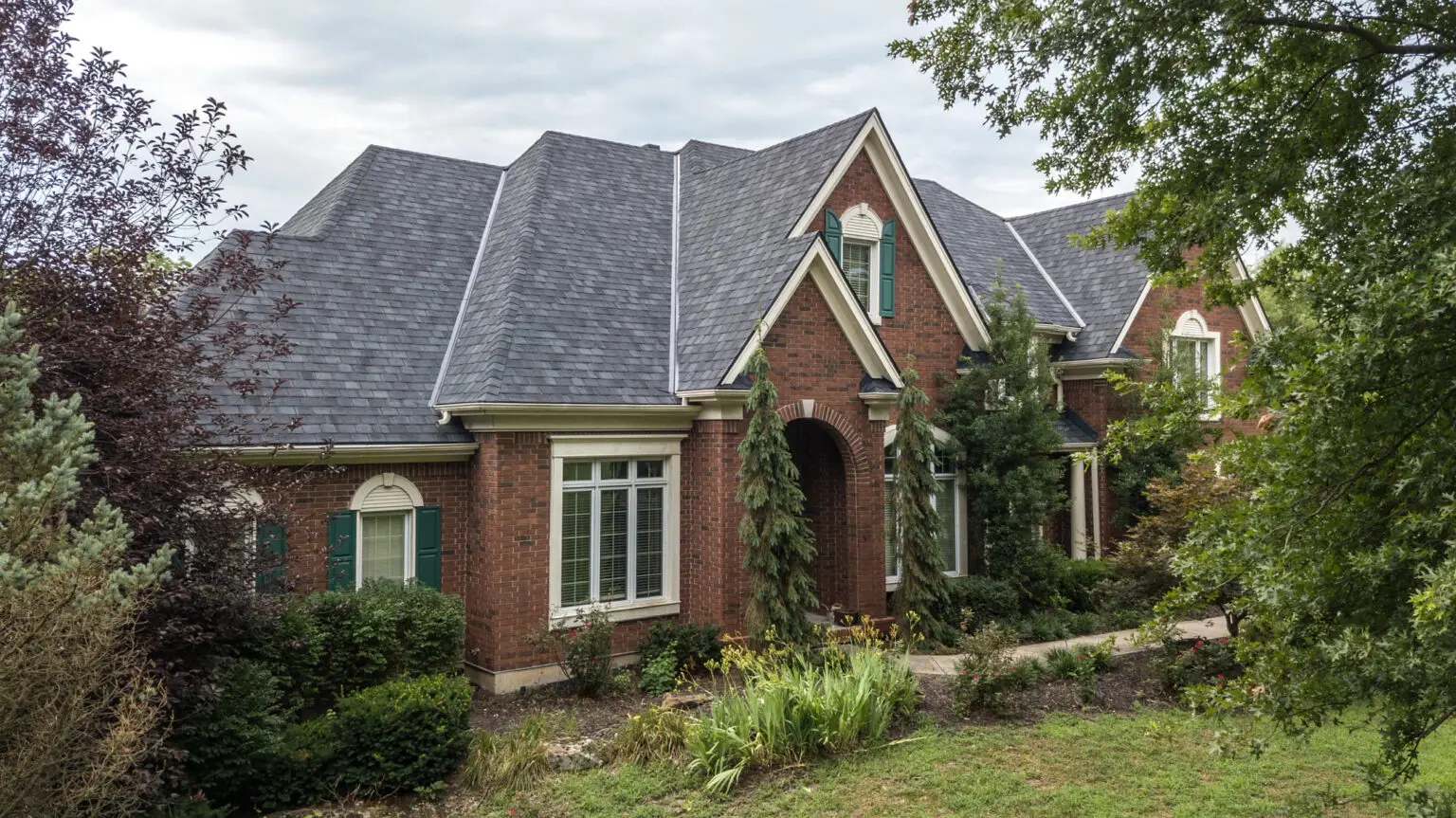
Impact-resistant shingles (IR shingles) are roofing materials specifically designed to withstand hail impact, flying debris, and extreme weather conditions without cracking or breaking. They’re built with reinforced materials such as rubber polymers, fiberglass, or copper to absorb impact energy.
Standard asphalt shingles crack or fracture when struck hard by hail, ice balls, or wind-blown debris. The damage creates vulnerable spots where water can penetrate, leading to roof leaks and costly repairs.
Impact-resistant shingles are designed to flex slightly upon impact, helping to maintain water-resistant properties after a storm. Instead of cracking, they absorb and dissipate the impact energy. Think of them like a car bumper that flexes instead of shattering.
The construction is different from traditional asphalt shingles. Impact-resistant shingles are often made with polymer-modified asphalt (SBS-modified asphalt), which is essentially rubberized asphalt. This gives them flexibility and enhanced durability that regular shingles lack.
FINANCE YOUR HOME IMPROVEMENT PROJECT TODAY
0% Financing, Quick and Easy Approval
With nearly four decades serving homeowners under our belt, we know what’s needed to make your roofing project a success.
When you work with County Roofing, you get only the best. As little as 0% interest on approval for 5 years, quick approval, easy pay, and all backed by the best guarantees in the industry.
Impact Resistance Ratings: Class 1 to Class 4
Not all impact-resistant shingles are created equal. The roofing industry uses a standardized rating system developed by Underwriters Laboratories (UL) to help homeowners compare the durability of roofing materials.
The UL 2218 test is commonly used to evaluate the impact resistance of asphalt shingles, assigning ratings from Class 1 to Class 4 based on performance:
Class 1 Shingles
Test: 1.25-inch steel ball dropped from 12 feet (simulates small hail) Requirement: No cracking when hit twice in the same spot Translation: Minimal impact resistance—basically what most traditional shingles offer
Class 2 Shingles
Test: 1.5-inch steel ball dropped from 15 feet Requirement: No cracking when hit twice in the same spot Translation: Slightly better than Class 1, but still not considered “hail-resistant”
Class 3 Shingles
Test: 1.75-inch steel ball dropped from 17 feet Requirement: No cracking when hit twice in the same spot Translation: Moderate impact resistance—better than standard shingles but not the top tier
Class 4 Shingles
Test: 2-inch steel ball dropped from 20 feet (simulates severe hail) Requirement: No cracking when hit twice in the same spot Translation: Highest-rated shingles for impact resistance—the gold standard for homes in hail-prone areas
Class 4 impact-resistant shingles can withstand a 2-inch steel ball dropped twice on the same spot from 20 feet during an impact test without cracking or damage. That’s serious durability and superior protection.
The testing for impact resistance includes dropping steel balls from specified heights to simulate hail impact, with Class 4 requiring the highest level of durability.
Most impact-resistant shingles sold today are Class 4. When contractors or homeowners talk about “impact-resistant roof shingles,” they usually mean Class 4 products. Class 4 impact-resistant shingles are considered the gold standard for their superior protection against severe hail.
How Impact-Resistant Shingles Are Built
The difference is in the construction and roofing materials used.
Standard Asphalt Shingles
Construction:
Fiberglass mat base
Asphalt coating
Ceramic-coated protective granules
Sealant strips
Weight: 200-280 lbs per square (100 sq ft)
Impact performance: Cracks under moderate to heavy hail impact
Class 4 Impact-Resistant Shingles
Construction:
Reinforced fiberglass mat (thicker and stronger than standard)
Polymer-modified asphalt (SBS rubber polymers added for flexibility)
Impact-absorbing granules embedded in thicker asphalt layer
Enhanced sealant strips
Often includes tear-resistant backing
Weight: 300-400+ lbs per square (significantly heavier than standard)
Impact performance: Absorbs and dissipates hail energy without cracking, maintaining the shingle’s ability to protect
The polymer-modified asphalt is the key. SBS (styrene-butadiene-styrene) rubber is mixed into the asphalt, creating a flexible, rubberized material that bounces back from impacts rather than shattering. Impact-resistant shingles are often made with polymer-modified asphalt to enhance their flexibility and durability against impacts.
Think of it like the difference between hard plastic and rubber. Drop a hard plastic plate on concrete—it shatters. Drop a rubber mat—it bounces. That’s the concept behind IR shingles.

Which Manufacturers Offer Class 4 Impact-Resistant Shingles?
All three major manufacturers offer Class 4 impact-resistant roofing products:
GAF Impact-Resistant Shingles
GAF Timberline HDZ-RS (formerly Timberline ArmorShield II):
Class 4 impact rating
LayerLock technology (reinforced construction)
WindProven limited wind warranty (up to 130 MPH with LayerLock)
StainGuard Plus algae protection
Available in most Timberline HDZ colors
GAF Timberline UHDZ-IR:
Ultra HD version with Class 4 impact resistance
More dimensional appearance than standard HDZ-RS
Same impact protection, enhanced aesthetics
Owens Corning Impact-Resistant Shingles
Owens Corning TruDefinition Duration FLEX:
Class 4 impact resistance
SureNail Technology (enhanced wind resistance up to 130 MPH)
StreakGuard algae protection
Available in popular TruDefinition colors
Owens Corning TruDefinition Duration STORM:
Class 4 impact resistance
Enhanced impact protection compared to FLEX
SureNail Technology included
Premium product line
CertainTeed Impact-Resistant Shingles
CertainTeed Landmark ClimateFlex:
Class 4 impact resistance
Advanced polymer formulation
StreakFighter algae protection
Available across Landmark color palette
CertainTeed NorthGate ClimateFlex:
Class 4 impact resistance
Premium thick laminate construction
Enhanced dimensional appearance
Higher price point than Landmark ClimateFlex
All of these roofing products are tested using standards developed by Underwriters Laboratories (UL) and Factory Mutual (FM) to ensure they meet Class 4 requirements.
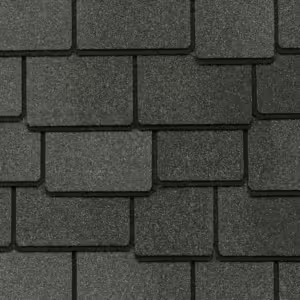
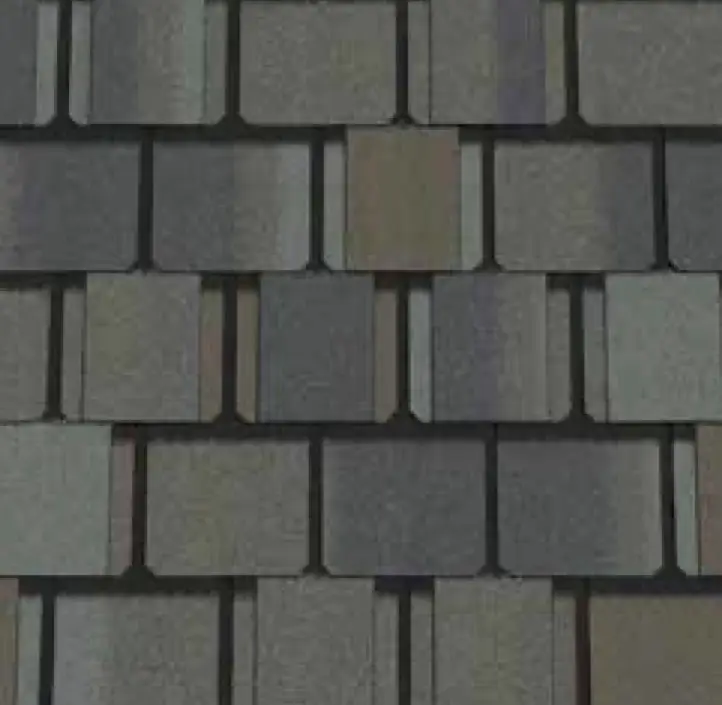
Important note: Impact-resistant shingles can come in various styles and colors, resembling traditional shingles. You can’t tell the difference by looking at them—the enhanced durability is in the internal construction, not the appearance.
THE BEST GUARANTEE IN THE INDUSTRY
50-Year Material, 25-Year Labor Guarantee
We’ve met the toughest requirements in the residential roofing industry- and we use only the best materials.
That’s why we stand behind our work with the best guarantee in the industry– including warranties only 2% of roofing companies can offer.
Your house deserves the best roofing warranty on the market. Give us a call today and get a brand new roof with a 50-year material, 25-year labor warranty from the best roofing contractor in Long Island and New York.
Real-World Cost: What You’ll Actually Pay
Let’s break down the numbers for a typical Long Island home when comparing costs between standard and impact-resistant options.
Standard Architectural Shingles
Material cost: $100-$150 per square (100 sq ft) Labor cost: $3-$5 per square foot ($300-$500 per square) Total installed cost: $400-$650 per square
For a 2,000 sq ft roof (20 squares): $8,000-$13,000 installed
Class 4 Impact-Resistant Shingles
Material cost: $150-$250 per square (100 sq ft)—in 2026, impact-resistant (IR) shingles typically cost $150 to $250 per square for materials alone Labor cost: $3-$5 per square foot ($300-$500 per square)—labor costs for IR shingles typically range from $3 to $5 per square foot, though higher demand for skilled roofers familiar with specific IR products can increase labor costs Total installed cost: $450-$750 per square
For a 2,000 sq ft roof: $9,000-$15,000 installed
Cost difference: $1,000-$2,000 additional for impact-resistant versus standard shingles
Impact-resistant shingles typically cost 10% to 30% more than standard architectural shingles. Upgrading to Class 4 shingles typically adds 10% to 25% to the total project cost. For a 2,000 sq. ft. home, the upgrade to Class 4 shingles could add $1,500-$3,000 or more to the total project.
In some cases, impact-resistant shingles cost significantly more upfront, typically 30-50% more than standard architectural shingles, ranging from roughly $4.50-$8.50/sq. ft. installed (Class 4) versus $3.00-$7.00/sq. ft. for standard. The average installation cost for impact-resistant shingles can range from $7,500 to $11,655. Impact-resistant shingles can be 50% to 100% more expensive than standard shingles depending on product choice and market conditions.
Why the cost difference?
IR shingles use materials like SBS-modified asphalt (rubberized) for flexibility, plus impact-absorbing granules, making them more expensive than standard shingles. The manufacturing process is more complex. The materials cost more. The shingles are heavier (which increases shipping costs and labor). The result is a higher upfront cost across the board.
Factors that affect your specific cost:
Roof complexity (steep pitch, multiple valleys, penetrations)
Specific IR shingle product chosen (FLEX vs. STORM vs. ClimateFlex)
Current roof condition (multiple layers to remove adds cost)
Geographic location on Long Island
Contractor experience and demand
The only significant downside of impact-resistant shingles is their higher upfront cost compared to standard shingles.
Insurance Discounts: The Big Financial Benefit
Here’s where impact-resistant shingles start looking attractive financially.
Many home insurance companies offer discounts for homeowners with Class 4 impact-resistant shingles. The insurance industry recognizes that impact-resistant roofs reduce claim frequency and severity after severe weather events.
Typical Insurance Discounts for Class 4 Shingles
Insurance discounts of 10-35% for Class 4 IR shingles often justify the higher upfront cost. Many insurers offer premium reductions of 10% to 35% for homes with Class 4 shingles.
Common discount range: 5-30% on homeowner’s insurance premiums
Long Island typical discount: 10-20% (varies by insurance provider)
Homeowners may save between 5% to 35% on their home insurance premiums by installing impact-resistant shingles. Class 4 shingles often qualify for significant premium reductions (5-30% or more) in hail-prone regions.
Example calculation:
Your current home insurance premium: $2,500/year Class 4 shingle discount: 15% Annual insurance savings: $375/year
Over 25 years: $9,375 in insurance savings
Cost to upgrade to Class 4: $1,500-$3,000
Net savings over roof lifespan: $6,000-$8,000
Payback period: 4-8 years, depending on discount percentage and upgrade cost
Reality check: Insurance discounts vary widely by:
Your specific insurance company (some offer zero discount, others offer 30%+)
Your location (coastal vs. inland, claim history in your area)
Your overall policy structure (bundled discounts, deductibles, etc.)
ALWAYS verify the discount with your insurance provider BEFORE upgrading. Don’t assume. Get the discount percentage in writing. Some insurance companies don’t offer any discount for impact-resistant roofs—especially in areas with low hail frequency like Long Island.
Long-Term Savings: Maintenance and Repairs
Beyond insurance discounts, Class 4 impact-resistant shingles can lead to long-term savings by minimizing roof repair costs due to their enhanced durability.
Maintenance Costs Over 20 Years
Standard shingles:
Storm damage repairs: $1,000-$2,000
Blown-off shingle replacements: $300-$500
Minor leak repairs: $200-$500
Total estimated maintenance: $1,500-$3,000 over 20 years
Impact-resistant shingles:
Storm damage repairs: Minimal (maybe $200-$500 if extreme weather)
Blown-off shingle replacements: Rare (better wind resistance)
Minor leak repairs: Less frequent
Total estimated maintenance: $500-$1,500 over 20 years
Maintenance costs over 20 years for IR shingles are estimated at $500–$1,500, significantly lower than the $1,500–$3,000 expected for standard shingles.
Savings from reduced repairs: $1,000-$1,500 over the roof’s lifespan
This matters most if you live in an area prone to:
Falling tree branches (mature trees nearby)
Severe storms with wind-blown debris
Occasional hail (even small hail can damage standard shingles over time)
The investment in impact-resistant shingles is often justified by the reduction in future repair costs and insurance savings combined.
Click the button below to give us a call today:
Lifespan: Do IR Shingles Last Longer?
Yes. Impact-resistant shingles typically have a longer lifespan than traditional asphalt shingles, leading to better long-term value.
Standard asphalt shingles on Long Island: 15-25 years typical lifespan Class 4 impact-resistant shingles: 20-30 years typical lifespan
IR shingles often last 20 to 30 years, compared to the 15 to 20 years typical for standard shingles. The lifespan of impact-resistant shingles is generally longer than that of standard asphalt shingles, contributing to their overall value.
Why the longer lifespan?
Thicker construction: More material = more durability
Polymer-modified asphalt: Resists thermal cycling (expansion/contraction) better
Better impact resistance: Less granule loss from hail/debris over time
Enhanced flexibility: Resists cracking from temperature extremes
Heavier weight: Better adhesion, less blow-off, longer performance
The 5-year lifespan extension may not sound dramatic, but it adds value:
Delays replacement cost by 5 years (value: $2,000-$3,000 in today’s dollars)
Reduces lifetime roof replacement frequency
Maintains home value longer
Total value over lifespan:
Insurance savings: $6,000-$9,000
Reduced maintenance: $1,000-$1,500
Extended lifespan value: $2,000-$3,000
Total benefit: $9,000-$13,500
Upgrade cost: $1,500-$3,000
Net gain: $6,000-$10,500 over the roof’s life
The numbers work—if you get the insurance discount and stay in your home long-term.
Wind Resistance: An Added Benefit
Class 4 shingles aren’t just about hail damage. They also perform better in high winds.
Standard shingles: 60-110 MPH wind resistance (depending on installation and product)
Class 4 impact-resistant shingles: 110-130 MPH wind resistance
Impact-resistant roofs can withstand winds as high as 130 mph, which is equivalent to Class 4 hurricane winds. Many IR shingles include enhanced wind resistance features (SureNail Technology, LayerLock, etc.) that help them withstand high winds and extreme weather conditions.
Long Island occasionally experiences severe storms with high winds from:
Nor’easters (70-90 MPH gusts)
Tropical storm remnants (60-80 MPH sustained)
Rare hurricanes (100+ MPH if direct hit)
Class 4 shingles provide extra security against wind-blown debris and the winds themselves. The heavier weight and enhanced sealant strips keep shingles in place better during severe weather events.
We’ve seen IR shingles survive severe storms with zero blow-offs while neighboring standard shingles lost dozens of shingles.
Does Long Island Need Impact-Resistant Shingles?
Honest answer: Long Island is not a major hail zone.
The frequency of hailstorms on Long Island is low compared to “Hail Alley” states (Texas, Oklahoma, Kansas, Colorado). We get maybe 1-3 hail events per year, and most are small hail (pea-sized to quarter-sized). The frequency of hailstorms has increased nationwide, leading to higher property damage costs across the United States, but Long Island remains a relatively low-risk area.
Severe hail (2+ inches) is extremely rare—maybe once every 10-20 years in any given Long Island location.
So why would you install impact-resistant shingles here?
Reasons IR Shingles Make Sense on Long Island:
1. Insurance discounts If your insurance provider offers a 15%+ discount, the math works. Verify the discount first.
2. Tree coverage Homes with large mature trees nearby face constant risk from falling branches, acorns, and flying debris. IR shingles handle this abuse better than standard shingles.
3. Coastal exposure South shore and waterfront homes face stronger winds and occasional hurricane threats. IR shingles provide superior protection in extreme weather conditions.
4. Peace of mind If severe weather events stress you out, IR shingles eliminate worry about storm damage. It’s insurance against the unpredictable.
5. Long-term home ownership If you’re staying 15+ years, the cumulative insurance savings and reduced maintenance justify the investment.
6. New roof timing If you’re already replacing your roof, adding $1,500-$2,500 for IR shingles is easier to swallow than replacing a roof early just to get IR shingles.
Reasons to Skip IR Shingles on Long Island:
1. No insurance discount If your insurance company doesn’t offer a discount (or offers <5%), the math gets tougher. Some insurers don’t recognize Class 4 in low-hail areas.
2. Budget constraints If the extra $1,500-$3,000 strains your budget, standard high-quality shingles from GAF, Owens Corning, or CertainTeed will perform well on Long Island.
3. Short-term ownership Selling within 5 years? You won’t recoup the investment. Standard shingles are fine for a new roof that increases home value.
4. No tree coverage Open lot with no large trees? Your primary IR shingle benefit (debris resistance) doesn’t apply. Hail risk alone doesn’t justify the cost here.
5. Local building codes don’t require it Long Island local building codes don’t mandate impact-resistant roofing materials. It’s optional, not required.
Our honest recommendation: IR shingles are worth it on Long Island if you get a solid insurance discount (10%+) and plan to stay long-term.
Without the insurance discount, the value proposition weakens significantly unless you have specific risk factors (large trees, coastal exposure).
Real Long Island Homeowner Scenarios
Scenario 1: South shore waterfront home, large oak trees, staying 20+ years
Recommendation: Class 4 impact-resistant shingles
Why: Coastal wind exposure + falling branches + long-term ownership + likely insurance discount = strong value proposition. The investment pays off over 20 years through reduced repairs and insurance savings.
Scenario 2: Inland Suffolk County, open lot, selling in 5 years
Recommendation: Standard premium shingles (GAF Timberline HDZ, Duration, or Landmark)
Why: Low hail risk, no trees, short ownership timeline. IR shingles won’t provide enough benefit to justify the higher upfront cost. Standard quality shingles are perfectly adequate.
Scenario 3: Nassau County home, mature trees, 15-year ownership plan, insurance offers 20% discount
Recommendation: Class 4 impact-resistant shingles
Why: Insurance discount alone justifies the cost ($400/year savings = $6,000 over 15 years). Trees add risk of debris damage. Math strongly favors IR shingles.
Scenario 4: Queens home, tight budget, insurance offers no discount
Recommendation: Standard shingles
Why: Without insurance discount, IR shingles are harder to justify financially. Focus budget on quality standard shingles and proper installation instead.
Class 4 vs. Metal Roofing for Impact Resistance
Some homeowners consider a metal roof as an alternative for impact resistance.
Metal roofing:
Excellent impact resistance (dents but doesn’t crack)
50-70 year lifespan (much longer than shingles)
Higher cost: $10-$20 per sq ft installed ($20,000-$40,000 for typical home)
Different aesthetic (not for everyone)
Insurance discounts also available
Better wind resistance than any shingle
Class 4 shingles:
Great impact resistance (Class 4 rating)
20-30 year lifespan
Moderate cost: $4.50-$8.50 per sq ft installed ($9,000-$17,000 for typical home)
Traditional shingle aesthetic
Insurance discounts available
Excellent wind resistance (up to 130 MPH)
The choice: Metal roofs offer superior durability and lifespan but cost significantly more. Class 4 shingles offer great protection at a more accessible price point.
Most Long Island homeowners choose Class 4 shingles over metal because:
Much lower cost
Traditional appearance (better for resale)
Easier to find experienced contractors
Adequate protection for Long Island’s climate
Metal makes more sense if you’re in your forever home, value ultra-long lifespan, and can afford the premium.
How to Verify Class 4 Rating
Don’t trust marketing claims. Verify the Class 4 rating independently.
Step 1: Ask for UL 2218 certification documentation
Every legitimate Class 4 product has UL 2218 test certification. Your roofing contractor should provide this documentation.
Step 2: Check the manufacturer’s product data sheet
GAF, Owens Corning, and CertainTeed all publish detailed spec sheets showing UL 2218 Class 4 certification for their IR products.
Step 3: Verify with your insurance company
Before committing, confirm with your insurance provider that:
They recognize the specific product as Class 4
They offer a discount for that product
The discount percentage applies to your policy
Don’t assume. Some insurance companies are picky about which Class 4 products they recognize for discounts.

Installation Considerations
Class 4 impact-resistant shingles install similarly to standard shingles, but there are important details roofing contractors must follow:
1. Heavier weight IR shingles weigh 300-400+ lbs per square vs. 200-280 lbs for standard. Ensure your roof structure can handle the extra weight (usually not an issue for modern homes, but older homes may need structural evaluation).
2. Proper nailing Follow manufacturer nailing patterns precisely. IR shingles often require specific nail placement due to thicker construction.
3. Underlayment Use high-quality synthetic underlayment. Pairing IR shingles with cheap felt underlayment defeats the purpose.
4. Ventilation Proper attic ventilation is essential (as with any shingle). IR shingles don’t compensate for poor ventilation.
5. Warranty requirements Most manufacturers require certified contractor installation for full warranty coverage. Make sure your roofing contractor is certified by the manufacturer you choose.
County Roofing Systems is certified by GAF, Owens Corning, and CertainTeed.
We install Class 4 impact-resistant shingles regularly and understand the specific requirements for each product line.
Click the button below to call us today and get started replacing your roof with new impact resistant CertainTeed shingles:
The Bottom Line: Are Impact-Resistant Shingles Worth It?
For Long Island homeowners, the answer is: It depends on your insurance discount.
Let’s talk about it:
IR Shingles Are Worth It If:
- ✅ Your insurance company offers 10%+ discount
- ✅ You plan to stay in your home 10+ years
- ✅ Your property has large trees or coastal exposure
- ✅ The upgrade cost fits comfortably in your budget
- ✅ You value peace of mind about storm damage
- ✅ You’re already getting a new roof (not replacing early)
Skip IR Shingles If:
- ❌ Your insurance offers no discount or <5%
- ❌ You’re selling within 5 years
- ❌ Budget is extremely tight
- ❌ Open lot with minimal storm exposure
The math:
Upgrade cost: $1,500-$3,000
Insurance savings (15% discount): $6,000-$9,000 over 25 years
Reduced maintenance: $1,000-$1,500
Extended lifespan value: $2,000-$3,000
Total net benefit: $7,000-$11,500 (if you get the discount)
Without insurance discount, the benefit drops to $3,000-$4,500—still positive but much less compelling.
County Roofing Systems recommendation: Get a quote for both standard and Class 4 options. Verify your insurance discount. Compare the numbers. Make an informed decision based on YOUR specific situation—not generic advice from the roofing industry.
We install both standard premium shingles and Class 4 impact-resistant roof shingles through our residential roofing services. We have zero incentive to push IR shingles—we want you to get the right roof shingles for your home and budget.
Want to know if Class 4 impact-resistant shingles make sense for your home? Contact County Roofing Systems. We’ll review your insurance policy, assess your property’s specific risk factors, show you samples, and give you honest numbers.
No pressure. No exaggerated claims. Just real data so you can make the right decision.
Related Reading:
Fast & Easy Financing with County Roofing
Financing your commercial roofing project has never been easier.
With County Roofing, you can get fast approvals with as low as 0% financing on new roofing projects for up to 15 years, with payments as low as $149:
First Approvals
0% financing
No income check
Up to 15 years
Monthly payments as low as $149
Fill out the form below or give us a call at (631) 400-7663 today to get started:
Call or contact us today
for your free comprehensive roofing estimate.
Call Us Today: (631) 400-7663
Frequently Asked Questions
Example
sss
Example
sss
Example
ss
Example
ss
Example
sss
Example
ss
Example
ss
Example
ss