
UPDATED FOR 2025
5 Commercial Roof Types: A Complete Guide for Long Island Business Owners
Comprehensive guide to commercial roof types for Long Island businesses. County Roofing Systems explains flat, low-slope, metal & membrane roofing options. 35+ years experience.
Key Takeaways:
- Single-ply membranes (TPO, EPDM, PVC) dominate commercial roofing with 20-30+ year lifespans, offering energy efficiency (TPO/PVC reflect UV), proven durability (EPDM at lowest cost), and chemical resistance (PVC for restaurants)
- Multi-ply systems like BUR and modified bitumen provide redundant waterproofing layers lasting 20-30 years, while metal roofing delivers 50+ year lifespans with superior fire resistance despite higher initial costs
- TPO costs $5.50-$9.50/sq ft, EPDM $4.50-$7.50/sq ft, PVC $7-$12/sq ft, BUR $6-$10/sq ft, modified bitumen $5.50-$9/sq ft, and metal $8-$14/sq ft installed
- Long Island’s coastal environment demands 60+ mil membrane thickness, corrosion-resistant metals (aluminum or premium coatings), and wind-rated systems installed by certified contractors
- Choosing the right system depends on building use (restaurants need chemical-resistant PVC), structural capacity (BUR is heavy), climate exposure (coastal requires specific materials), and total lifecycle costs (not just installation price)
Your commercial roof is a six-figure investment.
Pick the wrong system and you’re looking at premature failure, energy waste, and replacement costs decades earlier than necessary.
The truth is, most building owners don’t know the differences between types of commercial roofing systems.
That comes in all different flavors:
Single-ply membranes like TPO, EPDM, and PVC
Multi-ply systems including built-up roofing and modified bitumen
Metal roofing systems that can last 50+ years
Specialty commercial roofing materials for unique applications
Below, we’ll break down each type—how it works, what it costs, and when it makes sense for your Long Island building.

What Makes Commercial Roofing Different?
Let’s start with the basics.
Commercial roofs face challenges residential flat roofs don’t. They’re larger. They support rooftop equipment like HVAC units and exhaust systems. And they handle way more heavy foot traffic from maintenance personnel.
Many commercial buildings use flat roofs or low-slope commercial roofing instead of steep-slope roofs. That fundamental difference changes everything—the commercial roofing materials you need, how they’re typically installed, even who can do the work properly.
The slope matters. A lot.
Low-slope roofs (anything with a pitch of 3:12 or less) require membrane-based waterproofing. Steeper slope roofs can sometimes use metal roofing systems or asphalt shingles, but that’s less common in commercial roof installations.
FINANCE YOUR HOME IMPROVEMENT PROJECT TODAY
0% Financing, Quick and Easy Approval
With nearly four decades serving homeowners under our belt, we know what’s needed to make your roofing project a success.
After completing your roof inspection, if repairs or updates are recommended, we’ll do everything we can to make affording your roof repair or replacement quick and easy.
When you work with County Roofing, you get only the best. As little as 0% interest on approval for 5 years, quick approval, easy pay, and all backed by the best guarantees in the industry.
1. Single-Ply Membrane Roofing Systems
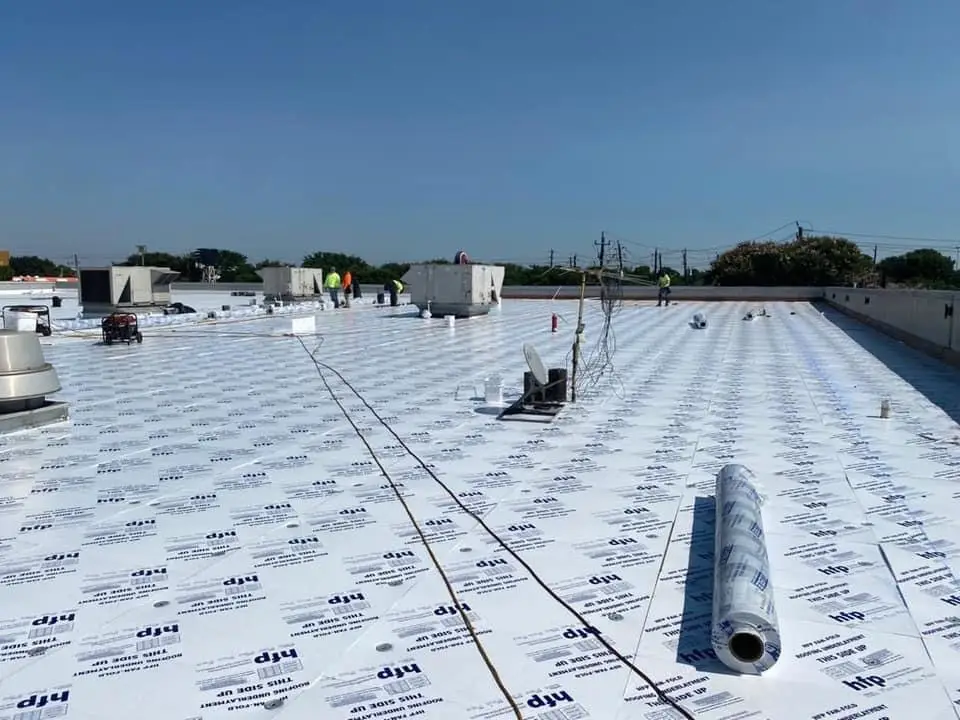
Single-ply membranes are factory-manufactured sheets of synthetic rubber or plastic that create a continuous waterproof barrier across your commercial roof.
They’re called “single-ply” because they use one layer of roofing material for waterproofing (though most roofing systems include insulation and other components underneath).
Single-ply roofing membranes can be attached using ballasting, adhesives, or mechanical attachment methods. These systems install faster than multi-ply roofs and weigh less, which matters if your building’s structure can’t handle heavy loads.
TPO (Thermoplastic Polyolefin)
TPO roofing is the most popular commercial roofing material in the U.S. right now. TPO roofing is recognized for its energy efficiency and reflective properties, making it a cost-effective choice for commercial roofs. It’s a white or light-colored membrane that reflects UV rays, which cuts your cooling costs and keeps the building cooler.
The roofing material itself is made from polypropylene and ethylene-propylene rubber. That combination gives you flexibility in cold weather and heat resistance when temperatures spike.
TPO sheets get heat-welded at the seams. Those welds are actually stronger than the membrane itself when done correctly, which creates a watertight seal that holds up for decades.
Typical lifespan: The lifespan of TPO roofing is typically 20-30 years
Cost range: $5.50-$9.50 per square foot installed
Thickness options: 45 mil, 60 mil, or 80 mil (thicker is more durable and more expensive)
Best for: Office buildings, retail spaces, warehouses, and any building where energy efficiency matters
Long Island’s coastal environment can be tough on TPO. You’ll want at least 60 mil thickness and mechanically attached systems that can handle high winds off the Atlantic.
EPDM (Ethylene Propylene Diene Monomer)
EPDM roof systems have been around since the 1960s. EPDM is a highly durable rubber roofing material with a 60-year track record, known for its performance in cold climates, making it suitable for industrial warehouses and office buildings in northern regions. It’s proven, reliable, and typically the most affordable commercial roofing material option.
The roofing material is synthetic rubber—black, flexible, and UV-resistant. It expands and contracts with temperature changes without cracking or splitting.
EPDM roofing is a single-ply membrane material known for its durability and flexibility, often used on flat roofs. EPDM can be fully adhered, mechanically attached, or ballasted (held down with stone). Seams are sealed with tape or liquid adhesive rather than heat welding.
Typical lifespan: The lifespan of EPDM roofing is typically 25-30 years
Cost range: $4.50-$7.50 per square foot installed
Thickness options: Usually 45 mil or 60 mil
Best for: Budget-conscious commercial roofing projects, buildings with simple roof layouts, and situations where proven long-term performance matters more than curb appeal
The black color absorbs heat, which isn’t ideal for cooling costs but can help with snow melt in winter. For Long Island buildings, that’s actually a decent trade-off given our nor’easters.
One more thing: EPDM is 100% recyclable. If sustainability matters to you, that’s worth considering.
PVC (Polyvinyl Chloride)
PVC roofing is the premium option in single-ply membranes. It costs more upfront but delivers superior chemical resistance and fire-resistant properties.
The membrane contains chlorine, which makes it naturally fire-resistant and resistant to oils, greases, and other chemicals. PVC is highly resistant to chemicals, making it commonly used in restaurants and industrial sites. That makes PVC the go-to choice for restaurants, chemical plants, and manufacturing facilities.
Like TPO roofing, PVC sheets are heat-welded at the seams. The roofing material is also highly reflective, which reduces cooling costs and helps keep your building cooler.
Typical lifespan: The lifespan of PVC roofing is typically 20-30 years, with some installations lasting 30+ years
Cost range: $7-$12 per square foot installed
Thickness options: 50 mil, 60 mil, or 80 mil
Best for: Restaurants with grease exhaust, manufacturing facilities, chemical plants, and any building where fire resistance is a priority
PVC handles Long Island’s salt air better than most other commercial roofing materials. The chlorine content provides natural resistance to degradation from coastal exposure.
Keep in mind that PVC performs best with professional installation. Those heat-welded seams need proper technique to achieve the strength they’re known for.
2. Built-Up Roofing (BUR)
Built-up roof systems have been protecting commercial buildings for over 100 years.
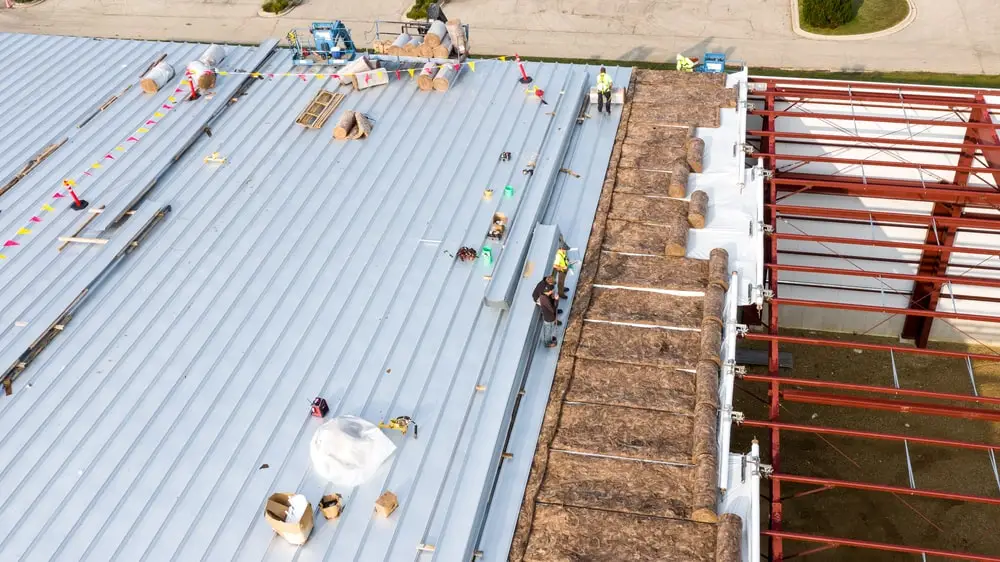
It’s a multi-ply system that alternates multiple layers of roofing felt or fiberglass mats with hot asphalt or coal tar. Built-up roofing (BUR) systems are composed of alternating layers of bitumen and roofing felts. You typically end up with 3-5 layers of waterproofing material.
The top surface gets finished with gravel, which protects the underlying layers from UV damage and provides fire-resistant protection. That gravel also gives you a surface you can walk on for maintenance without damaging the roof deck.
BUR systems are heavy—sometimes 5-10 pounds per square foot heavier than single-ply membranes. Your building structure needs to handle that load.
Typical lifespan: Built-up roofing (BUR) systems can last 20-30 years
Cost range: $6-$10 per square foot installed
Number of plies: Usually 3-5 layers
Best for: Commercial buildings with adequate structural support, facilities that need walkable roof surfaces, and building owners who prioritize proven durability over installation speed
The redundancy of multiple waterproofing layers means that if one layer fails, you’ve got backup protection. That’s valuable for critical facilities that can’t afford water intrusion.
Having said that, BUR installation produces strong odors from the hot asphalt. If your building is occupied during installation, that can be a problem.
For Long Island applications, BUR handles freeze-thaw cycles well. The multiple layers and gravel surfacing provide excellent protection against our coastal weather patterns.
3. Modified Bitumen Roofing
Modified bitumen roofing improves on traditional built-up roof systems by adding rubber or plastic polymers to the asphalt. Modified bitumen roofing is comprised of asphalt and works best for buildings that have a low slope or flat roofing deck.
You get the proven track record of asphalt-based roofing with enhanced flexibility and temperature performance.
The roofing material comes in rolls that are either heat-applied with a torch, mopped on with hot asphalt, or installed with cold adhesive. Modified bitumen roofing is typically installed in two layers, consisting of a base sheet and a cap sheet.
There are two main types of modified bitumen roofing systems:
SBS Modified Bitumen
SBS (styrene-butadiene-styrene) modified bitumen uses rubber polymers. That gives you excellent flexibility in cold weather and strong resistance to cracking from freeze-thaw cycles.
The roofing material stays flexible even when temperatures drop below freezing. For Long Island winters, that’s a significant advantage.
APP Modified Bitumen
APP (atactic polypropylene) modified bitumen uses plastic polymers instead of rubber. It provides excellent heat resistance and UV stability.
APP is typically installed using torch application, which creates strong adhesion but requires experienced installers who understand fire safety protocols.
Typical lifespan: The lifespan of modified bitumen roofing is typically 15-25 years
Cost range: $5.50-$9 per square foot installed (the installation of modified bitumen roofing can be more expensive due to the need for multiple layers and specialized labor)
Number of plies: Usually 2-3 layers
Best for: Commercial buildings in cold climates (SBS), roofs with moderate slopes, and facilities that want multi-ply protection without the weight of traditional BUR roofing
Modified bitumen roofing gives you a middle ground between single-ply roofing and traditional built-up roof systems. You get redundant waterproofing layers without quite as much weight or installation complexity.
The torch-applied versions do require hot work permits and careful fire safety procedures. Not every building can accommodate that during a commercial roofing project.
4. Metal Roofing Systems
Metal roofing is one of the few roofing materials that works well on flat, low-slope, and steep-slope roofs. Metal roofing systems can last 50+ years when properly installed and maintained. That longevity often makes metal roofing the most economical choice over a building’s lifetime, despite higher upfront costs.
Commercial metal roofs use standing seam roofing systems—vertical panels with raised seams that interlock and are sealed against water penetration.
The panels expand and contract with temperature changes. The standing seam design accommodates that movement without creating openings for water.
Metal roofing works on low-slope commercial roofs (down to 1:12 pitch) but performs better on steeper slope roofs where water drains quickly.
Typical lifespan: The lifespan of metal roofing systems can exceed 30-40 years, with many installations lasting 50+ years
Cost range: $8-$14 per square foot installed
Materials: Galvanized steel, aluminum, zinc, or copper
Best for: Commercial buildings with at least some roof slope, facilities prioritizing longevity and low maintenance, and commercial roofing projects where fire resistance is critical
Metal reflects solar radiation, which reduces cooling costs. Some metal roofing qualifies for Energy Star certification and potential utility rebates, contributing to energy efficiency.
The main limitation? Metal roofing doesn’t work well on truly flat roofs. You need at least minimal slope for proper drainage.
For Long Island coastal applications, you’ll want aluminum or premium-coated steel to resist corrosion from salt air. Standard galvanized steel won’t hold up as well near the ocean.


LIFETIME MATERIAL, LIFETIME WORKMANSHIP WARRANTY
Get Industry-Leading Protection
CertainTeed’s lifetime-limited transferable warranty is a true industry standout. Whereas other manufacturers only warrant against defects that cause leaks, CertainTeed protects your investment against all manufacturing defects, including aesthetic defects.
County Roofing Systems can offer you the longest warranties available because we’re a CertainTeed SELECT ShingleMaster, a certification only 1% of contractors qualify for.
We have over 35 years of experience living up to CertainTeed’s tough standards. That means CertainTeed trusts our home improvement work enough to stand behind it with their best guarantees.
To learn more about the industry-leading LIFETIME material, LIFETIME workmanship warranty, click the button below to call us today:
5. Spray Polyurethane Foam (SPF) Roofing
SPF roofing might be the roofing system you’ve never heard of, but it offers some unique advantages. Spray Polyurethane Foam (SPF) provides excellent insulation and waterproofing, forming a seamless coverage ideal for cold storage facilities.
The system involves spraying liquid polyurethane onto your existing roof deck. The liquid expands into foam, creating a solid layer of insulation and waterproofing in one application.
After the foam cures, it gets coated with an elastomeric or silicone coating that provides UV protection and the actual waterproofing. Roof coatings can extend the life of existing roofs and contribute to energy efficiency by reflecting heat.
SPF is particularly useful for retrofit projects with unusual shapes, multiple penetrations, or situations where you want to avoid a roof replacement and tear-off.
Typical lifespan: 50+ years with proper maintenance (recoating every 10-20 years)
Cost range: $6-$12 per square foot installed
R-value: About R-6.5 per inch of foam thickness
Best for: Existing roofs that are difficult to replace, commercial buildings with complex roof layouts, and situations where added insulation is valuable
The foam is self-flashing, which means it adheres to pipes, vents, HVAC units, and other roof penetrations without requiring separate flashing details.
Keep in mind that SPF requires recoating periodically. That maintenance isn’t optional—the foam itself degrades under UV exposure without the protective coating.
Wind can also be an issue during installation. If it’s too windy, the spray pattern becomes inconsistent and installation quality suffers.
For Long Island applications, SPF works well on existing roofs where a full tear-off would be disruptive or expensive. The seamless application handles our freeze-thaw cycles effectively.
How to Choose the Right Commercial Roof Type
So then, how do you decide which roofing system is right for your commercial building?
Several factors come into play:
Building Use and Exposure
Restaurants need chemical-resistant systems like PVC roofing that can handle grease exhaust. Warehouses can often use economical EPDM roof or TPO roofing. Manufacturing facilities might need the fire-resistant properties of metal roofing systems or PVC.
Think about what your roof is exposed to. Grease? Chemicals? Heavy foot traffic? Rooftop equipment that needs regular maintenance?
The amount of foot traffic on the roof can influence the type and thickness of the commercial roofing material that will be best for your building.
Budget—Initial Cost vs. Lifetime Cost
The cheapest commercial roof installation isn’t always the most cost-effective choice.
EPDM might cost $5 per square foot while metal roofing costs $10 per square foot. But if the EPDM roof lasts 25 years and the metal roofing system lasts 50+ years, which is the better value?
You also need to factor in proper maintenance costs, energy-efficient features that reduce cooling costs, and the disruption of roof replacement.
A new commercial roofing system that costs 50% more but lasts twice as long and cuts your energy bills by 20% is probably the smarter investment.
Structural Capacity
Your commercial building needs to support the weight of the roofing system.
Single-ply membranes are light. BUR roofing systems are heavy. If your structure can’t handle the load, that eliminates some options automatically.
An engineer can evaluate your building’s capacity if you’re not sure what it can support.
Climate and Weather
Long Island’s coastal climate creates specific challenges for commercial roofs.
Salt air corrodes certain metals. Freeze-thaw cycles can crack less-flexible roofing materials. Nor’easters generate high winds that can damage improperly installed roofing systems.
You need a commercial roofing system that’s engineered for coastal exposure and installed to handle wind uplift. Regular inspection and maintenance of a roofing system is paramount to its durability. A detailed inspection should be conducted at least once a year by a roofing professional to assess the condition of the roof.
Installation Disruption
Some roofing systems install faster than others. Some produce strong odors. Some require hot work permits.
If your commercial building stays occupied during installation, these factors matter. TPO roofing and EPDM roof systems install relatively cleanly. Hot-applied modified bitumen and BUR roofing produce odors that can be problematic.
Contractor Qualifications
This matters more than most building owners realize.
The manufacturer warranties worth having require installation by certified contractors. Those certifications exist because proper installation makes or breaks long-term performance.
At County Roofing Systems, we’re GAF Master Elite, CertainTeed SELECT ShingleMaster, and Owens Corning Platinum Preferred certified. That’s over 35 years of experience with the training and certifications that let us offer enhanced manufacturer warranties.
For a free inspection and estimate on your commercial roofing project, call (631) 400-ROOF, that’s (631) 400-7663.
Click the button below to give us a call today:
Choose the Right Commercial Roof Type for Your Long Island Building
County Roofing Systems has installed every type of commercial roofing system across Long Island and Westchester for nearly four decades.
We’re GAF Master Elite, CertainTeed SELECT ShingleMaster, and Owens Corning Platinum Preferred certified. That means we work with the industry’s best materials and can offer enhanced manufacturer warranties on the systems we install.
We don’t push one roof type over another. We evaluate your building, your budget, and your long-term plans, then recommend the system that makes the most sense for your situation—not our profit margin.
Need help selecting the right commercial roofing system? Contact us for a free consultation and roof inspection. We’ll review:
Your building’s structural capacity and current roof condition
Commercial roof types best suited for your building use and climate
Expected lifespan and maintenance requirements for each option
Total cost comparison (installation + energy savings + maintenance)
Warranty coverage available for different systems
Timeline and disruption for installation
No high-pressure sales tactics. Just honest expertise from NRCA-trained professionals who understand Long Island’s coastal environment and what it takes to build commercial roofs that last.
Call County Roofing today at (631) 400-ROOF, that’s (631) 400-7663, for your free estimate and roof inspection.
Fast & Easy Financing with County Roofing
Financing your commercial roofing project has never been easier.
With County Roofing, you can get fast approvals with as low as 0% financing on new roofing projects for up to 15 years, with payments as low as $149:
First Approvals
0% financing
No income check
Up to 15 years
Monthly payments as low as $149
Fill out the form below or give us a call at (631) 400-7663 today to get started:
Call or contact us today
for your free comprehensive roofing estimate.

Call Us Today: (631) 400-7663