
UPDATED FOR 2025
Types of Commercial Roof Materials: Understanding Your Options
Expert guide to commercial roofing materials from a seasoned commercial roofer. County Roofing Systems explains TPO, EPDM, PVC, metal & more.
Key Takeaways:
- Single-ply membranes dominate commercial roofing
- Modified bitumen and BUR systems provide multi-layer redundancy with easier repairs than single-ply, though BUR is heavier and requires structural capacity
- Metal roofing lasts 40-70 years with minimal maintenance, making it cost-effective long-term despite higher installation costs
- Material composition directly impacts performance: TPO’s polypropylene-rubber blend handles temperature extremes, EPDM’s synthetic rubber provides 300% elongation, PVC’s chlorine content resists chemicals and fire, while SBS modified bitumen stays flexible in cold and APP resists heat
Your choice of roofing material determines how long your commercial roof lasts.
It affects your energy bills, maintenance costs, and how often you’ll need roof replacement down the road.
The truth is, commercial roofing materials aren’t all created equal.
That includes:
Single-ply membranes like TPO, EPDM, and PVC
Bitumen-based materials including modified bitumen and built-up roof systems
Metal roofing materials from galvanized steel to premium options
Specialty materials for unique applications
Below, we’ll break down the most common commercial roofing options—what they’re made of, how they perform, and when each makes sense for your Long Island building.
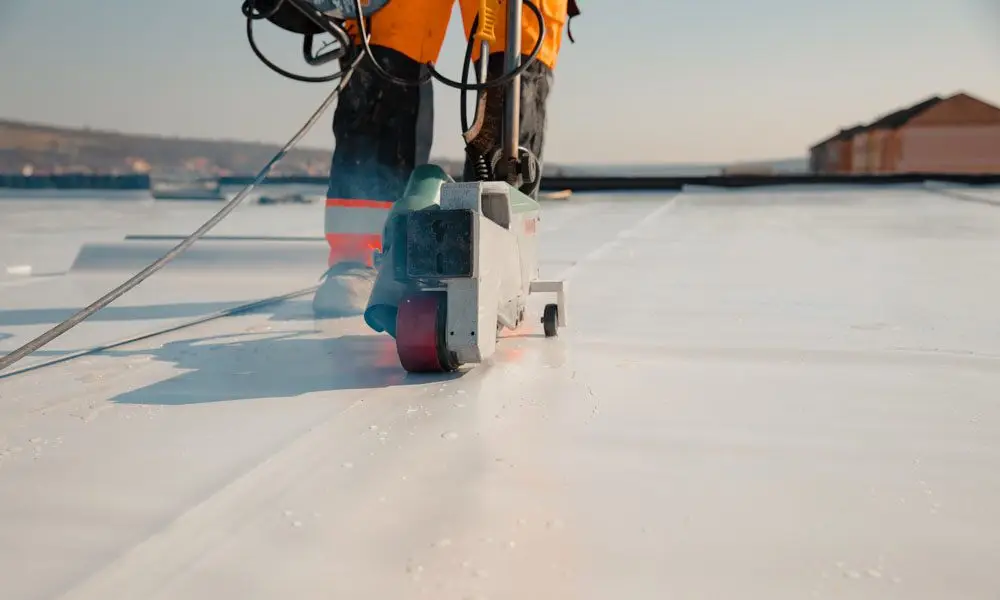
7 Types of Commercial Roofing Materials
Below, we’ve broken down the most commonly use commercial roofing materials.
Each is used in a variety of different situations, with most or all materials listed having their own “best” use case.
Read on to find out what makes a well-constructured commercial roof.
FINANCE YOUR HOME IMPROVEMENT PROJECT TODAY
0% Financing, Quick and Easy Approval
With nearly four decades serving homeowners under our belt, we know what’s needed to make your roofing project a success.
After completing your roof inspection, if repairs or updates are recommended, we’ll do everything we can to make affording your roof repair or replacement quick and easy.
When you work with County Roofing, you get only the best. As little as 0% interest on approval for 5 years, quick approval, easy pay, and all backed by the best guarantees in the industry.
1. Single-Ply Membrane Materials
Let’s start with the most common commercial roofing materials.
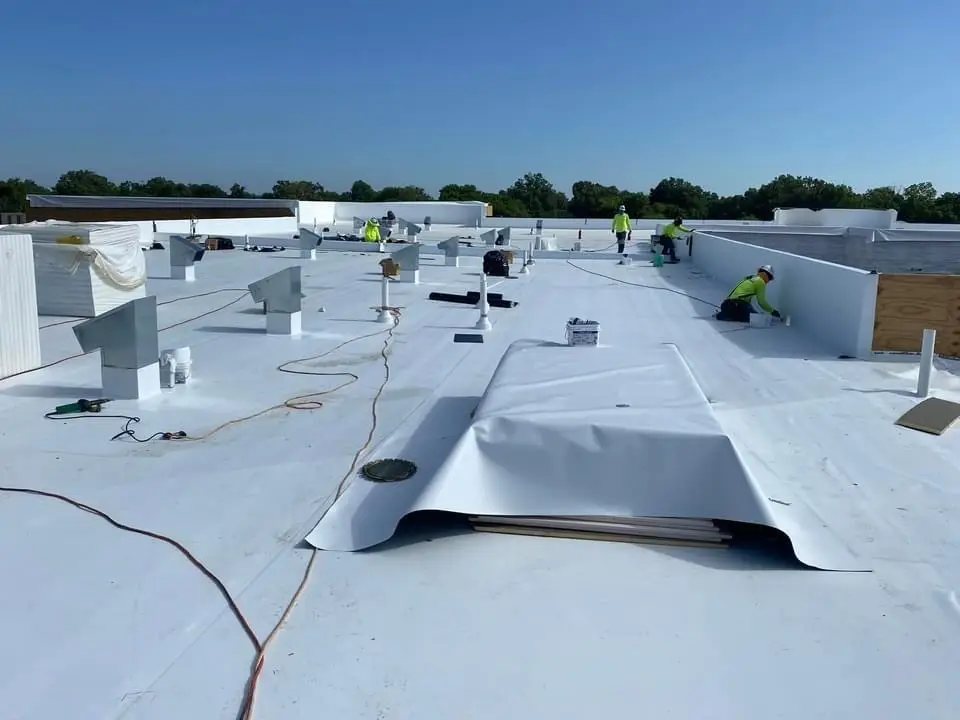
Single-ply membranes are factory-manufactured sheets that create a continuous waterproof barrier. They’re called “single-ply” because they use one layer of material for the primary waterproofing (though the complete roof system includes insulation and other components).
These materials dominate commercial roofing for good reason. They install faster than traditional materials, weigh less, and deliver reliable performance.
TPO (Thermoplastic Polyolefin)
TPO roofing membranes have become one of the most popular products used for low-slope roofing.
The roofing material itself is made from polypropylene and ethylene-propylene rubber polymers. That combination creates a membrane that stays flexible in cold weather and resists degradation from UV rays and ozone exposure.
TPO sheets are white or light-colored, which reflects solar radiation. Cool roofs, like white TPO or PVC, can reduce cooling costs significantly by reflecting a majority of solar heat. For Long Island commercial buildings, that translates to lower air conditioning expenses during summer months.
The seams get heat welded together with hot air. When done correctly, those heat welded seams are actually stronger than the membrane itself. That creates watertight connections that hold up for decades.
Thickness options: 45 mil, 60 mil, or 80 mil (thicker provides better durability and longer lifespan)
Cost range: The cost of single-ply roofing materials like TPO and PVC ranges from $10.50 to $15.50 per square foot
Lifespan: The lifespan of TPO roofing systems is generally between 10 to 25 years
Best for: Office buildings, retail spaces, warehouses, and any commercial building where energy efficiency matters
For Long Island’s coastal environment, you’ll want at least 60 mil thickness. Thinner membranes don’t hold up as well to salt air exposure and wind-driven rain.
EPDM (Ethylene Propylene Diene Monomer)
EPDM is synthetic rubber—the proven track record of commercial roofing materials.
It’s been protecting commercial roofs since the 1960s. EPDM (Ethylene Propylene Diene Monomer) is affordable, durable, easy to install, but absorbs heat and has basic aesthetics.
The roofing material is made from ethylene and propylene, which are derived from oil and natural gas. The manufacturing process creates a rubber membrane that’s incredibly flexible and weather-resistant.
EPDM can expand and contract without cracking—300% elongation without tearing. For Long Island buildings that experience temperature swings from summer heat to winter freezing, that flexibility prevents the thermal shock damage that can crack less flexible materials.
The membrane comes in black or white. Black EPDM absorbs heat, which isn’t ideal for cooling costs but helps snow melt faster in winter. White EPDM reflects heat like TPO.
Seams are sealed with tape or liquid adhesive rather than heat welding. Proper seam installation is critical to prevent leaks and ensure the longevity of the roof system.
Thickness options: Usually 45 mil or 60 mil
Cost: EPDM roofing is known for its cost-effectiveness
Lifespan: EPDM roofing can last more than 20 years when properly installed
Best for: Budget-conscious projects, industrial buildings, warehouses, and any commercial building where proven performance matters more than aesthetics
One more thing: EPDM is 100% recyclable. The entire roof membrane can be reclaimed and reprocessed into new roofing material.
PVC (Polyvinyl Chloride)
PVC is the premium option in single-ply membranes.
The roofing material contains chlorine, which makes it naturally fire-resistant and resistant to chemical exposure from oils, greases, and industrial chemicals. PVC roofing membranes are reliable and versatile, suitable for all types of single-ply systems with guarantees up to 30 years.
That chemical resistance makes PVC the go-to choice for restaurants with grease exhaust, manufacturing facilities, and any commercial building where the roof membrane might be exposed to harsh chemicals.
Like TPO roofing, PVC sheets are heat welded at the seams. The membrane is also highly reflective, which reduces cooling costs.
PVC (Polyvinyl Chloride) offers excellent chemical/grease resistance, strong seams, but is more expensive and can be brittle in cold temperatures.
Thickness options: 50 mil, 60 mil, or 80 mil
Cost range: The cost of single-ply roofing materials like TPO and PVC ranges from $10.50 to $15.50 per square foot
Lifespan: PVC roofing systems have a life expectancy of 15 to 30 years
Best for: Restaurants, chemical plants, manufacturing facilities, and commercial properties where fire resistance and chemical resistance are priorities
For Long Island coastal applications, PVC handles salt air exceptionally well. The chlorine content provides natural resistance to degradation from coastal exposure.

2. Bitumen-Based Materials
Bitumen-based materials have been protecting commercial roofs for over a century.
These traditional materials use asphalt or coal tar as the primary waterproofing component. Modern versions incorporate polymers that improve performance in extreme temperatures.
Asphalt
Asphalt is the base material for both built-up roof systems and modified bitumen.
It’s derived from crude oil refining. The heavy, viscous material provides excellent waterproofing but needs protection from UV rays and oxidation.
In traditional built-up roofing, hot asphalt is mopped between layers of roofing felt to create multiple layers of waterproofing. The gravel surface protects the asphalt from UV damage and provides a walkable surface for heavy foot traffic.
Asphalt shingles are commonly used for smaller buildings with pitched roofs and are cost-effective. Asphalt shingles for commercial buildings typically cost between $5.50 and $8.50 per square foot.
Modified Bitumen
Modified bitumen improves on traditional asphalt by adding rubber or plastic polymers.
There are two main types:
SBS Modified Bitumen uses styrene-butadiene-styrene (rubber polymers) that create a flexible membrane that stays pliable even in freezing temperatures. For Long Island winters, that flexibility prevents cracking from thermal shock.
APP Modified Bitumen uses atactic polypropylene (plastic polymers) that provide excellent heat resistance and UV stability. This material is typically installed using torch application with hot air.
Modified Bitumen roofing systems typically cost between $6.50 and $11.50 per square foot. Modified bitumen has a shorter lifespan of 15-20 years compared to high-end single-ply or metal roofs but is easy to repair.
The material comes in rolls that are typically installed in two or three layers. That provides redundant waterproofing similar to built-up roof systems but with less weight.
Roofing Felts
Roofing felts are the reinforcement layers in built-up roofing systems.
Traditional felts were made from organic materials like wood pulp or cotton. Modern felts use fiberglass or polyester, which don’t absorb moisture and provide better dimensional stability.
The felts get saturated with hot asphalt and layered to create the multiple layers that give BUR systems their proven track record. Built-Up Roofing (BUR) systems can cost between $15.50 and $25.50 per square foot.
Built-Up Roofing (BUR) systems can last 50 years or longer in some cases when properly maintained.
3. Metal Roofing Materials
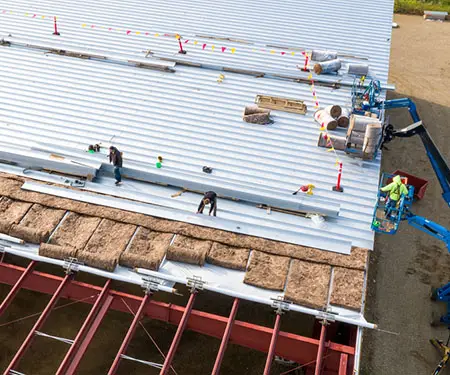
Metal roofing provides the longest lifespan of any commercial roofing material.
The initial cost is higher, but metal roofs can last 40–70 years with minimal maintenance, making them cost effective over the building’s lifetime.
Galvanized Steel
Galvanized steel is the most common metal roofing material for commercial buildings.
The steel gets coated with zinc to protect against corrosion. The zinc coating sacrifices itself to protect the underlying steel from rust and corrosion.
Standard galvanized steel works well in most climates but struggles in coastal environments. Salt air accelerates zinc corrosion, which eventually exposes the steel to rust.
For Long Island commercial roofs, you’ll want Galvalume or premium coatings that provide better corrosion resistance near the ocean.
Metal roofing systems can range from $10.50 to $18.50 per square foot depending on the material and thickness.
Aluminum
Aluminum naturally resists corrosion, which makes it ideal for coastal applications.
The material is lighter than steel, which reduces structural load. It won’t rust even with continuous salt air exposure, making it one of the best metal roofing materials for high humidity/coastal areas.
The trade-off is cost. Aluminum costs 50-75% more than galvanized steel. But for Long Island buildings near the ocean, that premium often pays off in extended lifespan and low maintenance.
Stainless Steel
Stainless steel provides the ultimate corrosion resistance for metal roofing.
The chromium content creates a protective oxide layer that prevents rust even in harsh coastal environments. For industrial buildings with chemical exposure or buildings in extreme coastal locations, stainless steel delivers unmatched durability.
The cost is substantial—2-3x the price of galvanized steel. That limits its use to applications where the corrosion resistance justifies the investment.
Zinc
Zinc roofing develops a protective patina that actually gets more weather-resistant over time.
The material is self-healing. Scratches and minor damage develop new patina that protects the underlying metal. Properly installed zinc roofs can last 80-100 years with minimal maintenance.
The cost is similar to stainless steel, which limits zinc to premium commercial roofing projects where the longevity and aesthetics justify the investment.
Copper
Copper is the premium metal roofing material.
It naturally resists corrosion and develops a distinctive green patina over time. Copper roofs can last 100+ years, making them essentially permanent roofing solutions.
The cost is prohibitive for most commercial buildings—3-4x the price of galvanized steel. Copper appears primarily on historic buildings, high-end commercial properties, and applications where aesthetics and longevity outweigh cost considerations.
4. Insulation Materials
Insulation is a critical component of any commercial roof system.
Proper insulation reduces energy bills, prevents condensation, and provides thermal protection. Regular inspection and maintenance are crucial for the durability of roofing systems, including the insulation layer.
Polyisocyanurate (Polyiso)
Polyiso is the most common insulation for commercial roofs.
It provides the highest R-value per inch of any rigid foam insulation—about R-6.5 per inch. That means you get maximum thermal performance with minimum thickness.
The material comes in rigid boards that install directly over the roof deck. It’s lightweight, cost effective, and compatible with all roofing material types.
The limitation is temperature performance. Polyiso loses R-value as temperatures drop. In Long Island winters, the effective R-value can drop to R-5 or less per inch.
Expanded Polystyrene (EPS)
EPS maintains its R-value across a broad range of temperatures—about R-4 per inch regardless of temperature.
That consistent performance makes it a good choice for cold climates. The material is also more affordable than polyiso, which helps control project costs.
The trade-off is thickness. You need more EPS than polyiso to achieve the same R-value, which adds roof height and can create flashing complications.
Mineral Wool
Mineral wool provides fire-resistant insulation with good thermal performance.
The material is made from molten rock or slag spun into fibers. It won’t burn and can actually help contain fires, making it valuable for commercial buildings where fire resistance is critical.
R-value is about R-4 per inch. The material handles moisture better than foam insulation, which prevents degradation in high-humidity environments.
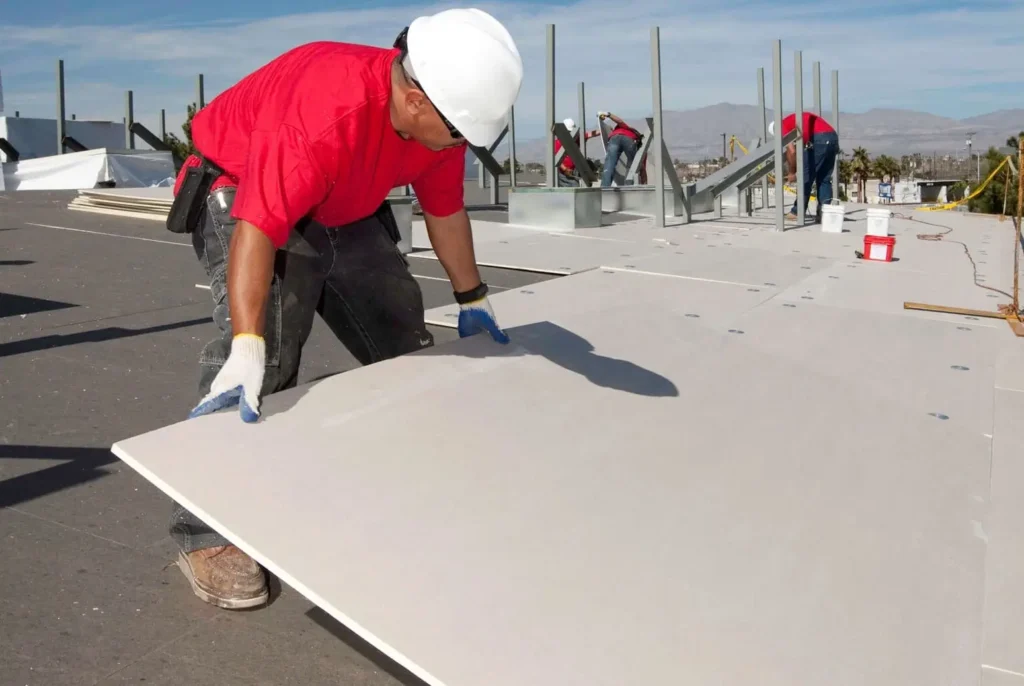
5 Cover Boards
Cover boards protect insulation and create stable substrates for roof membrane attachment.
They’re particularly important with softer insulation materials that can be damaged by heavy foot traffic or thermal expansion/contraction of the roof membrane.
Gypsum Cover Boards
Gypsum provides a low-cost cover board option.
The material is rigid, fire-resistant, and compatible with multiple layers of insulation. It creates a smooth surface for membrane installation and protects the insulation from physical damage.
The limitation is moisture sensitivity. Gypsum degrades when wet, which makes proper installation techniques crucial to prevent leaks.
High-Density Polyiso
High-density polyiso serves double-duty as insulation and cover board.
It provides additional R-value while protecting the softer insulation below. The denser material resists compression and creates a stable substrate for the roof membrane.
Cement Fiber Boards
Cement fiber provides the most durable cover board option.
The material is extremely impact-resistant and fire-resistant. It handles heavy foot traffic without damage and provides excellent protection for the underlying structure.
The trade-off is weight. Cement fiber boards are heavier than other cover boards, which requires adequate structural capacity.
6 Roof Coatings
Roof coatings can help extend the service life of commercial roofs that are still structurally sound. Roof coatings are installed directly over existing roof surfaces to restore and protect them.
Liquid-applied roofing systems require rigorous preparation of the substrate, which must be dry and dust-free.
Acrylic Coatings
Acrylic coatings are water-based and UV-reflective.
They provide good protection from UV rays while maintaining flexibility. The white color reflects solar heat, which reduces cooling costs.
The material is affordable and easy to apply. It works well on metal roofing, modified bitumen, and BUR systems.
The limitation is water resistance. Acrylic coatings aren’t fully waterproof and can wash off during heavy rain if not fully cured.
Silicone Coatings
Silicone provides superior waterproofing and UV resistance.
The material doesn’t chalk or degrade from UV exposure. It maintains elasticity across extreme temperature ranges and handles ponding water without degrading.
Silicone works particularly well for retrofit projects where you’re extending the life of an existing roof system rather than complete roof replacement.
Polyurethane Coatings
Polyurethane provides excellent impact resistance and durability.
The material creates a tough, protective layer that handles heavy foot traffic and resists punctures. It’s often used as a base coat under acrylic or silicone top coats.
The trade-off is UV sensitivity. Polyurethane breaks down under UV exposure, which is why it typically requires a protective top coat.
7. Specialty Materials
Some commercial roofing systems use specialized materials for unique applications.
Spray Polyurethane Foam (SPF)
Spray Polyurethane Foam (SPF) offers seamless waterproofing and superior insulation, but requires precise installation conditions.
The liquid expands into foam that provides both insulation and waterproofing. It conforms to irregular shapes and creates a seamless barrier without joints or seams.
R-value is exceptional—about R-6.5 per inch. The foam is self-flashing, which means it adheres to roof penetrations without separate flashing details.
The material requires protective coating to prevent UV damage. Regular inspection and maintenance of a roofing system is paramount to its durability, especially for SPF systems that need periodic recoating.
Green Roof Components
Vegetative roofs, also known as green roofs, have living plants installed on the roof surface and can effectively manage stormwater.
Green roofs provide superior insulation and manage stormwater, often utilized for LEED certification.
These systems include specialized components:
Waterproof membrane to protect the underlying structure
Root barriers to prevent plant roots from penetrating the waterproofing
Drainage layers to manage excess water
Growing medium designed for roof applications
Vegetation selected for local climate and roof conditions
The weight is substantial—saturated soil can add 15-50 pounds per square foot. Structural capacity must be considered when selecting roofing materials, as some premium options require additional reinforcement.
Choosing the Right Materials for Your Building
So then, which roofing material makes sense for your commercial building?
Several factors come into play:
Building Slope
Low-Slope/Flat roofs typically require waterproof, seamless, or heat-welded membranes such as TPO, EPDM, or Modified Bitumen.
Steeper slopes can use standing seam metal roofing or even asphalt shingles for smaller commercial buildings.
Climate
For Long Island’s coastal climate, you need materials that handle:
Salt air exposure (aluminum, stainless steel, or premium-coated metals)
Freeze-thaw cycles (flexible membranes like EPDM or SBS modified bitumen)
Wind and storm resistance (mechanically attached or fully adhered systems)
Regular inspection and maintenance of a roofing system is paramount to its durability in challenging coastal environments.
Building Use
Chemical exposure from restaurants or industrial processes requires PVC or other chemically resistant materials.
Buildings with heavy foot traffic need durable systems like BUR or metal roofing.
Buildings prioritizing energy efficiency benefit from reflective materials like white TPO or PVC.
Budget
Initial cost isn’t the only consideration. A metal roofing system that costs $18 per square foot but lasts 50 years might be more cost effective than a membrane that costs $12 per square foot but needs replacement in 20 years.
Factor in:
Installation costs
Maintenance requirements
Energy savings
Expected lifespan
Replacement timing
Structural Capacity
Your existing roof deck must support the weight of the roofing material and any additional components.
Single-ply membranes are light. Built-up roof systems with gravel are heavy. Metal installed over solid substrates falls in the middle.
Structural capacity must be considered when selecting roofing materials. An engineer can evaluate whether your building can handle the weight of your preferred material.
Choosing the best materials to use for a commercial property’s roof takes years of experience.
When you’re ready to get started on your property’s roof, give us a call. We’re happy to help provide a free inspection and estimate to help you take the first step toward completing your project.
Click the button below to give us a call today:
Working with County Roofing Systems
At County Roofing Systems, we help Long Island building owners select the right roofing material for their specific needs.
We’re GAF Master Elite, CertainTeed SELECT ShingleMaster, and Owens Corning Platinum Preferred certified. That means we work with premium materials from industry-leading manufacturers.
Our 35+ years of experience means we understand how different materials perform in Long Island’s coastal climate. We can recommend materials that will protect your building for decades.
For a free inspection and material consultation, call (631) 400-ROOF, that’s (631) 400-7663.
Get Expert Guidance
County Roofing Systems works with premium materials from every major manufacturer—GAF, Owens Corning, and CertainTeed.
Our elite certifications mean we understand how different materials perform in Long Island’s challenging coastal environment. We’ve seen what works and what fails when salt air, freeze-thaw cycles, and coastal storms test roofing systems year after year.
We don’t stock just one type of material and try to sell it for every application. We match materials to your specific building, budget, and performance requirements.
Need help selecting commercial roofing materials? Contact us for a free roof inspection and material consultation. We’ll assess:
Your current roof condition and remaining service life
Building slope, structural capacity, and climate exposure
Material options best suited for your building use (chemical resistance for restaurants, durability for heavy traffic, energy efficiency for climate control)
Cost comparison across material types (installation + lifespan + maintenance)
Expected performance in coastal conditions
Available warranty coverage for each material option
We’ll explain the differences between materials in plain language—not technical jargon—so you can make informed decisions about protecting your property.
Call County Roofing today at (631) 400-ROOF, that’s (631) 400-7663, for your free inspection and materials consultation.
Fast & Easy Financing with County Roofing
Financing your commercial roofing project has never been easier.
With County Roofing, you can get fast approvals with as low as 0% financing on new roofing projects for up to 15 years, with payments as low as $149:
First Approvals
0% financing
No income check
Up to 15 years
Monthly payments as low as $149
Fill out the form below or give us a call at (631) 400-7663 today to get started:
Call or contact us today
for your free comprehensive roofing estimate.

Call Us Today: (631) 400-7663