UPDATED FOR 2025
Cool Roof Shingles: Top Options (+ Do They Actually Lower Your Energy Bills?)
Cool roof shingles reflect sunlight and reduce heat absorption. But do they actually save money on Long Island? We break down the science, costs, and real-world performance of reflective roofing shingles.
Key Takeaways:
- Cool roof shingles reflect 25-40% of solar energy (vs. 5-15% for dark standard shingles), using reflective granules to stay 10-20°F cooler on the surface
- Real Long Island savings: 7-12% reduction in summer cooling costs when replacing dark shingles, translating to $120/year for typical homes
- Cost premium: $25-100 per square more ($500-2,000 for typical roof), with 4-8 year payback period
- Winter heating penalty: Cool roofs reflect sunlight year-round, slightly increasing heating costs ($30-50/year), but net annual savings are still positive ($70-90/year)
- Available only in lighter colors: Physics limits cool roof technology to light/medium shades—you can’t get cool roof benefits in black or dark charcoal
- Best combined with other improvements: Attic ventilation and insulation deliver bigger energy savings; cool roof shingles work best as part of comprehensive efficiency strategy
- Worth it for most homeowners getting a new roof anyway—modest upfront premium delivers long-term energy savings, environmental benefits, and helps combat urban heat island effect
Your attic is a furnace in summer.
The air conditioning runs constantly. Your energy bills are brutal. Someone mentioned “cool roof shingles”—roofing materials that reflect heat and keep your home cooler.
Sounds great. But do they actually work? And are they worth the extra cost?
County Roofing Systems has installed cool roof products across Long Island for years. We’ve seen the energy data. We’ve heard from homeowners about their electric bills. We know what works and what’s just marketing hype.
Here’s the complete truth about cool roof shingles—including whether they make sense for Long Island homes.

What Are Cool Roof Shingles?
Cool roof shingles (also called reflective shingles or solar reflective shingles) are roofing materials designed to reflect more sunlight and absorb less heat than conventional roof coverings. They help reduce the heat transferred into your building, lowering energy costs and improving indoor comfort.
Standard asphalt shingles absorb 80-90% of solar energy. That heat transferred through your roof into your attic. Your attic temperature can reach 150-170°F on a typical summer afternoon. That heat radiates down into your living space, forcing your air conditioning to work harder.
Cool roof shingles reflect 25-40% of solar energy instead of absorbing it. They use specially formulated granules that bounce solar radiation away from your roof surface.
The result? Lower roof surface temperatures, cooler attics, and (theoretically) lower cooling costs with energy savings. Cool roofs can lower maximum indoor temperatures in non-air-conditioned residential buildings by 1.2–3.3°C (2.2 to 5.9°F).
FINANCE YOUR HOME IMPROVEMENT PROJECT TODAY
0% Financing, Quick and Easy Approval
With nearly four decades serving homeowners under our belt, we know what’s needed to make your roofing project a success.
When you work with County Roofing, you get only the best. As little as 0% interest on approval for 5 years, quick approval, easy pay, and all backed by the best guarantees in the industry.
How Cool Roof Shingles Work
The technology is simpler than it sounds.
Standard shingles use colored ceramic granules embedded in asphalt. Dark surfaces (black, brown, dark gray) absorb sunlight and convert it to heat. Even light-colored standard shingles absorb heat significantly.
Cool roof shingles use specially engineered granules with reflective pigments. These pigments reflect infrared radiation (the part of sunlight that creates heat) while still providing the desired color. It’s like wearing light colored clothing on a hot day—you stay cooler by reflecting more solar energy.
The key metric: Solar Reflectance
Solar reflectance is measured on a scale of 0 to 1 (or 0% to 100%):
0 = absorbs all sunlight (think black tar)
1 = reflects all sunlight (think white paint)
Standard dark shingles: 0.05-0.15 solar reflectance (5-15%) Standard light shingles: 0.20-0.30 solar reflectance (20-30%) Cool roof shingles: 0.25-0.40+ solar reflectance (25-40%+) with high solar reflectance
The Cool Roof Rating Council (CRRC) maintains an extensive online database of cool roof products and their radiative performance ratings, helping building owners and roofing contractors verify which roofing product options meet cool roof standards.
The second metric: Thermal Emittance
This measures how well a material releases absorbed heat and can emit heat effectively. Higher emittance = better cooling. High thermal emittance helps cool roofs work more effectively.
Most asphalt shingles (cool or standard) have thermal emittance around 0.85-0.90. Cool roof shingles don’t dramatically improve this—the main benefit comes from solar reflectance and thermal emittance combined.
Translation: Cool roof shingles stay 10-20°F cooler on the surface than standard shingles in the same color. That translates to lower attic temperatures and reduced heat transferred into your home, decreasing roof temperature and the surrounding air temperature.
Which Manufacturers Offer Cool Roof Shingles?
All three major manufacturers offer cool roof options that meet Cool Roof Rating Council standards.
GAF Cool Roof Shingles
GAF Timberline Cool Series:
Reflective versions of standard Timberline HDZ colors
COOL ROOF rated by the Cool Roof Rating Council (CRRC)
Available in lighter colors (light grays, tans, lighter browns)
Not available in dark colors (black, charcoal, dark brown)
Solar reflectance: 0.25-0.40 depending on color with high solar reflectance
Popular colors: Weathered Wood, Barkwood, Aged Oak
Owens Corning Cool Roof Shingles
Owens Corning Duration COOL Series:
TruDefinition Duration in specially formulated cool roof colors
ENERGY STAR® qualified in certain climate zones for energy efficiency
Reflective pigment technology in granules
Available colors:
Chateau Green
Pacific Wave
Sand Dune
Summer Harvest
Solar reflectance: 0.28-0.40 depending on color with high solar reflectance
CertainTeed Cool Roof Shingles
CertainTeed Solaris Series (various product lines):
Available in Landmark Solaris, Presidential Solaris, others
Advanced solar reflective technology
Available across multiple color options
CertainTeed Landmark Solaris Platinum:
Enhanced reflectivity compared to standard Landmark
Available in designer colors with cool roof technology
Solar reflectance: 0.25-0.40+ depending on color and product line
Key point: You can’t get cool roof shingles in every color. Dark surfaces fundamentally absorb heat—no amount of reflective technology changes physics. Cool roof options are typically available in lighter and mid-tone colors only.
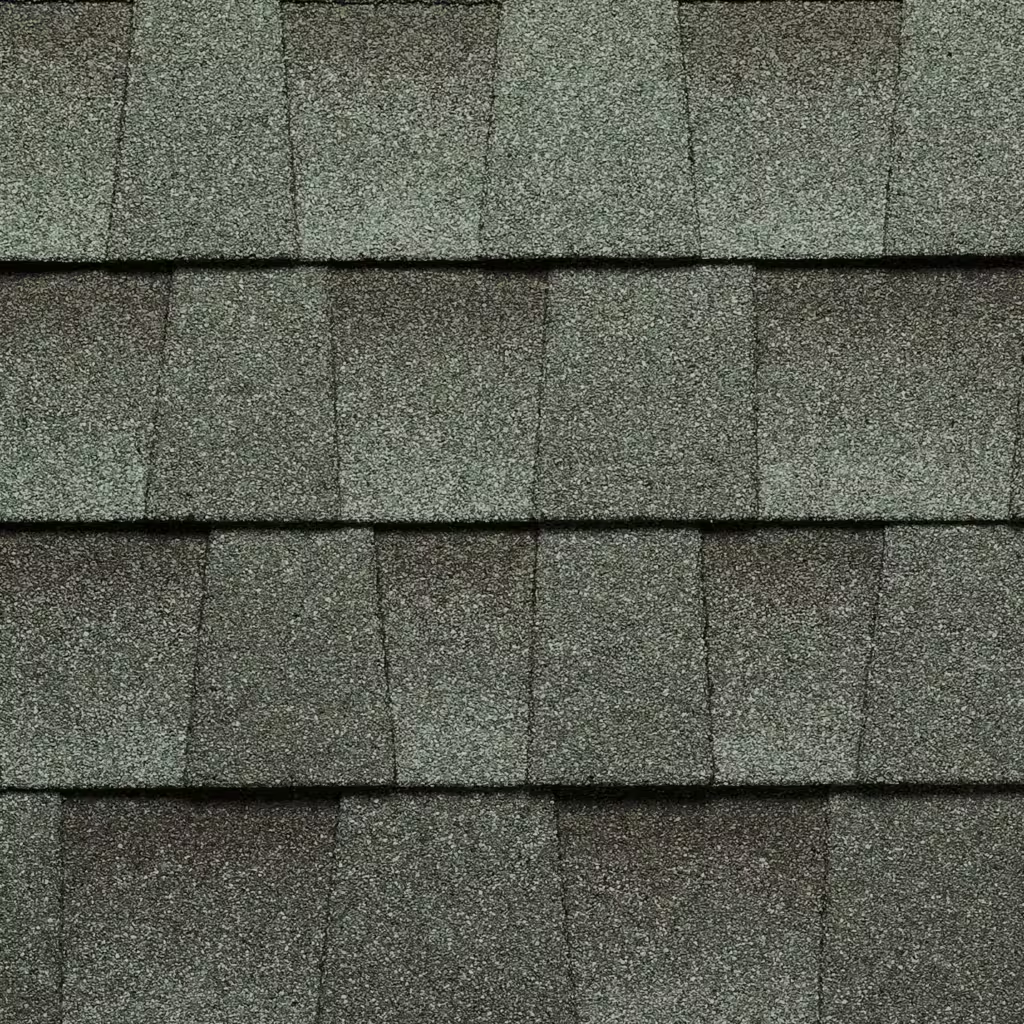
Asphalt shingles can be designed to comply with cool roof requirements by using colored granules that contain special pigments. Cool roof shingles are available in a variety of colors, allowing homeowners to choose styles that complement their homes while maintaining traditional aesthetics.
Modern cool roof shingles utilize advanced reflective granules while maintaining aesthetic flexibility.
Do Cool Roof Shingles Actually Save Money?
This is the big question. Let’s look at the data.
Department of Energy Studies
The DOE estimates cool roofs can reduce cooling energy use by 10-15% in hot climates (think Texas, Arizona, Florida). Cool roofs achieve the greatest cooling savings in hot climates.
In moderate climates like Long Island? 5-10% cooling cost reduction is more realistic with energy savings from reduced energy use.
Real-World Long Island Performance
County Roofing Systems tracked energy data from homeowners who installed cool roof shingles in residential buildings.
Average results:
Summer cooling costs: 7-12% reduction compared to dark standard shingles
Attic temperature reduction: 10-15°F cooler on typical summer afternoon
Air conditioning runtime: Runs slightly less frequently (5-10% less runtime)
Important context: The savings are most noticeable when replacing dark-colored shingles with cool roof shingles. If you’re already using light gray or tan standard shingles, the improvement is much smaller.
Does It Pay for Itself?
Let’s do the math for a typical Long Island home.
Assumptions:
2,000 sq ft home
Central air conditioning
$300-400 monthly summer electric bills (June, July, August)
Replacing dark shingles with cool roof shingles
Annual summer cooling costs: $1,200 total (4 months averaging $300)
10% savings from cool roof shingles: $120 per year in energy savings
Cool roof shingles cost premium: $500-$1,000 more than standard shingles (about $25-50 per square extra)
Payback period: 4-8 years
Over 25 years: $3,000 in energy savings (assuming $120/year, not accounting for rising electricity costs)
The verdict: Cool roof shingles typically pay for themselves over the roof service life, but it’s not a dramatic money-saver. You’re looking at modest energy savings, not massive energy bill reductions. Less energy usage from cool roofs results in reduced carbon emissions and greenhouse gas emissions from power plants.
BUT: If energy costs rise significantly over the next 20 years (likely), the savings accelerate. If you use a lot of air conditioning (large home, poor insulation, many windows), savings are higher.
THE BEST GUARANTEE IN THE INDUSTRY
50-Year Material, 25-Year Labor Guarantee
We’ve met the toughest requirements in the residential roofing industry- and we use only the best materials.
That’s why we stand behind our work with the best guarantee in the industry– including warranties only 2% of roofing companies can offer.
Your house deserves the best roofing warranty on the market. Give us a call today and get a brand new roof with a 50-year material, 25-year labor warranty from the best roofing contractor in Long Island and New York.
Cool Roof Shingles vs. Other Energy Improvements
Here’s some perspective: Cool roof shingles are ONE way to reduce cooling energy costs. How do they compare to other options?
- Attic insulation (adding R-value): 15-25% cooling cost reduction, similar upfront cost, faster payback
- Attic ventilation (ridge vents, soffit vents): 10-20% cooling cost reduction, lower cost, excellent ROI
- Air sealing (sealing ductwork, attic penetrations): 10-15% cooling cost reduction, low cost, great ROI
- Whole-house fan: 20-30% cooling cost reduction (when outdoor temps drop below indoor temps), moderate cost
- High-efficiency air conditioning unit: 20-40% cooling cost reduction, high cost, longer payback
- Cool roof shingles: 7-12% cooling cost reduction, moderate cost premium, 4-8 year payback
Cool roof shingles are a solid energy improvement for energy efficiency, but they’re not the MOST effective option.
If energy savings are your primary goal, invest in insulation and air sealing first. Then add cool roof shingles when you need a new roof anyway.
The smart approach: Combine improvements. Install cool roof shingles + improve attic ventilation + add insulation. The combined effect is much greater than any single improvement, helping your building cooler more effectively.
Long Island Climate Considerations
Long Island’s climate affects whether cool roof shingles make sense.
Summers: Hot and Humid
High temperatures: 85-95°F on hot summer days Humidity: Often 70-90% (makes it feel hotter) Air conditioning season: June through September (4 months)
Cool roof shingles provide meaningful benefit during these months. Lower roof surface temperatures = less attic heat = less air conditioning load = indoor comfort.
Winters: Cold and Snowy
Here’s the catch: Cool roof shingles reflect sunlight all year round, including winter.
In winter, you WANT your roof exposed to sun to absorb heat. Solar gain helps warm your home and reduce heating costs in cold climates.
Cool roof shingles slightly increase heating costs in winter because they reflect more solar energy that could otherwise warm your home. This is known as the winter heating penalty.
The trade-off:
Summer savings: +$120
Winter heating penalty: -$30 to -$50
Net annual savings: $70-$90
The winter heating penalty is smaller than cooling savings because:
Long Island winters have less direct sunlight (shorter days, lower sun angle at low slope)
Snow cover reflects sunlight anyway
Most homes heat with gas (cheaper than electric cooling)
Bottom line for Long Island: Cool roof shingles still provide net energy savings despite the winter heating penalty. But the benefit is smaller than in year-round hot climates. Cool roofs can increase energy costs in colder climates if the annual heating penalty exceeds the annual cooling savings, but this is rare on Long Island.
Aesthetics: Do Cool Roof Shingles Look Different?
Good news: Modern cool roof shingles look identical to standard shingles with aesthetic flexibility.
You can’t tell the difference by looking at them. The reflective technology is in the granule formulation—it doesn’t change the appearance. Cool roof shingles are available in various colors and textures, allowing homeowners to match any architectural style.
The limitation: Cool roof technology works best in lighter colors. You won’t find cool roof options in jet black or dark charcoal.
Available color range:
Light grays (yes)
Medium grays (yes)
Tans and earth tones (yes)
Lighter browns (yes)
Medium browns (yes)
Whites and off-whites (yes)
Dark browns (limited)
Charcoal/black (no)
If you want a dark roof, cool roof shingles aren’t an option. Standard dark shingles fundamentally absorb heat—there’s no way around it with dark surfaces.
If you’re flexible on color, cool roof shingles give you plenty of attractive options that look great on Long Island homes.
Popular choices: Weathered Wood (light brown/gray), Driftwood (medium tan), Estate Gray (medium gray), Sand Dune (light tan)
Durability & Longevity
Do cool roof shingles last as long as standard shingles?
Yes. The reflective granule technology doesn’t compromise durability.
Expected lifespan: 25-30 years (same as standard architectural shingles) with proper roof service life management
Wind resistance: Same ratings as standard versions (110-130 MPH depending on product)
Algae resistance: Most include algae-resistant technology (StreakGuard, StreakFighter, etc.)
Warranties: Identical to standard versions (limited lifetime, 10-15 year non-prorated periods)
The only difference is the granule pigment formulation. Everything else—mat construction, asphalt blend, sealant strips, nailing pattern—is identical.
You’re not sacrificing durability for energy efficiency. Cool roof shingles are just as tough as standard shingles.
Installation & Cost
Cool roof shingles install exactly like standard shingles. No special techniques or equipment required.
Cost Breakdown
Standard architectural shingles on Long Island:
GAF Timberline HDZ: $450-$600 per square installed
Owens Corning Duration: $450-$600 per square installed
CertainTeed Landmark: $450-$600 per square installed
Cool roof shingles:
GAF Timberline Cool Series: $475-$650 per square installed
Owens Corning Duration COOL: $475-$650 per square installed
CertainTeed Solaris products: $500-$700 per square installed (varies by product line)
Cost premium: $25-$100 per square more than standard shingles
For a typical 2,000 sq ft roof (20 squares): $500-$2,000 additional cost
The cost premium varies based on:
Specific product chosen
Color selection (some colors cost more)
Product line (Landmark vs. Landmark Solaris vs. Landmark Solaris Platinum)
Contractor markup
Your location on Long Island
Is the premium worth it? If you’re already spending $10,000-12,000 on a roof replacement, adding $500-1,500 for cool roof technology makes sense for long-term energy savings, lowering energy use over decades.
Tax Credits & Incentives
Federal tax credits: Cool roof shingles may qualify for energy efficiency tax credits under certain programs. Check current IRS regulations for ENERGY STAR® qualified roofing products. Government rebates or utility incentives may be available for installing cool roof materials that meet Cool Roof Rating Council standards.
State/local incentives: New York occasionally offers energy efficiency rebates. Check NYSERDA (New York State Energy Research and Development Authority) for current programs. Incentives such as rebates and loans are available for homeowners and businesses in some U.S. locations.
Utility rebates: Some Long Island utilities (PSEG, LIPA) have offered rebates for energy-efficient home improvements, including cool roofs. Check with your utility provider.
Insurance discounts: Some insurance companies offer small premium discounts for energy-efficient home improvements, including cool roofs. Ask your insurance agent.
Reality check: Don’t expect huge incentives. Tax credits and rebates for cool roof shingles are typically $200-500, not thousands of dollars. They help offset the cost premium but don’t make cool roofs “free.”
California standards: To qualify as a cool roof in California, your home must have roof coverings that are listed in the Cool Roof Rating Council database and meet the relevant reflectivity and emissivity requirements. Cool roof regulations apply to all 16 of California’s climate zones, but differ between them.
Requirements to meet standards or to qualify for incentives often take into account how much of the roof is covered in cool materials, roof slope, solar reflectance and thermal emittance values of the materials, and the nature of the property.
Overwhelmed by your options? You’re not alone.
At County Roofing, our focus is to deliver the look and performance you want at a surprisingly affordable price.
The best materials, the best workmanship, all backed by the best guarantee in the industry.
Reach out today to learn more about how we can help transform your old roof.
Click the button below to give us a call today:
When Cool Roof Shingles Make Sense on Long Island
Cool roof shingles are a smart choice if:
Your current roof has dark shingles (maximum cooling benefit)
You run air conditioning heavily during summer (large cooling load)
You’re choosing a light or medium color anyway (cool options available)
You plan to stay in your home long-term (10+ years to recoup investment)
You want to maximize energy efficiency across all improvements
Your home has poor attic ventilation or insulation (cool roof helps compensate)
You live on the south shore or coastal areas (more intense sun exposure)
You want to reduce the urban heat island effect in your neighborhood
Skip cool roof shingles if:
You want a dark colored roof (cool options not available)
Your current roof is already light colored (minimal improvement)
You barely use air conditioning in summer (small potential energy savings)
You’re selling within 5 years (won’t recoup investment)
Your budget is extremely tight (standard shingles perform fine)
You haven’t addressed basic insulation/ventilation yet (fix those first)
Our honest recommendation: Cool roof shingles are a worthwhile upgrade if you’re already getting a new roof and the cost premium fits your budget. They provide real energy savings—just not dramatic ones for residential buildings.
Don’t expect your electric bill to drop 30% or to experience benefits of cool roofs like those in extreme hot climates. Expect a 7-12% reduction in summer cooling costs and a modest long-term ROI.
Other Ways to Keep Your Roof Cooler
Cool roof shingles work best when combined with other heat-reduction strategies. The benefits of cool roofs are maximized when integrated with comprehensive energy efficiency measures:
Proper attic ventilation: Ridge vents + soffit vents allow hot air to escape. This matters MORE than shingle color in decreasing roof temperature.
Radiant barrier: Reflective insulation installed on attic rafters reflects heat back toward the roof surface. Very effective in hot climates at reducing heat transferred.
Attic insulation: R-38 to R-60 insulation reduces heat transferred from attic to living space in residential buildings.
Air sealing: Seal gaps around attic penetrations (recessed lights, pipes, wires) to prevent hot air infiltration.
Shade trees: Large deciduous trees on the south/west sides of your home reduce direct sun exposure on roof and walls.
Light-colored siding: Reflective siding reduces overall heat absorption (though this matters less than roof surface color).
The hierarchy:
Proper ventilation (biggest impact, low cost, decreases roof temperature)
Insulation (major impact, moderate cost)
Cool roof shingles (moderate impact, moderate cost premium)
Radiant barrier (moderate impact, moderate cost)
Everything else (smaller impacts)
Don’t install cool roof shingles if your attic ventilation is inadequate. Fix the fundamentals first.
Environmental Benefits Beyond Energy Savings
Cool roofs help combat the urban heat island effect—the phenomenon where cities are significantly warmer than surrounding rural areas due to dark surfaces absorbing heat.
How cool roofs help:
Reduce urban air temperatures: More reflective roofs mean less heat absorbed by buildings, lowering the ambient temperature
Decrease peak energy demand: Less air conditioning use during heat waves reduces strain on the power grid, preventing power outages
Lower greenhouse gas emissions: Reduced energy use means less pollution and greenhouse gas from fossil fuel power plants
Improve air quality: Lower urban air temperatures reduce ground level ozone formation and air pollution
Increase indoor comfort: Buildings stay cooler without air conditioning
Cool roofs can help combat the urban heat island effect, making cities cooler and more comfortable for everyone. In areas with significant urban heat island problems, widespread cool roof adoption by building owners can reduce urban air temperatures by several degrees.
Cool roofs decrease the demand on the electrical grid during peak energy demand periods (hot summer afternoons), reducing the risk of power outages and heat waves causing system failures.
Cool Roofs on Commercial Buildings
While this article focuses on residential applications, cool roofs are particularly effective on commercial buildings with low slope roofs (flat or nearly flat roofing materials).
Why commercial buildings benefit more:
Larger roof surface area exposed to sun
More energy use for cooling (higher utility bills)
Often in urban areas with heat island effect
Better ROI due to scale
Commercial buildings can choose from various cool roof coverings including:
Single-ply membranes (TPO, PVC) with high solar reflectance
Metal roofing with reflective coatings
Modified bitumen with reflective cap sheets
Cool roof coatings applied over existing roofs
The Cool Roof Rating Council database includes ratings for all these roofing materials, helping commercial building owners select the most effective roofing product for their needs. Oak Ridge National Laboratory and other research institutions have extensively studied cool roofs on commercial buildings and documented significant energy savings.
Cool roofs can be retrofitted with coatings to improve their solar reflectance and thermal emittance without full roof replacement, making them cost-effective for existing buildings.
Cool Roof Shingles: The Bottom Line
Cool roof shingles are a legitimate energy improvement for energy efficiency—not marketing hype.
What they DO deliver:
10-20°F lower roof surface temperatures
7-12% reduction in summer cooling costs (when replacing dark shingles)
Modest long-term energy savings ($70-90 per year on Long Island)
Same durability and lifespan as standard shingles
4-8 year payback period
Reduced greenhouse gas emissions and air pollution
Help combat urban heat island effect
What they DON’T deliver:
Dramatic energy bill reductions (don’t expect 30% savings)
Year-round savings (winter heating penalty offsets some summer gains)
Availability in dark colors (physics limits dark cool roof technology)
Instant ROI (takes years to recoup cost premium)
For Long Island homeowners: Cool roof shingles make sense as part of a broader energy efficiency strategy. They’re not a magic bullet, but they’re a solid incremental improvement for residential buildings looking to save energy.
The smart approach:
If you need a new roof anyway, upgrade to cool roof shingles in a light/medium color
Simultaneously improve attic ventilation and insulation
Combine these improvements for maximum energy savings
Enjoy modestly lower cooling costs and increased indoor comfort
Want to know if cool roof shingles are right for your home? County Roofing Systems installs cool roof products from GAF, Owens Corning, and CertainTeed.
We’ll show you samples, explain the energy savings based on YOUR current roof and air conditioning usage, and help you decide if the cost premium makes sense.
No pressure. No exaggerated energy savings claims. Just honest numbers and real-world performance data.
Call County Roofing today to find out how we can update your old roof with the latest in cool roof shingles.
Fast & Easy Financing with County Roofing
Financing your commercial roofing project has never been easier.
With County Roofing, you can get fast approvals with as low as 0% financing on new roofing projects for up to 15 years, with payments as low as $149:
First Approvals
0% financing
No income check
Up to 15 years
Monthly payments as low as $149
Fill out the form below or give us a call at (631) 400-7663 today to get started:
Call or contact us today
for your free comprehensive roofing estimate.

Call Us Today: (631) 400-7663