
UPDATED FOR 2026
Flat Roof Installation for Commercial Buildings on Long Island
How commercial flat roofs are installed on Long Island. County Roofing Systems breaks down every step from inspection to final walkthrough.
Key Takeaways:
- Surface prep is where most shortcuts happen. Trapped moisture and damaged decking cause the majority of premature flat roof failures.
- Membrane seams are the most vulnerable point. Improper seam work is the leading cause of commercial flat roof leaks.
- Drainage planning matters more than material choice. The best membrane will still fail if water pools on the surface.
- Insulation isn’t optional. It regulates temperature, prevents condensation, and lowers energy costs year-round.
- Your contractor should pull permits without being asked. Nassau and Suffolk County have different permitting requirements for commercial roof work.
- A final walkthrough protects your investment. If your contractor skips this step, that tells you something.
If you own or manage a commercial building on Long Island, there’s a good chance you’re dealing with a flat roof.
Office parks along the Route 110 corridor in Melville. Strip malls in Hicksville. Warehouses in Hauppauge. Mixed-use buildings in Hempstead.
Flat roofing dominates the commercial landscape across Nassau and Suffolk County for good reason: it’s practical, cost-effective, and easier to maintain when installed correctly.
The key phrase there is “when installed correctly.”
A flat roof that goes down right will perform reliably for 20 to 30 years. One that’s rushed or poorly planned can start leaking within the first season. This guide walks through the entire flat roof installation process so you know what to expect, what to ask, and what separates a quality job from a shortcut-filled one.
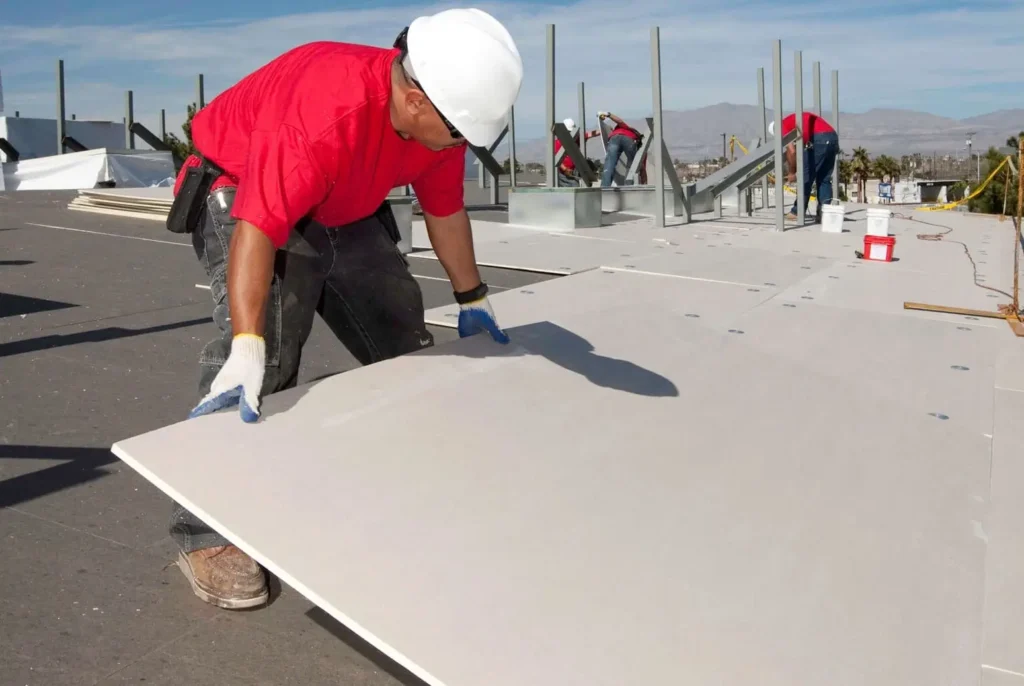
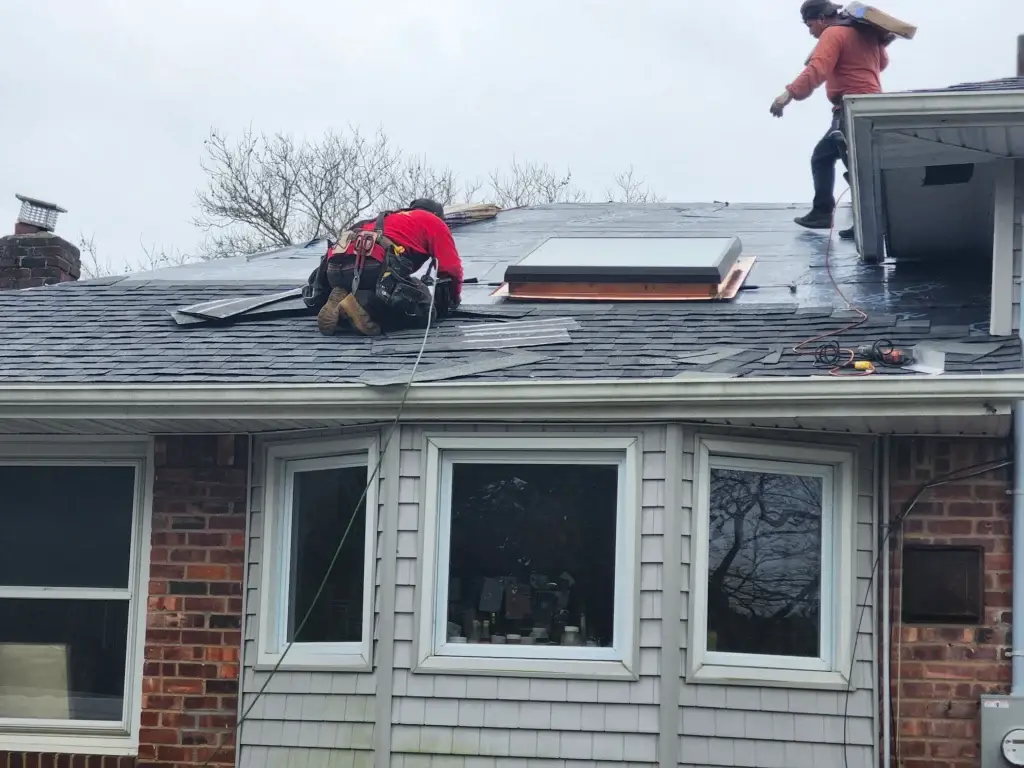
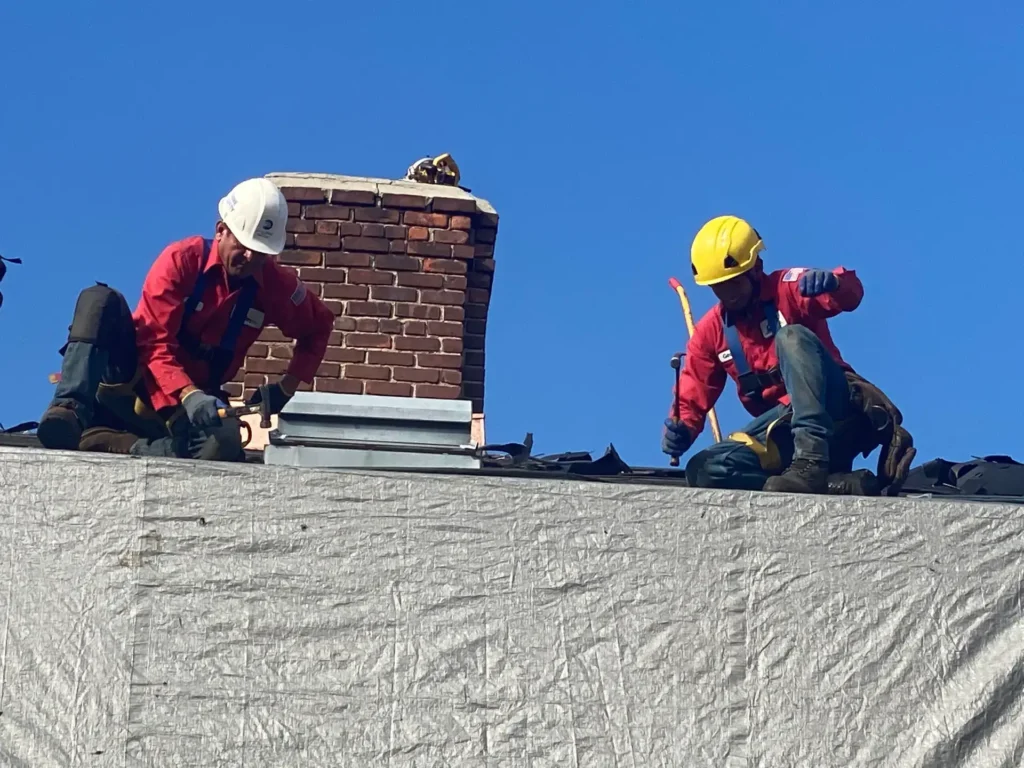
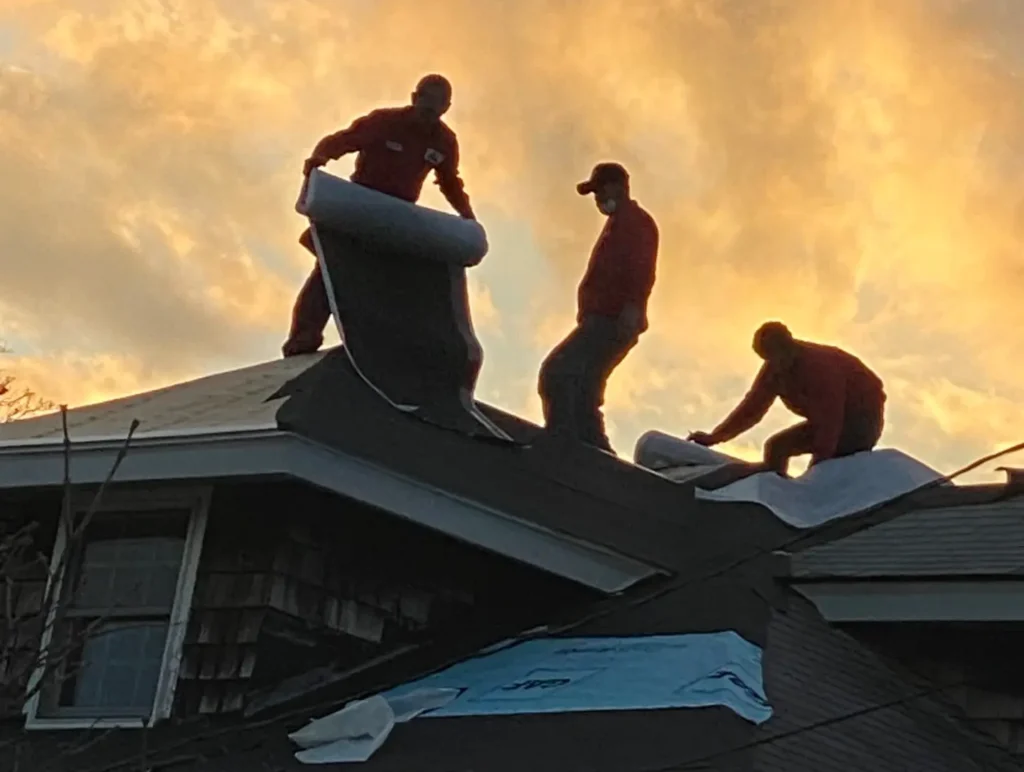
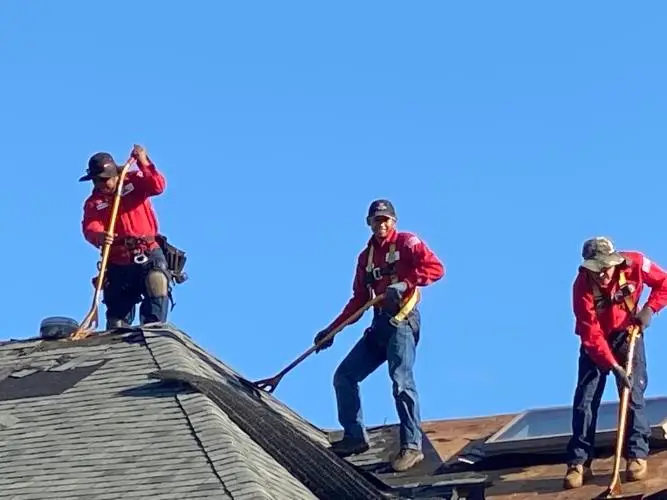
County Roofing Systems team working on a commercial roof in Long Island.
It Starts with an Assessment, Not a Quote
A serious commercial roofing contractor doesn’t hand you a number after a 15-minute visit.
The assessment phase is where the entire project gets scoped. Rushing it leads to problems that show up months later.
During this phase, the contractor evaluates your existing roof structure, deck condition, moisture levels, and drainage layout. They should also be identifying every piece of rooftop equipment the new system needs to work around (HVAC units, satellite equipment, access hatches, pipe penetrations).
On Long Island specifically, the assessment needs to account for local building codes. Nassau County and Suffolk County have different permitting requirements, and your contractor should know which building department they’re pulling permits through.
County Roofing Systems handles permitting as part of every commercial project so you’re not navigating that process yourself.
FINANCE YOUR HOME IMPROVEMENT PROJECT TODAY
0% Financing, Quick and Easy Approval
With nearly four decades serving homeowners under our belt, we know what’s needed to make your roofing project a success.
When you work with County Roofing, you get only the best. As little as 0% interest on approval for 5 years, quick approval, easy pay, and all backed by the best guarantees in the industry.
Surface Preparation: Where the Real Work Begins
This is the phase that separates professional installations from the ones you end up regretting.
Once the assessment is complete and the project plan is locked in, the existing roof surface needs to be prepared for the new system. If there’s a failed membrane in place, it typically needs to come off.
Some situations allow for a layover, where the new system goes directly over the old one. But that’s only viable when the existing roof is structurally sound and free of trapped moisture. Your contractor should be testing for moisture, not guessing.
What does proper surface prep actually look like?
Damaged decking gets replaced. Uneven areas get leveled. Debris, old adhesive residue, deteriorated insulation, all of it comes out. The goal is a clean, dry, stable surface that gives the new system its best chance at a long life.
Keep in mind that skipping surface prep is the single most common shortcut in commercial roofing. It saves the contractor time and money. It costs you a roof that fails early.
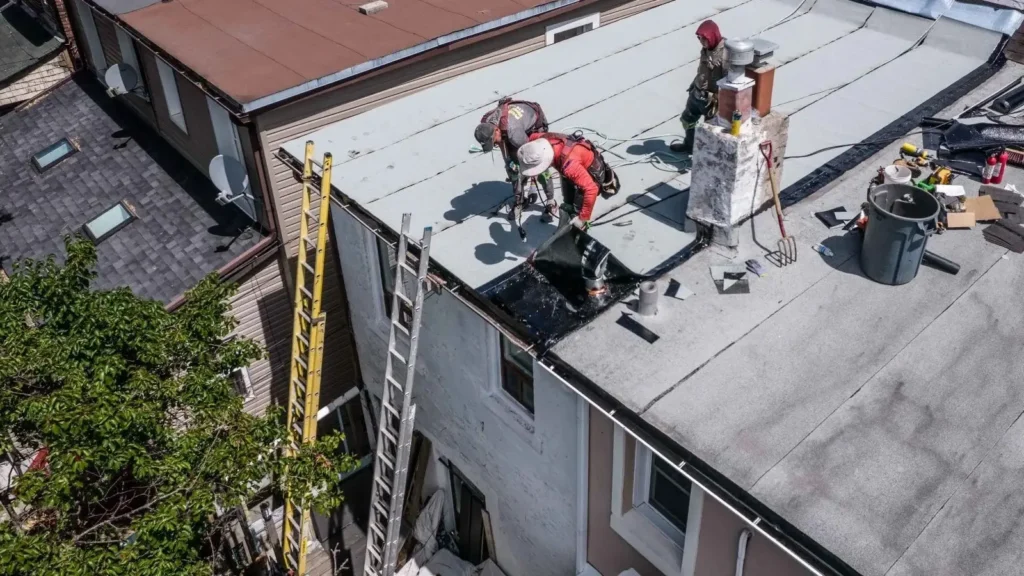
Insulation and Vapor Barriers
Long Island’s climate creates a specific challenge for commercial flat roofs.
In the winter, warm air from inside the building rises and meets the cold underside of the roof deck. Without proper insulation and a vapor barrier, that temperature difference creates condensation that slowly degrades the roof structure from the inside out.
Insulation boards go down evenly across the entire roof surface, eliminating gaps and thermal bridges. For commercial buildings in Nassau and Suffolk County, this isn’t just about comfort. It directly impacts your energy costs, and those savings show up on your utility bills month after month.
The vapor barrier goes beneath the insulation to prevent interior moisture from reaching the roof assembly. This matters most in temperature-controlled environments like restaurants, medical facilities, and cold storage buildings.
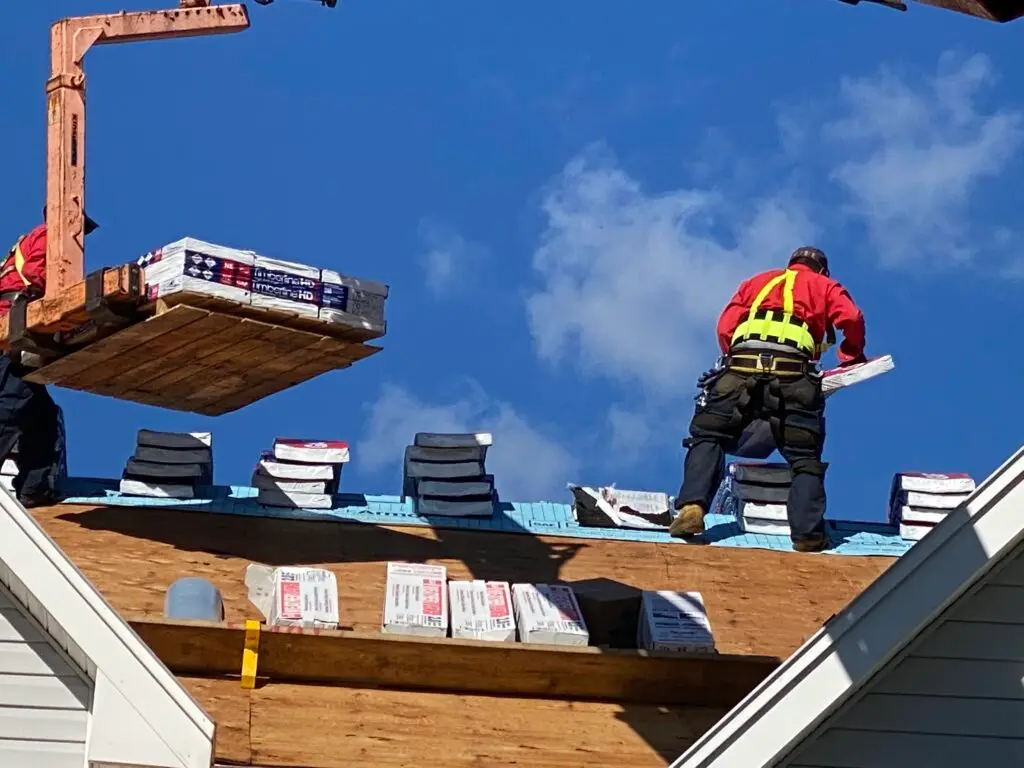
Membrane Installation
The membrane is your roof’s primary defense against water.
It’s the layer that determines whether your building stays dry or develops leaks that damage inventory, equipment, and interior finishes. So the material choice and the crew installing it both matter.
TPO (Thermoplastic Polyolefin)
Popular for its energy efficiency and weldable seams. TPO reflects heat well and works on a wide range of commercial building types across Long Island.
EPDM (Ethylene Propylene Diene Monomer)
Known for long-term durability and flexibility in cold weather, which matters when January temperatures on Long Island drop into the teens. EPDM has a long track record on commercial buildings.
Modified Bitumen
Excellent waterproofing and often the best fit for buildings with significant foot traffic on the roof. If your crew needs regular rooftop access for HVAC maintenance or other equipment, modified bitumen handles that wear well.
Having said that, the material matters less than the installation quality.
Seams must be aligned precisely and sealed according to manufacturer specifications. Penetration points around pipes, vents, and HVAC curbs need custom detailing. Edges and transitions where the roof meets walls or parapets require careful flashing integration.
This is where experience shows. A crew that has installed flat roofs on Long Island commercial buildings for decades understands how nor’easter-driven rain, summer humidity, and freeze-thaw cycling interact with each membrane type. County Roofing Systems has been doing this work across Nassau and Suffolk County for over 35 years.


LIFETIME MATERIAL, LIFETIME WORKMANSHIP WARRANTY
Get Industry-Leading Protection
County Roofing Systems can offer you the longest warranties available because we’re a CertainTeed SELECT ShingleMaster, a certification only 1% of contractors qualify for.
We have over 35 years of experience living up to CertainTeed’s tough standards. That means CertainTeed trusts our home improvement work enough to stand behind it with their best guarantees.
To learn more about the industry-leading LIFETIME material, LIFETIME workmanship warranty, click the button below to call us today:
Flashing, Edges, and Drainage
Flashing seals every vulnerable junction on a flat roof.
Where the membrane meets a wall. Where a vent pipe penetrates the surface. Where an HVAC unit sits on a curb. Every one of these points is a potential leak source if the flashing isn’t installed correctly.
Then there’s drainage.
Flat roofs aren’t truly flat. They’re designed with a slight slope that directs water toward drains, scuppers, or gutters. If that slope is insufficient or the drainage system is undersized, water pools on the surface. Ponding water accelerates membrane degradation and adds structural weight the building wasn’t designed to carry.
On Long Island, drainage planning has to account for the volume of water that comes with coastal storms. A 3-inch rainfall in a nor’easter isn’t unusual. Your drainage system needs to handle that without backing up.
Getting this right during installation prevents the emergency calls that come six months later.
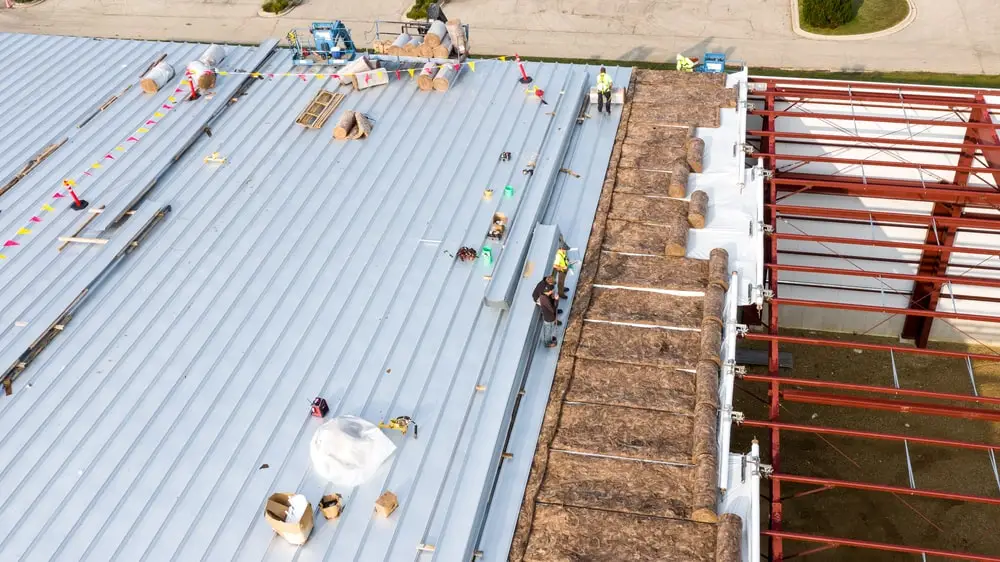
Final Inspection and Walkthrough
Once every component is in place, the project isn’t done.
A reputable contractor performs a final inspection covering membrane seams, flashing integrity, insulation placement, drain flow, and overall workmanship. Any issues found during the walkthrough get corrected before the project is signed off.
This isn’t a formality. It’s the step that confirms the roof meets manufacturer requirements for warranty coverage and complies with Nassau or Suffolk County building codes.
County Roofing Systems includes a documented final walkthrough on every commercial project. You receive a written summary of what was installed, how it was tested, and what your warranty coverage includes.
Warranty and Maintenance Planning
A properly installed commercial flat roof should come with two types of warranty protection: a material warranty from the manufacturer and a workmanship warranty from the contractor.
The truth is, the workmanship warranty matters more for the first 10 to 15 years. Material defects are rare. Installation errors aren’t.
County Roofing Systems provides workmanship warranties that go well beyond the industry standard because we stand behind the quality of our crew’s work.
Beyond the warranty, a maintenance plan extends the life of any flat roof system. Annual inspections catch minor issues before they become expensive repairs. Clearing drains, checking seams, and inspecting flashing points take a fraction of the time and cost that an emergency repair requires.
Why County Roofing Systems
We wrote this guide because commercial building owners deserve to know what a proper flat roof installation looks like before they sign a contract.
If you apply the standards described in this article to your contractor search, you’ll end up with a short list. We’ll be on it.
County Roofing Systems is one of the only contractors on Long Island certified by all three major manufacturers at their highest levels: GAF Master Elite, Owens Corning Platinum Preferred, and CertainTeed SELECT ShingleMaster. We’ve been installing commercial and residential roofing systems across Nassau and Suffolk County for over 35 years. Our crews are County Roofing employees, not subcontractors. Keith Schmied oversees every project personally.
We’re also including free gutters and leaders with every new roofing system right now.
Call us at 631-400-7663 or click here to schedule your free estimate.
Frequently Asked Questions
How long does a commercial flat roof installation take on Long Island?
Most commercial flat roof installations take between 3 and 10 days depending on the building’s size, complexity, and weather conditions. County Roofing Systems coordinates with your operations schedule to minimize business disruption.
Can a new flat roof be installed over the existing one?
In some cases, yes. A layover is viable when the existing roof structure is sound and there’s no trapped moisture. Your contractor should perform moisture testing before recommending this approach. If there’s any doubt, a full tear-off is the safer investment.
What is the best flat roof membrane for Long Island commercial buildings?
It depends on the building’s usage, size, and budget. TPO offers excellent energy efficiency, EPDM provides strong cold-weather flexibility, and modified bitumen excels on roofs with regular foot traffic. The best choice for your building depends on a professional assessment of your specific situation.
How often should a commercial flat roof be inspected?
At least twice a year and after every major storm. Spring and fall inspections catch winter damage and prepare for storm season. Regular inspections are the single most effective way to extend a commercial flat roof’s lifespan.
Do I need permits for a commercial flat roof installation on Long Island?
Yes. Both Nassau County and Suffolk County require building permits for commercial roof work. County Roofing Systems handles the full permitting process as part of every project.
How much does a commercial flat roof installation cost on Long Island?
Costs vary based on roof size, material choice, existing condition, and building complexity. Contact County Roofing Systems at (631) 400-7663 for a free, no-obligation estimate that covers every line item.
What causes most commercial flat roof failures?
Poor surface preparation, improper seam installation, and inadequate drainage planning account for the majority of premature flat roof failures. Choosing an experienced contractor with a documented installation process prevents these issues.

Keith Hutchinson Schmied
We Serve the Entire Long Island Area
We serve all of Long Island, from Nassau to Suffolk County. Whether you’re on the coast or in the city, we know the area’s local design preferences, construction needs, and climate challenges.
Call us today for a free estimate: (631) 400-7663