
UPDATED FOR 2026
How NYC Contractors Cheap Out on Flat Roof Systems
Welcome to County Roofing’s “Roofing Industry Scams Uncovered”, a series designed to shine a light on untrustworthy practices within the roofing industry.
This series is designed to empower consumers by increasing awareness of unlawful or wrongful practices we’ve seen throughout our 35 years serving Long Island and the greater New York area with roofing services based on integrity and trust.
Key Takeaways:
- Single-layer flat roof systems (SBS cap sheet over ice and water barrier) are common contractor shortcuts that lack the redundancy needed for NYC’s harsh climate
- Proper three-ply systems include mechanically fastened base sheet, mid-ply with staggered seams, and UV-protective cap sheet—providing multiple layers of waterproofing
- Single-layer systems fail after 7-10 years when thermal cycling and ponding water compromise the only waterproofing layer, while three-ply systems last 20-25 years
- Contractors save $4,000-$7,000 per job by eliminating two membrane layers, but homeowners pay 2-3x more over time through premature replacements
- Always verify that your contractor installs manufacturer-specified multi-ply systems, not simplified shortcuts that void warranties and fail early
Your flat roof installer just finished the job in two days.
Fast work. Clean site. Everything looks great.
What you don’t see is that your roof has one layer of protection instead of three.
In five years when water starts pooling in your ceiling, you’ll discover that single-layer system wasn’t designed for New York’s freeze-thaw cycles, temperature extremes, and constant thermal expansion.
The proper three-ply system would have lasted 20-25 years.
Your single-layer roof? You’re looking at failures within 7-10 years, if you’re lucky.
This is the most common shortcut in flat roofing, and most homeowners have no idea it’s happening because they can’t see what’s under that final layer.

The Difference Between “A Roof” and “A System”
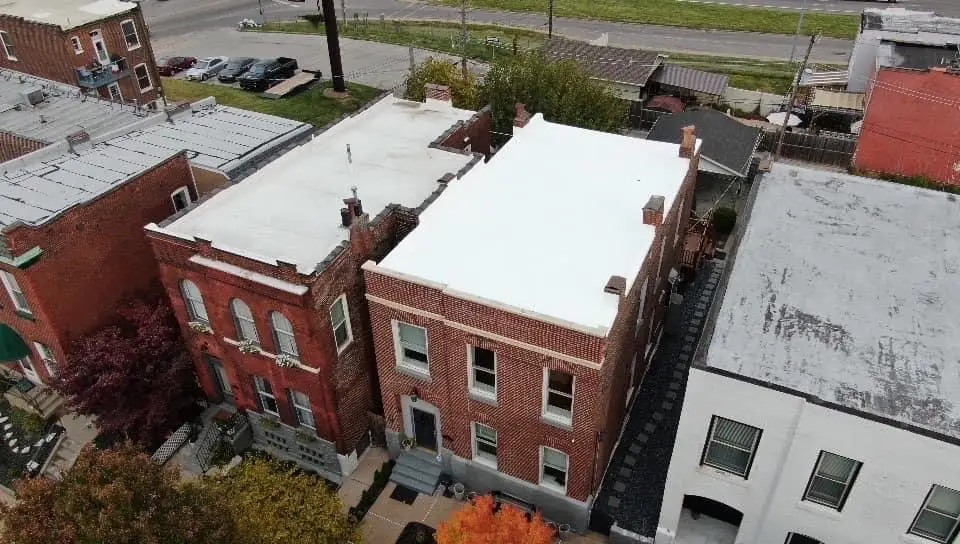
Walk onto any flat roof in the NYC area and you see the top surface—usually a granulated cap sheet that looks professional and complete.
What you can’t see is whether that cap sheet is sitting on top of two additional membrane layers designed to create redundancy, or whether it’s installed directly over ice and water barrier with nothing in between.
Both installations look identical from above.
One lasts decades. One fails prematurely.
The Simplified Method Most Contractors Use
Many NYC contractors install flat roofs using what’s euphemistically called a “simplified system”:
- Ice and water barrier over the roof deck
- Single layer of SBS-modified bitumen cap sheet on top
- Done
Total installation time: 1-2 days for a typical flat roof section.
This method keeps costs down and speeds up the job. It’s not technically wrong—you do have a waterproof membrane on your roof.
It’s just not designed for the harsh climate conditions in the New York area.
FINANCE YOUR HOME IMPROVEMENT PROJECT TODAY
0% Financing, Quick and Easy Approval
With nearly four decades serving homeowners under our belt, we know what’s needed to make your roofing project a success.
After completing your roof inspection, if repairs or updates are recommended, we’ll do everything we can to make affording your roof repair or replacement quick and easy.
When you work with County Roofing, you get only the best. As little as 0% interest on approval for 5 years, quick approval, easy pay, and all backed by the best guarantees in the industry.
The Proper Three-Ply System
A true three-ply SBS system provides multiple layers of defense against water intrusion:
Layer 1: Nailable Base Sheet
This is mechanically fastened to the wood deck. It creates a fire-rated barrier and provides a stable surface that prevents deck movement from damaging the upper membrane layers.
Without this layer, every expansion and contraction of your roof deck transfers directly to your waterproofing membrane, creating stress points that develop into failures.
Layer 2: Mid-Ply Modified Base
The second layer is the primary waterproofing component. It’s torch-applied, cold-adhered, or self-adhered depending on building codes and substrate conditions.
Installation uses staggered seams relative to the base sheet—meaning the joints in this layer don’t line up with the joints in the layer below. That eliminates straight paths for water to penetrate if the top layer fails.
This is the redundancy that single-layer systems lack.
Layer 3: SBS Cap Sheet
The final layer is granule-surfaced to protect against UV damage and physical wear. In NYC, this is often required to be a “cool roof” (white or reflective) to comply with Local Law 92/94 energy codes.
This layer takes the daily punishment from weather, foot traffic, and thermal cycling. When it eventually needs replacement, the two layers underneath keep your building dry while repairs are made.
Why Redundancy Matters in NYC
New York’s climate creates specific challenges for flat roofs:
Freeze-thaw cycles that cause materials to expand and contract hundreds of times per year. Temperature swings from below zero in winter to 95+ degrees in summer. Ponding water from heavy rains that sits on low-slope sections for days.
A single-layer system means one puncture or one failed seam results in an immediate leak.
A three-ply system means your roof has two backup layers if something goes wrong with the top surface. That’s the difference between a minor repair and an emergency call to stop water pouring into your building.
How the Single-Layer Shortcut Saves Contractors Money
Installing three membrane layers instead of one doesn’t just take more time—it requires more skill, more materials, and more quality control.
Contractors who cut corners on flat roofs aren’t necessarily incompetent.
They’re just prioritizing profit margins over long-term performance.
Labor Costs Drop Dramatically
A single-layer installation requires one trip up with materials, one waterproofing application, and minimal coordination between layers.
A three-ply system requires three separate membrane installations, careful attention to seam staggering, proper overlap specifications, and quality checks at each stage.
On a typical 1,500 square foot flat roof section, the labor difference is 3-4 additional days. At commercial labor rates, that’s $2,500-$4,000 in additional labor costs that contractors eliminate by skipping the base sheet and mid-ply.
Material Costs Cut in Half
Two additional membrane layers mean doubling or tripling material costs.
A quality SBS base sheet runs $40-$60 per roll. Mid-ply modified membranes cost $60-$90 per roll. For that same 1,500 square foot section, you’re looking at an additional $1,500-$2,500 in materials.
Contractors who skip these layers pocket that difference while charging you the same price their competitors quote for proper three-ply systems.


LIFETIME MATERIAL, LIFETIME WORKMANSHIP WARRANTY
Get Industry-Leading Protection
CertainTeed’s lifetime-limited transferable warranty is a true industry standout. Whereas other manufacturers only warrant against defects that cause leaks, CertainTeed protects your investment against all manufacturing defects, including aesthetic defects.
County Roofing Systems can offer you the longest warranties available because we’re a CertainTeed SELECT ShingleMaster, a certification only 1% of contractors qualify for.
We have over 35 years of experience living up to CertainTeed’s tough standards. That means CertainTeed trusts our home improvement work enough to stand behind it with their best guarantees.
To learn more about the industry-leading LIFETIME material, LIFETIME workmanship warranty, click the button below to call us today:
The Failure Pattern You’ll See
Single-layer flat roofs don’t fail immediately.
They fail slowly, in a predictable pattern that usually starts around year 5-7.
Ponding Water Creates First Leaks
NYC flat roofs are rarely perfectly flat—they have slight depressions where water collects after rain.
On a three-ply system, that ponding water sits on a granulated cap sheet backed by two additional waterproof layers. Even if the standing water eventually degrades the cap sheet surface, the mid-ply underneath keeps water out.
On a single-layer system, that ponding water sits directly on your only waterproofing layer. When it fails—and it will fail—water goes straight through into your ceiling.
Thermal Cycling Opens Seams
Flat roof membranes expand in summer heat and contract in winter cold.
On a properly installed three-ply system, the mechanically fastened base sheet anchors everything to the deck. The mid-ply and cap sheet can move slightly with thermal cycling without compromising the waterproof seal.
On a single-layer system, thermal movement creates stress at every seam and penetration. Those stresses accumulate over time until seams start opening.
When you notice the leak, it’s because the single waterproof layer has already failed.
No Warning Before Complete Failure
Three-ply systems give you warning signs before catastrophic failure.
Minor surface damage shows up as worn granules or small cracks in the cap sheet. You can repair the top layer while the two layers underneath continue protecting your building.
Single-layer systems go from “fine” to “completely failed” with no intermediate stage. One day your roof is dry, the next day you have water pouring through the ceiling—because there’s only one layer between you and disaster.
County Roofing Systems: Three Layers, No Shortcuts
Other contractors install single-layer flat roof systems to maximize profit and minimize installation time.
We refuse to cut that corner.
Every County Roofing Systems flat roof installation starts with a mechanically fastened nailable base sheet anchored to your roof deck. That base sheet creates a stable, fire-rated foundation that prevents deck movement from damaging your waterproofing membranes.
Then we install a mid-ply modified base with seams staggered relative to the base sheet. This creates your primary waterproofing layer with no straight paths for water to penetrate.
Finally, we install an SBS cap sheet—typically a cool roof product to meet NYC energy codes—that provides UV protection and takes the daily punishment from weather and foot traffic.
Three layers. Full redundancy. The system that’s actually designed for New York’s climate.
Other contractors skip the base sheet and mid-ply to save $4,000-$7,000 per job. We’ve been installing flat roofs in the NYC area for nearly four decades, and we know what happens to those shortcuts in five years.
We’ve been called to replace them enough times to understand why proper redundancy matters.

Elite Certifications Mean Manufacturer Accountability
As certified installers for all three major brands, we’re required to install flat roof systems according to manufacturer specifications.
Other contractors make up their own installation methods to save time and money.
Manufacturer specs call for multi-ply systems in our climate zone. We can’t skip layers to increase our profit margin because our certifications hold us accountable to those standards.
The manufacturers verify our installations. Our warranty coverage depends on proper system design.
That creates protection for you because it means we’re not inventing shortcuts that void your coverage.

NRCA Training Means Proper Installation Technique
Every installer on our flat roof crews is NRCA-trained in proper modified bitumen installation techniques.
Other contractors hire whoever’s available and hope they figure it out.
Our professionals know how to stagger seams for waterproof integrity. They understand proper overlap specifications. They can identify and correct substrate issues before membranes go down.
This isn’t work you want done by whoever showed up with a truck last week. Flat roofing requires precision and expertise because mistakes don’t show up until water starts pouring through your ceiling.
Click the button below to give us a call today:

Nearly Four Decades of Understanding What Lasts
We’ve been installing flat roofs in New York for nearly four decades.
Other contractors are here today, gone in five years when their single-layer shortcuts start failing.
We’ve seen what works and what fails. We know which shortcuts cause problems and which standards actually protect buildings for the long term.
That’s why we install proper three-ply systems on every flat roof project—even when competitors are underbidding us with single-layer installations.
Because we’ll still be here in fifteen years when your roof is performing exactly as designed. We’re not a pop-up operation that wins jobs by cutting corners and disappears before the consequences show up.
The Real Cost Comparison
Proper three-ply flat roofing costs more than single-layer shortcuts upfront. There’s no getting around that.
Two additional membrane layers plus the skilled labor to install them correctly adds $4,000-$7,000 to a typical flat roof replacement.
But here’s the calculation that actually matters:
A single-layer roof lasts 7-10 years before failures start. A three-ply system lasts 20-25 years.
That means you’re replacing your single-layer roof two to three times in the same period that a proper system would last. Each replacement costs $12,000-$18,000 for a typical NYC flat roof section.
The “cheap” option costs you $24,000-$54,000 over 25 years.
The proper system costs you $18,000-$25,000 once.
You’re not saving money with single-layer installation. You’re just spreading the payments out and multiplying them.
We’d rather be honest about what proper installation costs upfront than pretend we’re saving you money while installing a system designed to fail.
The next time you need roofing work on a flat or low-slope roof—whether it’s a repair or a complete replacement—you deserve to know exactly what system is going on your building.
Not just what it looks like from above, but what’s actually underneath that cap sheet protecting your investment.
Call County Roofing Systems today at (631) 400-7663 for a free estimate.
Fast & Easy Financing with County Roofing
Financing your commercial roofing project has never been easier.
With County Roofing, you can get fast approvals with as low as 0% financing on new roofing projects for up to 15 years, with payments as low as $149:
First Approvals
0% financing
No income check
Up to 15 years
Monthly payments as low as $149
Fill out the form below or give us a call at (631) 400-7663 today to get started:
Call or contact us today
for your free comprehensive roofing estimate.
Call Us Today: (631) 400-7663