Roof leaks affect millions of homeowners annually, causing billions of dollars in property damage across North America.
According to industry data, up to 40% of flat roofs develop significant problems within their first year, but even traditional sloped roofs aren’t immune to water intrusion issues. The key to minimizing damage lies in early detection and prompt action.
Learning how to find a roof leak can save you thousands of dollars in repair costs and prevent serious structural damage to your house.
However, while homeowners can identify many leak sources, understanding when to call professionals like County Roofing Services ensures both safety and effective long-term solutions.
This comprehensive guide will walk you through systematic leak detection methods, from recognizing early warning signs to conducting thorough inspections and understanding when professional intervention becomes necessary.
Recognizing the Signs of a Roof Leak
Before you climb into your attic or onto your roof, you need to confirm you actually have a leak. Not all ceiling stains come from the roof.
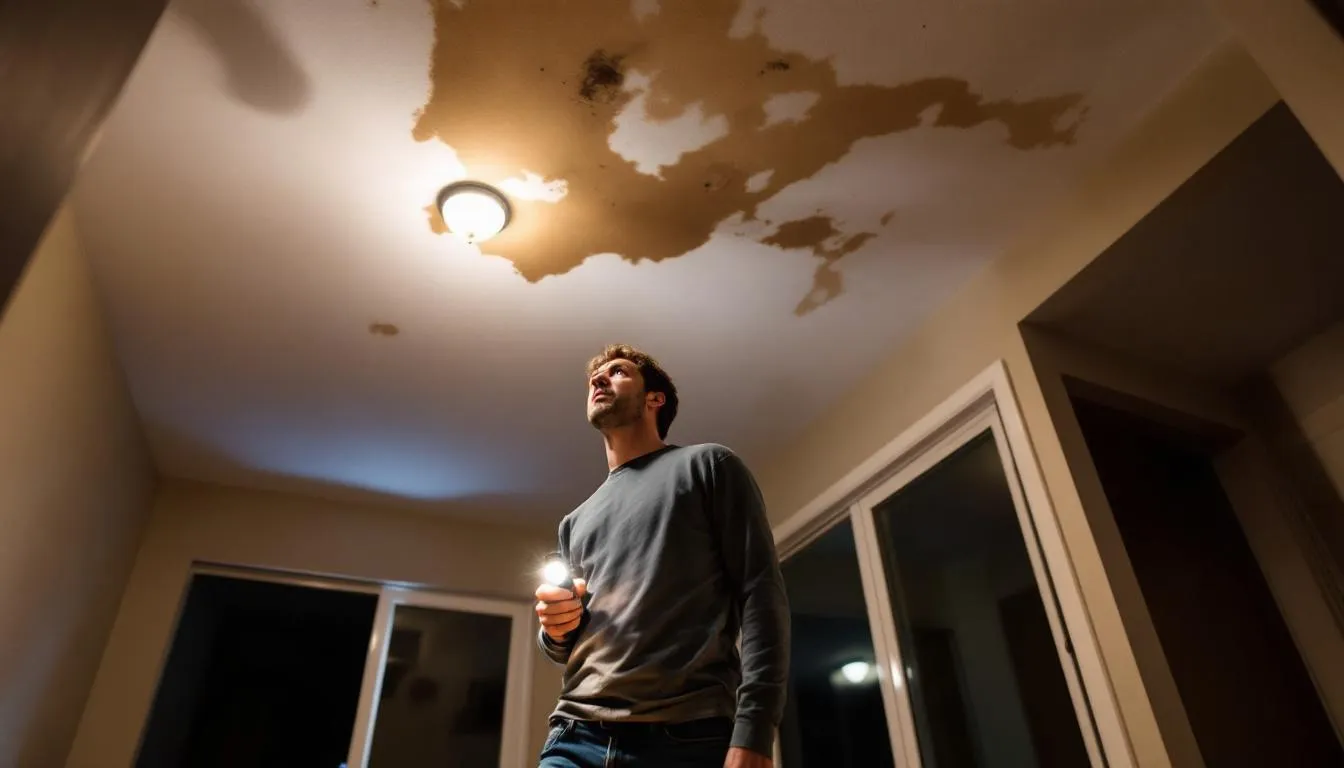
Water stains are your first red flag. These are among the most common signs of a roof leak, typically appearing as yellowish or rust-colored rings on white ceilings, with darker edges that spread over time. They’re most common near chimneys, in corners, or around light fixtures.
But stains aren’t the only sign. Watch for peeling paint or bubbling wallpaper on walls near the ceiling. These indicate moisture working its way through your drywall, and you may also notice damp drywall as a symptom of water intrusion.
A musty smell in your home—especially in upper floors or the attic—often signals hidden water damage. Wet insulation and damp wood create that distinctive odor long before you see visible water.
Mold or mildew growth near ceilings or along exterior walls is another dead giveaway. Mold thrives in damp environments, and if you spot black or green patches, moisture is definitely getting in somewhere. Be alert for other signs of leaks, such as unusual odors or structural issues that may indicate water intrusion.
When inspecting, look for obvious signs and telltale signs of damage, such as water stains, mold, or water trails. Hearing dripping sounds after rain? That’s your cue to investigate immediately. Even if you can’t see water yet, it’s collecting somewhere in your ceiling or walls. If water pools and causes the ceiling to bulge, there is a risk of ceiling collapse if the accumulation becomes excessive.
Don’t ignore damaged or missing shingles, including missing shingles or cracked and curling shingles, when you glance at your roof from the ground. These expose your underlayment to the elements and create entry points for water.
Understanding How Water Travels Through Your Roof
Here’s what throws most homeowners off: water rarely travels straight down.
When water gets through your roof, it hits the underside of your roof deck and starts moving. It follows the path of least resistance—along rafters, across the top of insulation, through nail holes. Water can travel several feet horizontally before it finally drips through your ceiling.
That stain in your living room? The actual leak in your roof could be three feet uphill from where you see the damage.
This is why finding a roof leak requires detective work. You can’t just look directly above the stain and expect to find the problem. You need to trace the water back to its source.
Water also pools in your attic until it finds an escape route. It might sit on top of insulation, soak into wood, or puddle on your attic floor before finding a light fixture or soffit vent to drip through. Moisture buildup in these areas can lead to further water damage and mold growth if not addressed.
Step 1: Start Your Search in the Attic
Inspect your attic space for signs of leaks. This is where you’ll see the clearest evidence of water intrusion.
Grab a flashlight and head up during daylight hours if possible. Natural light will help you spot problems more easily.
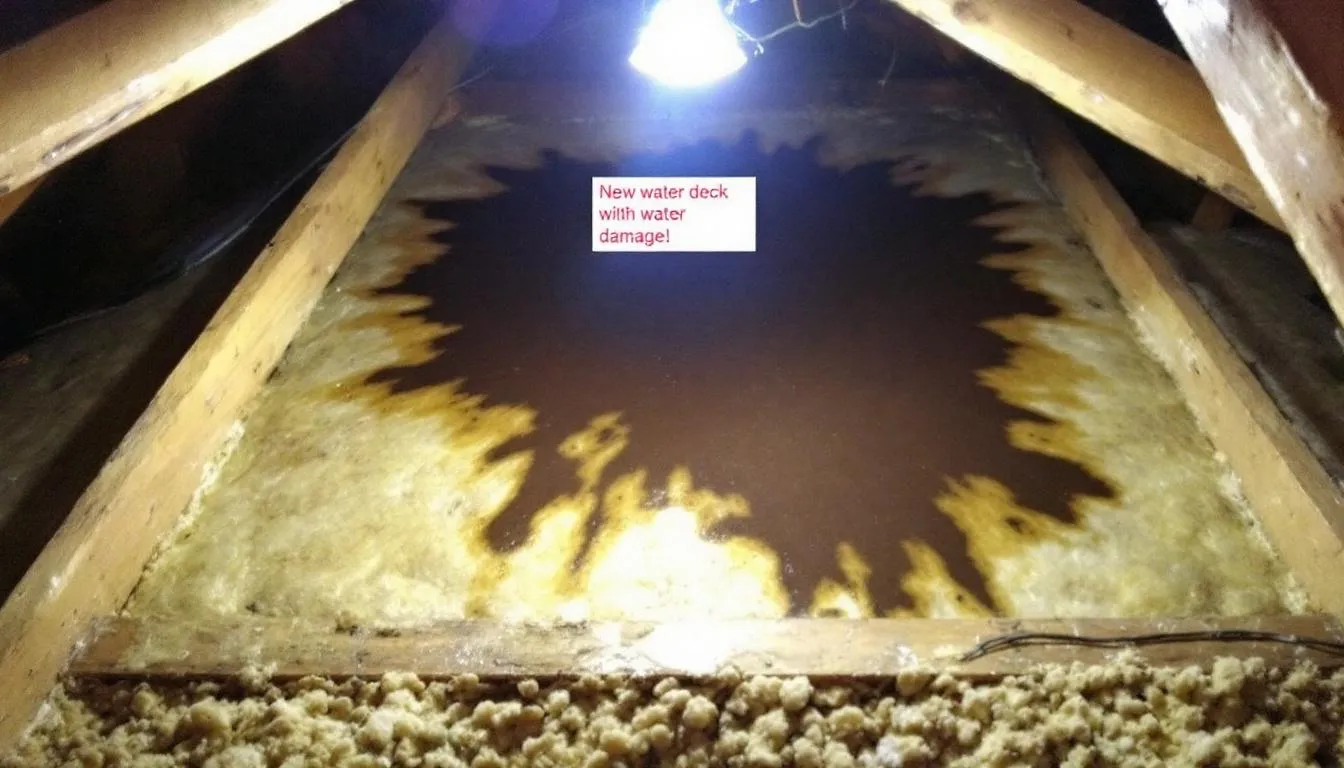
Look for water stains on the underside of your roof deck. Wet wood, moist wood, and dark spots are your first clues—these indicate possible leaks. Fresh leaks will feel damp to the touch.
Follow any water trails you find. Look along rafters and roof sheathing. The water came from somewhere higher up, so trace those dark streaks uphill toward the roof peak.
Carefully examine your insulation and all surrounding surfaces, especially around vulnerable areas. Water-damaged insulation looks compressed, darkened, or even has visible mold growth. Insulation shows water damage faster than wood does, making it a good indicator.
Turn off your flashlight and look for daylight. Any light coming through your roof (except from vents) marks a potential leak source. Small holes or gaps in your roof let both light and water through.
Look for exposed roofing nails poking through the underside of your roof deck—roofers call these “shiners.” Water can follow these nails straight into your attic during rain or when snow melts.
Pay special attention to areas around chimneys, vents, and skylights. These roof penetrations are where most leaks start.
If you go up during or shortly after heavy rain, you might catch the leak in action. Just be careful not to step through the ceiling—stay on joists or use boards to distribute your weight.
Step 2: Identify Common Leak Locations
Roof leaks aren’t random. They happen in predictable places.
Roof penetrations cause the majority of leaks. Anything that pokes through your roofing—vents, pipes, chimneys, skylights, roof joints, and vent pipes—creates a potential weak point. These are among the most vulnerable areas for leaks. It’s rare for leaks to develop in the middle of uninterrupted shingles, even on older roofs. Vulnerable areas such as roof joints, vent pipes, and skylights should be inspected regularly to prevent leaks.
Chimneys
Chimneys are leak magnets. The flashing around your chimney—those metal strips that seal the gap between masonry and roofing—fails over time.
When chimney flashing wears out or separates, water pours in during every rainstorm. The caulk sealant breaks down. The metal corrodes. Mortar joints between bricks can become so saturated during multi-day storms that water seeps right through.
If you have water stains on the ceiling near your chimney, start your investigation there.
Skylights
Skylights leak when their seals fail or when the flashing around them deteriorates. Poor installation is often the culprit—if the skylight wasn’t properly flashed during installation, it’s only a matter of time before water finds its way in.
Cracks in the skylight glass itself can also let water through, though this is less common than flashing failures.
Roof Valleys
Valleys—where two roof planes meet—are natural water channels. Every drop of rain from two roof sections funnels through these valleys.
The constant water flow makes valleys vulnerable to wear. Shingles in valleys break down faster. Valley flashing can separate or develop holes. Ice dams love to form in valleys during winter.
If you have water stains aligned with a valley, that’s your prime suspect.
Plumbing Vents and Exhaust Fans
Every pipe that exits through your roof needs proper flashing and a rubber boot seal. These rubber seals crack and deteriorate over time—Long Island’s freeze-thaw cycles are especially hard on them.
When the rubber boot fails, water runs straight down the pipe opening and into your attic.
Roof Edges and Eaves
Missing or damaged drip edge allows water to work its way under shingles at roof edges. Clogged gutters cause water to back up under the bottom row of shingles.
Ice dams that form along eaves during winter can force water under shingles and into your home.
Step 3: Conduct a Water Test
Can’t find the leak source from inside? It’s time to simulate a rainstorm.
This method requires two people—one on the roof with a garden hose, one in the attic with a flashlight. Pick a dry day so you’re not dealing with existing moisture.
Start low on the roof, downhill from where you see interior damage. Have the person on the roof soak one small section at a time, letting the water run for several minutes.
The person in the attic watches for drips or new moisture. When water appears, you’ve found your leak.
Work your way up the roof slowly. Don’t jump around or you’ll confuse the results. Methodical, section-by-section testing is the key.
Keep each test area contained. If you spray too large an area at once, you won’t know exactly where the leak is.
This test is highly effective but requires patience. Some leaks take several minutes of steady water before they reveal themselves.
Step 4: Inspect Your Roof Exterior
Once you’ve narrowed down the general area from inside, it’s time to look at the roof surface itself.
Safety first: only go on your roof if you’re comfortable and conditions are safe. Wet or icy roofs are dangerous. Steep pitches require professional equipment. If you have any doubts, call us—we’ve got the training and safety gear.
Look for obvious damage in the suspect area:
Missing or damaged shingles create direct openings for water. Shingles that are cracked, curled, or have lost their granules no longer protect your roof deck. If you find a damaged shingle, use a pry bar to carefully lift and remove it, then install a replacement shingle or new shingle that matches your existing roof.
Check the condition of flashing around chimneys, vents, skylights, and window edges. Look specifically for damaged flashing—signs include rust, separation, gaps, or movement when you push gently. Damaged flashing should be repaired or replaced to prevent leaks.
Inspect caulk and sealant around all penetrations. Cracked or missing sealant lets water through. Remove any old sealant before applying new material to ensure a proper seal. Old caulk becomes brittle and pulls away from surfaces.
Look at the shingles around nail heads. If nails have backed out or if the sealant around them has failed, water can enter.
Check valleys for damaged or separated flashing. Make sure valley shingles are properly installed and not lifting.
Examine ridge vents and roof vents for damage or improper installation. The flashing underneath these vents is often where problems hide.
While homeowners can address some simple leak issues, understanding the limitations of DIY repairs and recognizing when professional expertise becomes necessary helps prevent inadequate fixes that may worsen problems over time.
Appropriate DIY temporary measures focus on minimizing damage while arranging professional repairs.
Placing buckets to catch dripping water, covering leaks with waterproof tarps secured with sandbags, and applying temporary roof patch materials can provide short-term protection. However, these measures should never be considered permanent solutions.
Safety risks and liability concerns with DIY roof work extend beyond immediate injury potential. Before attempting to climb or use a ladder, always inspect the roof from ground level to identify visible issues and ensure the ladder is set up on a stable, even surface.
Improper repairs may void manufacturer warranties, create additional leak sources, or mask underlying problems that continue to cause damage.
Insurance coverage may also be affected if DIY repairs contribute to subsequent damage.
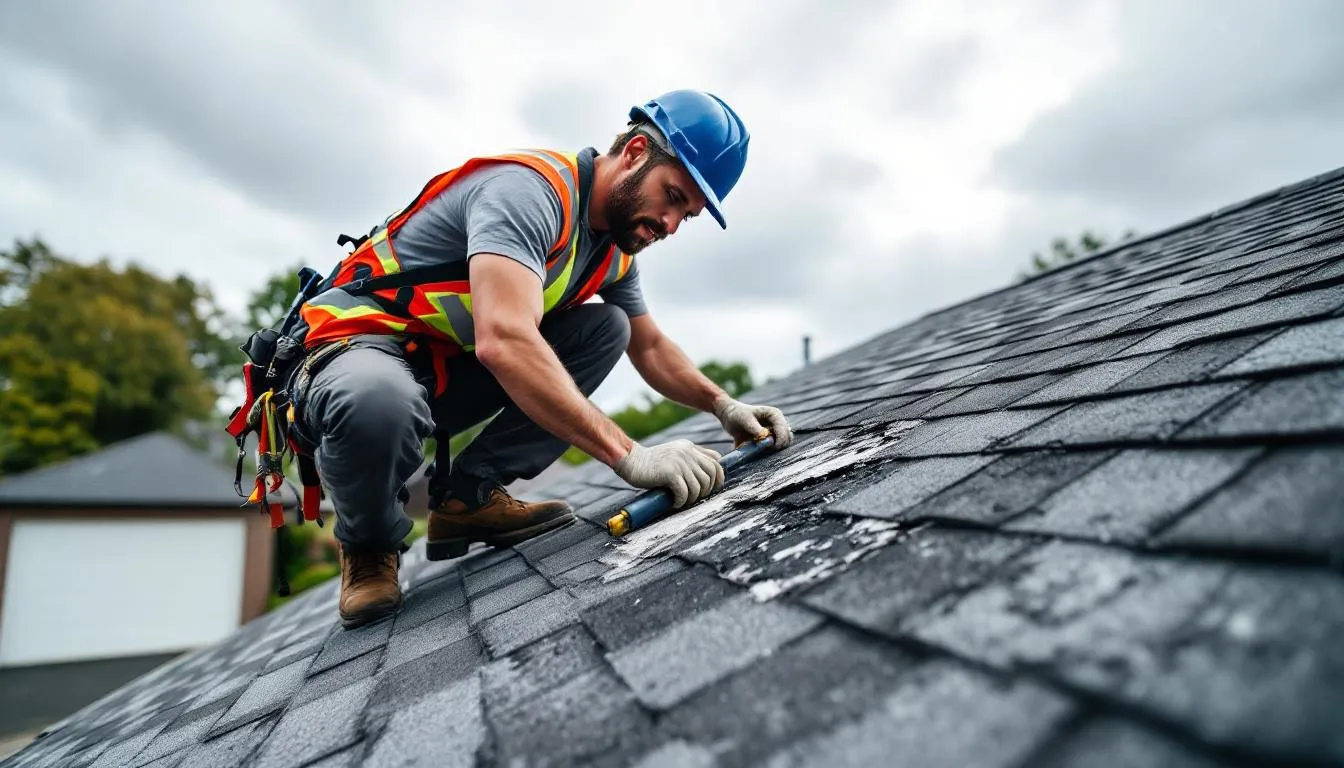
Cost considerations often favor professional repairs when comprehensive analysis reveals the scope of necessary work.
While DIY repairs may seem less expensive initially, inadequate fixes frequently lead to recurring problems and more extensive damage that costs significantly more to address properly.
Expertise become apparent in leak diagnosis accuracy, repair quality, and long-term effectiveness.
Professional services like County Roofing Services utilize advanced detection methods, provide warranties on work performed, and ensure repairs meet manufacturer specifications and local building codes.
When to Call a Professional Roofer
Some roof leak investigations require professional expertise and equipment.
Call County Roofing Systems if:
You can’t safely access your roof or attic. No leak is worth risking a fall or injury.
You’ve searched but can’t locate the source. Our team has 35 years of experience finding even the trickiest leaks.
The leak appears widespread or severe. Multiple entry points or significant water damage needs professional assessment.
You found the leak but it’s in a complex area. Flashing repairs around chimneys, skylight replacements, or valley work require specialized skills.
Your roof is old and likely has multiple problems. If your roof is 20+ years old, one leak often signals broader issues.
Our team of fully certified professionals uses advanced detection methods when standard techniques don’t work. Infrared cameras can spot moisture that’s not visible to the naked eye. Electronic leak detection pinpoints breaches in flat or low-slope roofs.
We also understand Long Island’s specific challenges. Nor’easters, heavy snow loads, ice dams, salt air near the coast—these conditions create unique roofing problems. Our local expertise makes a difference.
Most importantly, we fix leaks right the first time. Finding the leak is only half the battle. Proper repairs prevent the same leak from coming back.
Understanding the Cost of Ignoring Roof Leaks (Cost and Timeline)
Delaying roof leak repairs is expensive.
A simple flashing repair might cost a few hundred dollars today. Wait six months and you’re looking at roof deck replacement, new insulation, drywall repairs, and potential mold remediation—easily thousands of dollars more.
Water damage spreads exponentially. That small stain on your ceiling represents gallons of water that have already soaked into your roof deck, rafters, and insulation. Standing water, often caused by clogged gutters or poor drainage, can accelerate structural damage and promote rapid mold growth.
Mold develops in as little as 24-48 hours in wet conditions. Once you have a mold problem, you need professional remediation—another significant expense.
Structural damage is the ultimate consequence of ignored leaks. Rotted rafters require major repairs. Compromised roof decking needs replacement. These aren’t cosmetic issues—they affect your home’s safety.
Your home’s energy efficiency plummets when insulation gets wet. Saturated insulation loses its R-value and needs replacement. You’ll see higher heating and cooling bills until it’s fixed.
Insurance companies may deny claims if you knew about a leak and didn’t address it promptly. They cover sudden damage, not neglected maintenance.
Typical cost ranges
Common leak repairs vary significantly based on damage extent and accessibility. Simple shingle replacement may cost $300-$500, while flashing repairs around chimneys or complex penetrations can range from $500-$1,500. More extensive repairs involving roof deck replacement or structural damage may cost several thousand dollars.
Factors affecting pricing include:
Roof accessibility
Materials required
Labor complexity
And local market conditions
Steep roofs require additional safety equipment and time, while specialty materials or custom flashing work increases costs. Emergency repairs during storms or after hours typically carry premium pricing.
Repair Type | Cost Range | Timeline | Complexity |
|---|---|---|---|
Shingle Replacement | $300-$500 | 1-2 hours | Low |
Flashing Repair | $500-$1,500 | 2-4 hours | Medium |
Valley Repair | $750-$2,000 | 4-8 hours | High |
Emergency Tarping | $200-$600 | 1-2 hours | Low |
Insurance considerations play a crucial role in repair cost management as well.
Storm damage is typically covered under homeowner’s policies, while general wear and tear usually isn’t. Proper documentation of damage, including professional assessments, strengthens insurance claims and may be required for coverage approval.
Common Roof Leak Myths Debunked
Let’s clear up some misconceptions about roof leaks.
Myth: A small leak isn’t urgent.
Reality: Small leaks cause big damage over time. That tiny drip is rotting your roof deck, destroying insulation, and creating perfect conditions for mold. Address every leak immediately.
Myth: You can just caulk over flashing problems.
Reality: While caulk might provide a temporary fix, it’s not a permanent solution. Failed flashing needs proper replacement, not just a caulk band-aid.
Myth: Leaks only happen on old roofs.
Reality: We find leaks on brand-new roofs when installation was faulty. We also find leaks on middle-aged roofs after storm damage. Age is one factor, but not the only one.
Myth: If it’s not dripping, it’s not a leak.
Reality: Slow leaks cause damage for months before you see dripping. Water stains, musty odors, and mold appear well before visible water.
Myth: You can wait until spring to fix a winter leak.
Reality: Every day you wait causes more damage. Water expands when it freezes, making the leak worse. Winter repairs are possible—we do them all the time.
What to Do While Waiting for Repairs
Found your leak but can’t fix it immediately? Here’s how to minimize damage while you wait.
Place buckets or containers under active drips. This prevents water from soaking into floors or saturating insulation further.
Move furniture, electronics, and valuables away from the affected area. Water stains on your ceiling mean more water could come through.
If water is pooling on your ceiling and creating a bulge, carefully puncture the lowest point with a small screwdriver. This lets trapped water drain in a controlled way instead of bursting through suddenly.
For emergency roof patching during a storm, you can use a heavy-duty tarp. Extend the tarp from above the leak area down past the eaves. Weight it down with boards (never nails or screws—you’ll create more leak points). This is temporary only.
Document everything with photos. You’ll need this for insurance claims and for showing our repair team the full extent of damage.
Call us as soon as possible. We offer emergency roof repair services for Long Island homeowners. When you have an active leak, every hour counts.