
UPDATED FOR 2026
How Roof Pitch Affects Cost & Maintenance on Long Island
Roof pitch affects what materials your home can use to roof replacement and repair costs. County Roofing explains what Long Island homeowners need to know.
Key Takeaways:
- Roof pitch is measured as a ratio. A 6:12 pitch means the roof rises 6 inches for every 12 inches of horizontal run. The higher the first number, the steeper the roof.
- Your pitch determines which materials you can use. Standard asphalt shingles work on most pitched roofs, but low-slope and flat roofs require membrane systems like EPDM, TPO, or modified bitumen.
- Steeper roofs cost more to install and repair. The added surface area, safety equipment, and slower installation pace on steep pitches can increase labor costs by 25% or more compared to a moderate slope.
- Long Island homes span every pitch category. Postwar capes and ranches tend to sit in the 4:12 to 6:12 range. Colonials and Tudors run steeper. And flat sections on additions, garages, and porches are common across both Nassau and Suffolk County.
- Pitch affects more than just aesthetics. It influences drainage, ventilation, ice dam risk, attic space, wind resistance, and how long your roof lasts before it needs attention.
- A professional assessment tells you what you’re working with. Most homeowners don’t know their roof’s pitch offhand. A quick inspection gives you that number and everything that follows from it.
Your roof’s pitch is one of those things you probably never think about.
Not until someone tells you it’s the reason your project costs what it costs. Or the reason you can’t use the material you wanted. Or the reason ice dams keep forming in the same spot every winter.
Pitch is the angle of your roof’s slope. It affects which materials work, how much labor goes into installation and repair, how water and snow drain, and how your attic ventilates.
For Long Island homeowners, where the housing stock ranges from flat-roofed mid-century ranches to steep-pitched Tudors and everything in between, understanding what your pitch means is worth a few minutes of your time.


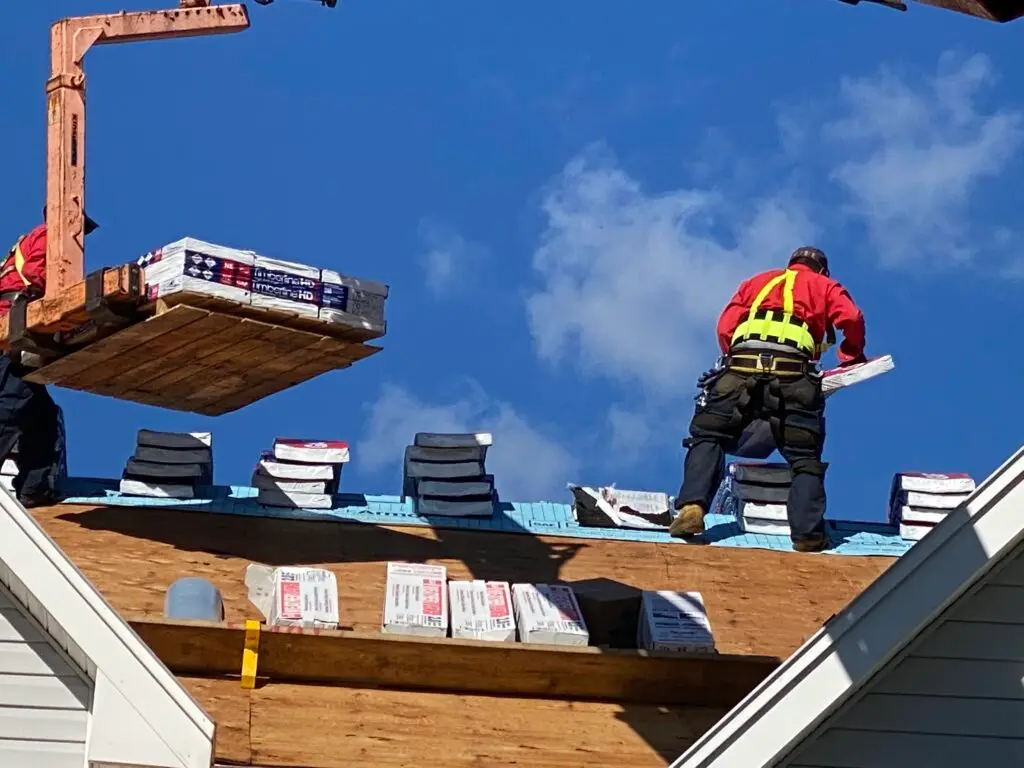
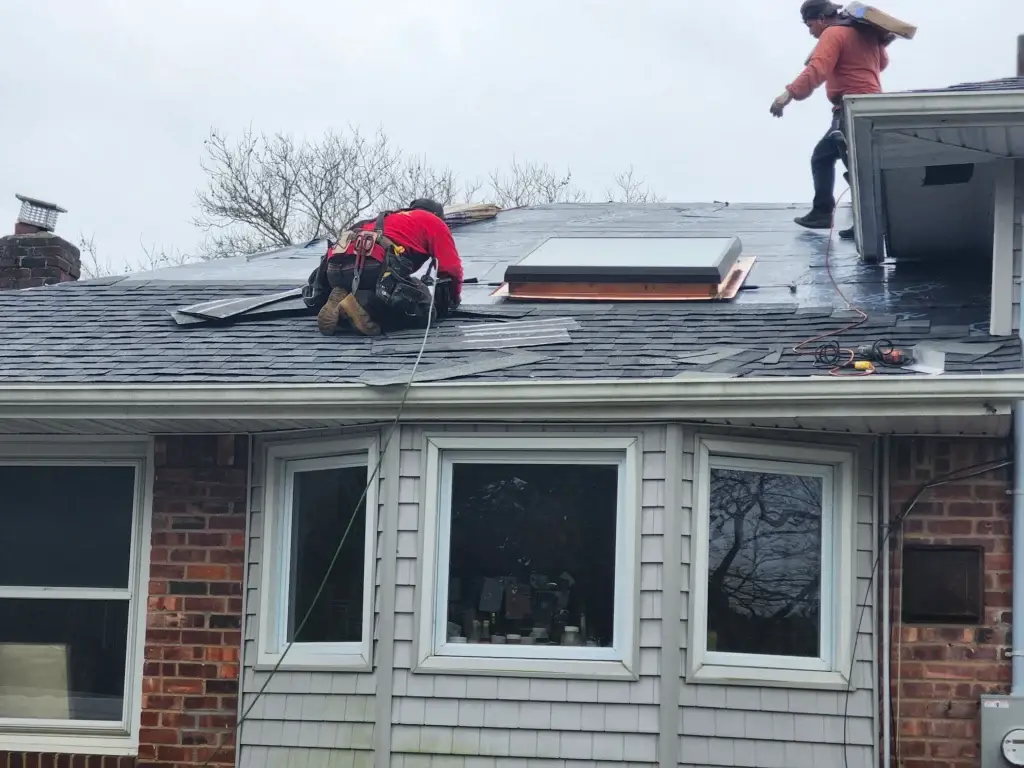
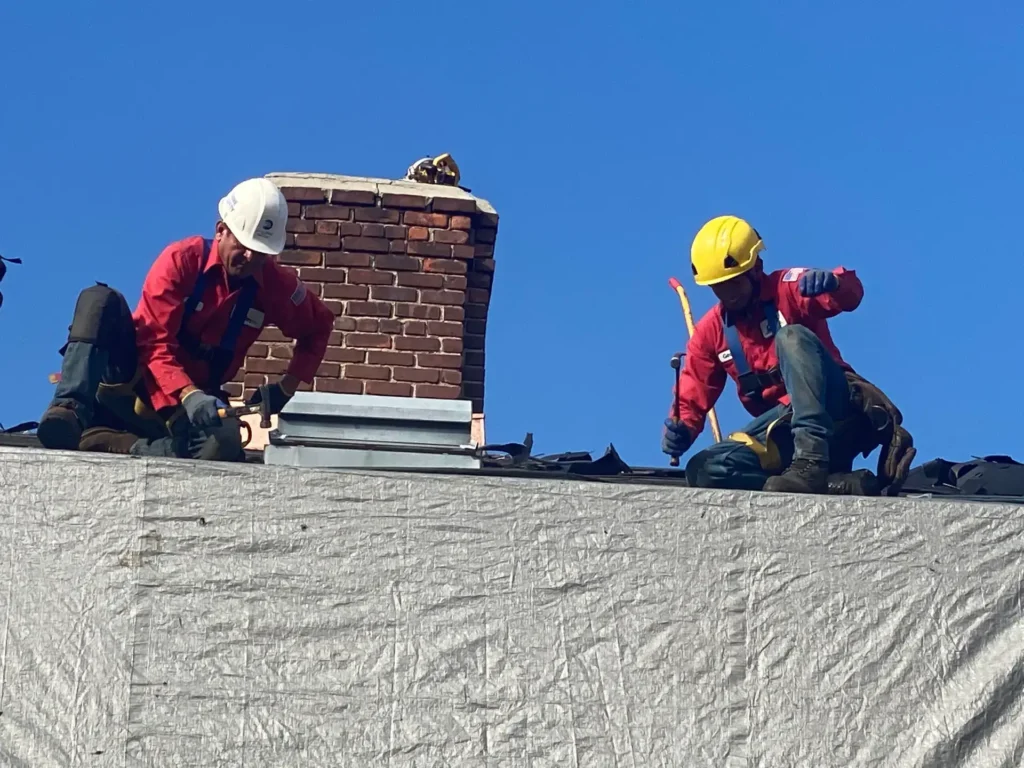
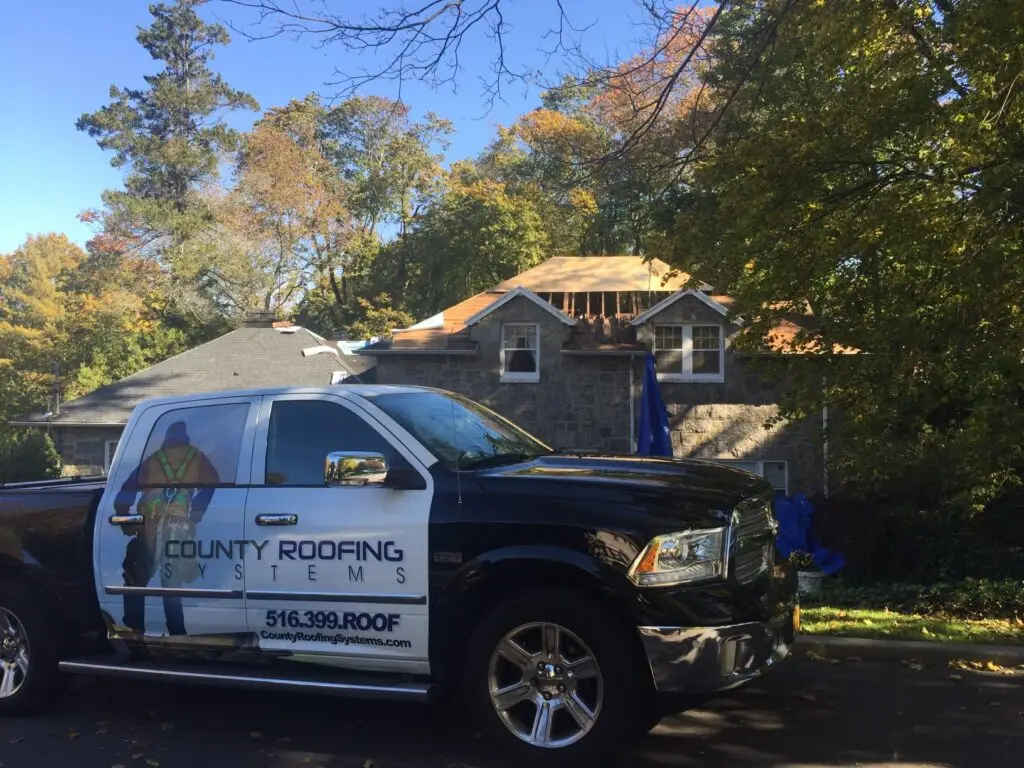
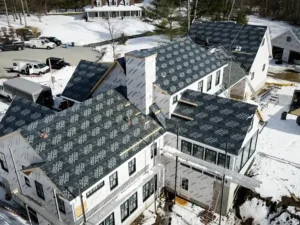
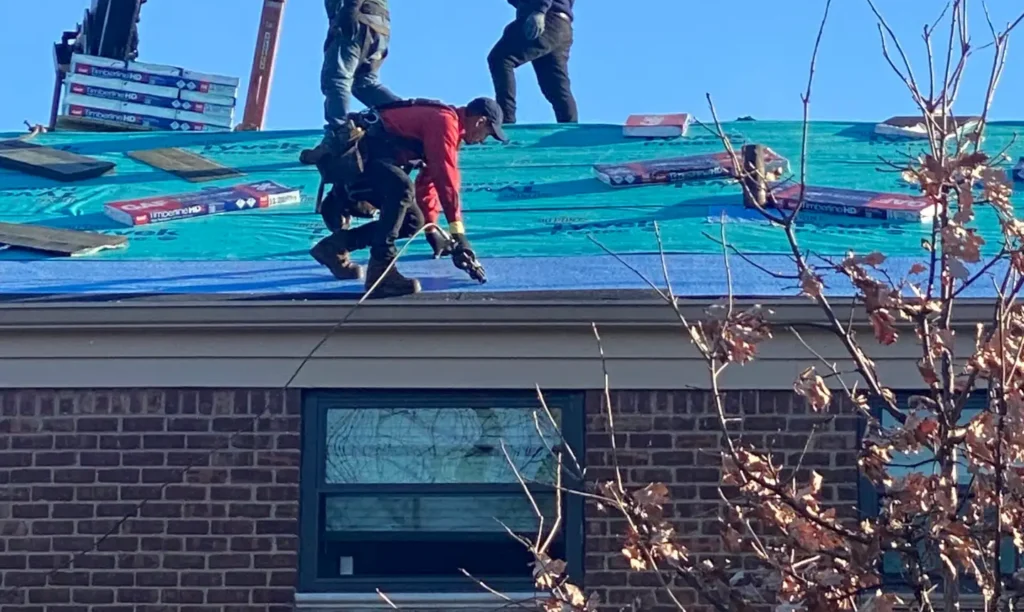
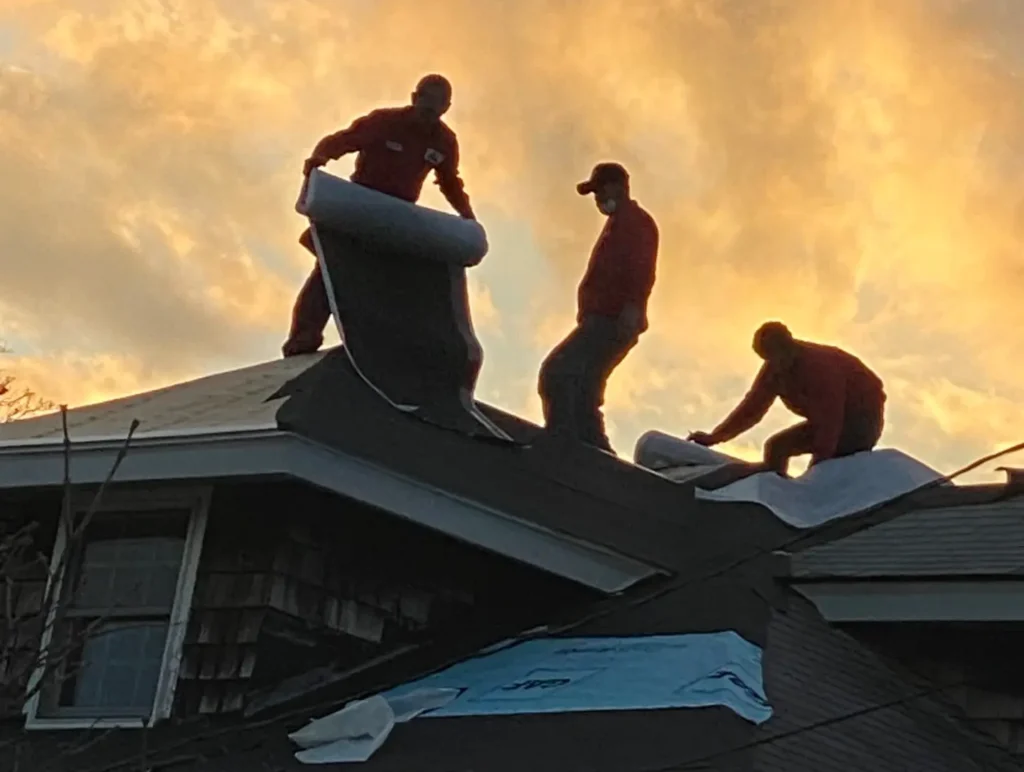
County Roofing Systems team repairing and replacing roofs throughout Long Island.
What Roof Pitch Actually Means
Roof pitch is expressed as a ratio. The first number is how many inches the roof rises vertically. The second number is always 12, representing 12 inches of horizontal distance.
So a 6:12 pitch means the roof goes up 6 inches for every foot it runs horizontally. Simple enough. Here’s how the categories break down:
Flat to Low-Slope (0:12 to 3:12)
The flat roofs and near-flat sections you see on commercial buildings, ranch home additions, enclosed porches, and attached garages across Long Island. They look level from the ground but do have a slight slope for drainage. These require specialized membrane roofing systems rather than traditional shingles.
Moderate Pitch (4:12 to 7:12)
This is where most Long Island residential homes land. Postwar capes in Levittown and Hicksville. Ranches in Deer Park and Commack. Split-levels scattered across Nassau and Suffolk County. Moderate pitches support the widest variety of materials and are the most cost-effective to install and maintain.
FINANCE YOUR HOME IMPROVEMENT PROJECT TODAY
0% Financing, Quick and Easy Approval
With nearly four decades serving homeowners under our belt, we know what’s needed to make your roofing project a success.
When you work with County Roofing, you get only the best. As little as 0% interest on approval for 5 years, quick approval, easy pay, and all backed by the best guarantees in the industry.
Steep Pitch (8:12 to 12:12)
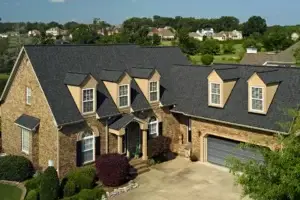
Colonials, Tudors, and custom homes on the North Shore. Communities like Manhasset, Old Westbury, and Cold Spring Harbor often have steeper pitches. These roofs shed water and snow quickly and offer dramatic curb appeal, but they cost more to work on.
Very Steep Pitch (12:12 and Above)
A 12:12 pitch is a 45-degree angle. You’ll find this on certain Victorian-era homes, turret features, and dramatic architectural elements. These require harness systems and specialized safety rigging for any work.
How Pitch Affects Your Material Options
This is where pitch goes from an abstract number to a real decision point. Not every roofing material works at every pitch.
Low-Slope and Flat Roofs
These can’t use standard asphalt shingles. The slope isn’t steep enough to shed water effectively, and shingles installed on a low-slope surface will eventually allow water to back up underneath the overlap and penetrate the deck.
These roofs need single-ply membrane systems like EPDM, TPO, or modified bitumen. They’re designed to create a continuous waterproof barrier rather than relying on gravity-driven drainage.
Having said that, many Long Island homes have a combination of both. A colonial with a 6:12 main roof might have a 2:12 flat section over the back porch or a bump-out addition. That means two different roofing systems on the same house.
It also means you need a contractor who knows how to transition between them properly. Bad transitions between pitched and flat sections are one of the most common sources of roof leaks we see across Nassau and Suffolk County.


LIFETIME MATERIAL, LIFETIME WORKMANSHIP WARRANTY
Get Industry-Leading Protection
County Roofing Systems can offer you the longest warranties available because we’re a CertainTeed SELECT ShingleMaster, a certification only 1% of contractors qualify for.
We have over 35 years of experience living up to CertainTeed’s tough standards. That means CertainTeed trusts our home improvement work enough to stand behind it with their best guarantees.
To learn more about the industry-leading LIFETIME material, LIFETIME workmanship warranty, click the button below to call us today:
Moderate-Pitch Roofs
These give you the broadest selection. Standard architectural shingles from GAF, Owens Corning, and CertainTeed are designed to perform best in this range. Metal roofing, slate, and cedar shake are also options.
For most Long Island homeowners, this pitch range means you’re choosing based on preference, budget, and aesthetic goals rather than being limited by what the pitch will allow.
Steep-Pitch Roofs
These can use the same materials as moderate pitches, but the installation is different. Shingles on steep roofs may require additional fasteners per manufacturer specs because gravity pulls harder on each shingle. Hand-sealing is often necessary.
The material itself is also more visible from the street at a steep angle. That’s why homeowners with steep pitches tend to invest in premium designer or luxury shingles that look better when viewed head-on.
How Pitch Affects Cost
This is the part that catches most homeowners off guard. Two houses with the same footprint can have significantly different roofing costs based solely on pitch.
Surface Area Increases with Pitch
A roof with a 4:12 pitch covering a 2,000 square foot footprint has roughly 2,055 square feet of actual roof surface. That same footprint with a 12:12 pitch? Approximately 2,828 square feet. That’s nearly 38% more material. You’re paying for every square foot of it.
Labor Costs Increase with Steepness
Moderate-pitch roofs are the most efficient to work on. The crew can move around safely without harness systems, materials stay in place, and the workflow is straightforward.
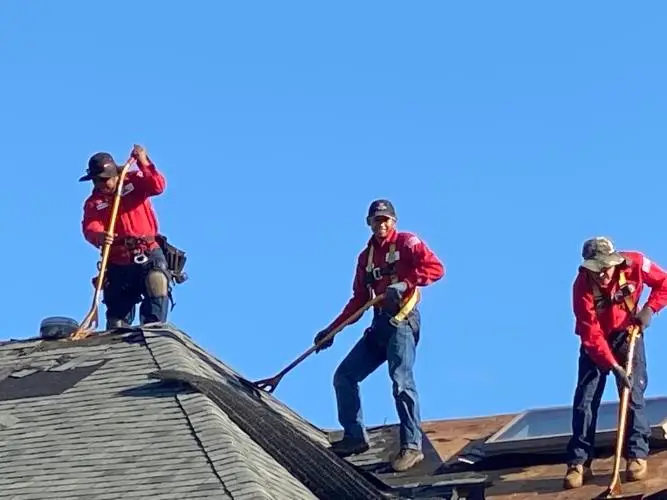
Once you get above 8:12, everything slows down. Steeper roofs require toe boards, roof jacks, and sometimes full harness rigs. Every step takes longer. Every shingle takes more care to position. The crew installs fewer squares per day, and that directly increases the labor line on your estimate.
Repairs Cost More on Steep and Flat Roofs
Steep roofs are harder to access, so even a minor shingle repair costs more in labor. Flat roofs are easy to walk on, but the membrane systems they use require specialized repair techniques that shingle roofers may not be equipped for.
The truth is, moderate-pitch homes in the 4:12 to 7:12 range tend to have the lowest maintenance costs over time.
Waste Factor Increases on Complex Rooflines
Homes with intersecting gable lines, dormers, valleys, and hip-to-gable transitions generate more material waste during installation. Many Long Island colonials and split-levels have exactly this kind of complexity.
A skilled contractor accounts for this in the estimate. A less experienced one might not. And the shortfall shows up as a change order mid-project.
Pitch and Long Island Weather
Long Island’s climate puts specific demands on roofs. Pitch plays directly into how well a roof handles them.
Ice Dams
Low-pitch roofs and areas with poor attic ventilation are the most vulnerable. When heat escapes through the roof deck, it melts snow from underneath. The meltwater runs down to the eave, refreezes, and creates a dam that forces water back up under the shingles.
Moderate to steep pitches with proper ventilation and ice-and-water shield at the eaves handle this much better. We see ice dam damage every spring on postwar homes across Smithtown, Huntington, and Hempstead where the original ventilation was never designed for modern insulation levels.
Wind
Steeper roofs present more surface area to wind. That means higher uplift forces during nor’easters and summer storms.
Keep in mind, this doesn’t mean steep roofs are worse in wind. It means they need to be fastened correctly. GAF’s Timberline HDZ with LayerLock technology and Owens Corning’s Duration with SureNail are both engineered for high-wind performance. But the nailing pattern and installation technique have to match the pitch for the warranty to hold.
Drainage and Ponding
Flat and low-slope roofs are prone to ponding water if the original slope was insufficient or if the deck has deflected over time. Standing water accelerates membrane degradation and adds structural load.
This is particularly common on older additions and enclosed porches across Long Island where the original framing was marginal.
Snow Load
Steep roofs shed snow quickly, which reduces structural load but creates ground-level hazards and potential gutter damage. Low-pitch roofs hold snow longer, increasing the load on the structure.
For most Long Island homes in the moderate pitch range, the framing handles typical snow loads fine. But older homes with undersized rafters can run into trouble during heavy winters.
What This Means for Your Next Roofing Project
If you’re planning a roof replacement or evaluating whether your roof needs attention, pitch is one of the first things your contractor should assess. It determines which materials are appropriate, what the installation involves, how the estimate is structured, and what ongoing maintenance looks like.
For Long Island homes specifically, the most common scenario we see is a moderate-pitch main roof with one or two low-slope sections. That combination requires a contractor who installs both shingle systems and membrane systems at a high level. And who knows how to detail the transition between them so you don’t end up with a leak at every pitch change.
County Roofing Systems has been handling exactly these situations across Nassau County and Suffolk County for over 35 years. We’re triple-certified by GAF, Owens Corning, and CertainTeed. Our crews work on every pitch category, from flat commercial roofs to steep residential peaks.
Keith Schmied is on-site for every project to make sure the work meets the standard. Regardless of how steep the slope or how complex the roofline.
We’re also including FREE gutters and leaders with the purchase of any new roofing system right now. If your roof replacement has been on the radar for 2026, spring is the time to get it scheduled before contractor availability tightens up for summer.
Call us at 631-400-7663 or click here to schedule your free estimate.

Keith Hutchinson Schmied
We Serve the Entire Long Island Area
We serve all of Long Island, from Nassau to Suffolk County. Whether you’re on the coast or in the city, we know the area’s local design preferences, construction needs, and climate challenges.
Call us today for a free estimate: (631) 400-7663