Long Island's
Flat Roof Experts
Flat Roofing Solutions for Homes & Businesses
FLAT ROOFING SERVICES BUILT FOR LONG ISLAND
We're Long Island's Go-To Flat Roofing Expert
Looking to install a new flat roof on your property, or need your existing flat roof serviced?
Your Long Island property deserves flat roofing services from someone who understands Long Island’s unique coastal climate challenges and modern roofing systems.
Long Island’s coastal location creates demanding conditions for flat roofs. Salt air from the Atlantic Ocean and Long Island Sound accelerates membrane deterioration and corrodes metal components.
Temperature extremes cause thermal expansion and contraction that stress seams and fasteners. Heavy rainfall and occasional hurricanes test drainage systems and waterproofing integrity.
Winter brings freeze-thaw cycles and snow loads that flat roofs must withstand without proper pitch to shed water naturally.
County Roofing Systems has been installing and repairing flat roofs throughout Long Island for more than 35 years. Our team understands exactly how Nassau County and Suffolk County weather impacts different flat roofing systems.
We’ve completed hundreds of flat roof projects across Long Island—from commercial buildings in Nassau County to residential properties in Suffolk County—and know the specific challenges your flat roof faces.
Whether you need a new flat roof installation, complete membrane replacement, emergency leak repairs, or preventive maintenance, our experienced crews deliver quality workmanship using materials engineered for Long Island’s coastal climate. We specialize in flat roofing systems and stay current with the latest technologies and installation techniques.
We utilize newer roofing technology, including advanced membrane roofing systems, to provide innovative and durable solutions for Long Island properties.
Call County Roofing Systems today at (631) 400-7663 or use the form below for your free flat roof inspection and estimate.
THE BEST WARRANTIES IN THE INDUSTRY- ONLY 2% OF ROOFING COMPANIES CAN OFFER
25-Year Labor, 50-Year Material Warranty
We’ve met the toughest requirements in the residential roofing industry- and we use only the best materials.
That’s why we stand behind our work with the best warranties in the industry- warranties only 2% of the roofing industry can offer.
Your house deserves the best roofing warranty on the market. Give us a call today and get a brand new roof with a 25-year labor, 50-year material warranty from the best roofing contractor throughout Long Island and New York.
Types of Flat Roof Materials: Which Is Right for You?
Start with the best materials, then go from there.
Choosing the Right Membrane for Your Long Island Property
Selecting the appropriate flat roofing material impacts your roof’s performance, longevity, maintenance requirements, and total cost of ownership.
County Roofing Systems installs all major flat roofing membrane types and helps Long Island property owners choose the best system for their specific needs.
TPO (Thermoplastic Polyolefin) Roofing
TPO has become the most popular choice for commercial flat roofs throughout Long Island.
This single-ply membrane features heat-welded seams that create bonds stronger than the material itself, virtually eliminating seam failures. White TPO reflects up to 87% of solar radiation, dramatically reducing cooling costs during Long Island’s hot, humid summers.
TPO membranes resist UV damage, ozone exposure, chemical exposure, punctures, and bacterial growth. The material remains flexible in cold temperatures while withstanding summer heat without deteriorating.
TPO accommodates building movement without cracking and typically lasts 25-30 years with minimal maintenance. It’s ideal for commercial buildings, large residential flat roofs, and properties prioritizing energy efficiency.
EPDM (Rubber Membrane) Roofing
EPDM rubber roofing has protected buildings for over 50 years with proven reliability and performance.
This synthetic rubber membrane handles temperature extremes from -40°F to 300°F, making it exceptionally durable in Long Island’s variable climate. EPDM resists ozone and UV radiation naturally without requiring protective coatings.
Available in black and white formulations, EPDM offers flexibility in energy performance choices. Black EPDM absorbs heat—beneficial in winter—while white EPDM reflects heat for cooling savings.
The material installs quickly using fully adhered, mechanically attached, or ballasted methods. Repairs are straightforward when damage occurs, and EPDM typically delivers 25-30 years of service.
EPDM’s competitive pricing makes it popular for residential flat roofs, small commercial buildings, and budget-conscious projects without sacrificing quality or longevity. It performs exceptionally well in coastal environments like Long Island.
PVC (Polyvinyl Chloride) Roofing
PVC represents the premium option in single-ply flat roofing membranes.
This material offers superior strength, chemical resistance, and fire ratings compared to other membrane types. PVC’s heat-welded seams and exceptional durability make it ideal for demanding applications including restaurant roofs exposed to grease, industrial buildings with chemical exposure, and high-traffic roofs.
PVC membranes resist punctures, tears, and microbial growth while maintaining flexibility throughout their service life. The material reflects solar heat effectively, reducing energy costs.
PVC’s superior strength means it can be installed in thinner gauges while maintaining performance, potentially reducing material costs despite higher per-square-foot pricing.
With proper installation and maintenance, PVC roofs regularly exceed 30-year lifespans. The material’s resistance to Long Island’s salt air and harsh weather makes it an excellent long-term investment for properties requiring maximum durability and minimal maintenance.
Modified Bitumen Roofing
Modified bitumen systems combine traditional built-up roofing reliability with modern polymer technology.
These multi-ply systems consist of asphalt modified with plastic or rubber polymers, reinforced with fiberglass or polyester, and surfaced with mineral granules or reflective coatings.
Modified bitumen excels in puncture resistance and handles foot traffic better than single-ply membranes. The multi-ply construction provides redundancy—if the top layer develops issues, underlying layers continue protecting the building.
This makes modified bitumen ideal for roofs requiring regular maintenance access or properties in areas with debris concerns.
Installation flexibility is another advantage. Modified bitumen can be torch-applied, cold-applied, or self-adhered depending on building requirements and fire code restrictions.
The systems perform well in temperature extremes and typically last 20-25 years. For Long Island properties wanting traditional roofing performance with modern improvements, modified bitumen offers an excellent balance.
Built-Up Roofing (BUR)
Built-up roofing represents the traditional flat roofing method with over a century of proven performance.
BUR systems consist of alternating layers of bitumen (asphalt or coal tar) and reinforcing fabrics, topped with an aggregate surface or reflective coating. The multiple layers create a thick, durable membrane.
While less common for new installations today, BUR systems offer excellent waterproofing, superior fire resistance with gravel surfacing, and proven longevity—many BUR roofs exceed 30 years. The aggregate surface protects the membrane from UV damage and physical impacts while providing excellent hail resistance.
BUR works well for Long Island properties with existing built-up systems, buildings requiring maximum fire protection, or owners preferring traditional roofing methods. The material handles thermal cycling and coastal weather effectively.
However, BUR installations are labor-intensive, heavier than modern membranes, and repairs can be more complex than single-ply systems.
County Roofing Systems helps Long Island property owners evaluate these options based on building type, budget, performance priorities, and long-term ownership plans. We provide honest assessments of which materials best suit your specific situation.
Flat Roof Installation Methods
For Long Island Homes and Properties
How your flat roof membrane attaches to the building directly impacts performance, longevity, and wind resistance.
County Roofing Systems masters all major installation methods and selects the appropriate technique based on your building structure, membrane type, local building codes, and performance requirements.
Fully Adhered Installation
Fully adhered systems bond the membrane directly to the substrate using specialized adhesives or hot asphalt.
This method creates a continuous bond across the entire roof surface, providing maximum wind uplift resistance—critical for Long Island’s coastal location where hurricanes and nor’easters bring extreme winds.
Fully adhered installation prevents membrane billowing in high winds, reduces noise from wind movement, and allows moisture in the substrate to escape through permeable adhesives. This method works with all membrane types and is often required by building codes in coastal wind zones.
It’s the preferred method for taller buildings and areas with severe weather exposure.
The technique requires careful substrate preparation—any irregularities telegraph through the membrane and can cause premature wear. Proper adhesive application is critical for performance. Our experienced crews ensure complete adhesion without voids that could allow water infiltration or wind uplift.
Mechanically Attached Installation
Mechanically attached systems use specialized fasteners and plates to secure the membrane to the roof deck.
Fasteners space according to engineered patterns that provide adequate wind resistance while minimizing penetrations. Seams receive additional reinforcement through heat welding, tape, or adhesive.
This method installs faster than fully adhered systems and costs less in materials and labor. Mechanical attachment accommodates slight substrate irregularities better than adhesion and allows faster installation in cooler weather when adhesives may not bond properly.
The technique works well for large commercial roofs where installation speed matters.
However, mechanically attached systems create multiple penetrations through the membrane—each requiring proper sealing to prevent leaks. Wind resistance depends on proper fastener spacing and plate installation. County Roofing Systems follows strict engineering specifications to ensure mechanically attached roofs meet Long Island’s coastal wind requirements while providing long-term watertight performance.
Ballasted Installation
Ballasted systems use heavy materials—typically river rock, pavers, or concrete blocks—to hold the membrane in place through weight rather than adhesives or fasteners.
The membrane attaches only at the perimeter, penetrations, and any inside corners. Ballast distributes weight evenly across the roof surface.
Ballasted installations offer several advantages: minimal roof penetrations reduce leak potential, installation completes quickly without adhesives or extensive fastening, the ballast protects the membrane from UV exposure and physical damage, and thermal mass from ballast reduces temperature fluctuations in the building.
This method requires adequate structural capacity to support ballast weight—typically 10-15 pounds per square foot. Building codes restrict ballasted systems in high-wind coastal areas due to ballast becoming projectiles during hurricanes.
Nassau and Suffolk County regulations often prohibit or severely restrict ballasted roofing in coastal wind zones.
Where permitted, ballasted systems work well for warehouses, storage facilities, and buildings with robust structural capacity. The method suits property owners wanting minimal roof penetrations and quick installation. However, maintenance and inspections require moving ballast to access the membrane.
Self-Adhered Installation
Self-adhered membranes feature factory-applied adhesive protected by a release liner.
Installers remove the liner and press the membrane onto the prepared substrate, creating a bond without additional adhesives, heat, or fasteners. This method has gained popularity for smaller flat roofs and residential applications.
Self-adhered systems install cleanly without torches, hot asphalt fumes, or adhesive odors—important for occupied buildings and residential properties. Installation proceeds safely in enclosed areas and sensitive environments.
The method eliminates concerns about improper adhesive application since bonding agents are factory-applied and quality-controlled.
Self-adhered membranes work excellently for Long Island residential flat roofs, small commercial buildings, additions, and roof sections over occupied spaces. The technique requires meticulous surface preparation—any dust, moisture, or irregularities prevent proper adhesion. Our crews prepare substrates carefully and install self-adhered membranes according to strict temperature and weather requirements.
Torch-Applied Installation
Torch-applied modified bitumen uses propane torches to melt the membrane’s underside, bonding it to the substrate or previous layer.
This method creates strong, immediate adhesion without separate adhesives. Multiple layers build up to create the final roof system.
Torch application provides excellent adhesion and allows installers to verify bond quality during installation. The method works well in cooler weather when cold adhesives might not perform properly.
Torch-applied systems are particularly popular for modified bitumen installations.
However, fire safety concerns restrict torch-applied methods near combustible materials, in certain building types, and where fire codes prohibit open flames.
Long Island building codes may restrict or prohibit torch application depending on building occupancy, construction type, and proximity to other structures. County Roofing Systems carefully evaluates fire safety requirements and obtains necessary permits when torch application is appropriate.
Cold-Applied Installation
Cold-applied systems use specialized adhesives, mastics, or primers that bond at ambient temperatures without heat, torches, or hot asphalt.
This method has become increasingly popular for safety, environmental, and practical reasons.
Cold-applied installation eliminates fire risks from torches and hot asphalt kettles, reduces fumes and odors affecting building occupants, allows work in areas where open flames are prohibited, and can proceed in temperature ranges unsuitable for other methods.
Modern cold-applied adhesives provide bonding strength comparable to heat-based methods.
This technique is ideal for Long Island occupied buildings, schools, healthcare facilities, residential properties, and additions where safety and minimal disruption are priorities. Cold application requires attention to temperature ranges, humidity levels, and proper adhesive coverage to ensure adequate bonding.
County Roofing Systems evaluates your building’s structure, local code requirements, membrane type, budget, and wind exposure to recommend the optimal installation method for your Long Island flat roof.
Our expertise across all installation techniques ensures your roof receives the method that delivers maximum performance and longevity.
Why Choose County Roofing?
Here’s why Long Island chooses us for their flat roof services.
Security Is Important To Us
For over 35 years, County Roofing Systems has specialized in flat roof installations and repairs throughout Long Island. Our extensive experience with commercial and residential flat roofing systems means we’ve mastered every challenge Nassau and Suffolk County properties face—from coastal salt air damage to drainage complications.
We Know the Neighborhood
Flat roofs require specialized materials and precise installation techniques. We install modern membrane systems including TPO, EPDM, PVC, and modified bitumen using manufacturer-certified methods. Our attention to detail during installation—especially at seams, penetrations, and edges—ensures your flat roof delivers decades of leak-free performance.
Honest Assessments, Transparent Pricing
County Roofing Systems provides straightforward evaluations of your flat roof’s condition without sales pressure. We explain exactly what your roof needs and why. If repairs can extend your roof’s life cost-effectively, we’ll recommend that. If replacement is the smarter investment, we’ll explain the reasoning clearly with detailed estimates.
Built-Up Roofing Systems: How to Protect Your Flat Roof
For Long Island Homes and Properties
Built-up roofing (BUR) systems have long been a cornerstone of the roofing industry, offering time-tested protection for flat roofs across Nassau and Suffolk counties.
Recognized for their durability and versatility, BUR systems are constructed from multiple layers of roofing felt and bitumen, finished with a protective layer of gravel or a reflective coating.
This multi-layered approach creates a robust waterproof barrier that shields the roof surface from UV rays, extreme temperatures, and the demanding weather conditions unique to Long Island.
For commercial, industrial, and residential buildings with flat roof types, built-up roofing remains a popular and practical choice.
The multiple layers of roofing material not only enhance the system’s resistance to punctures, tears, and heavy foot traffic but also provide excellent fire resistance and energy efficiency.
The top layer—whether gravel or a reflective coating—helps reduce heat absorption, lowering cooling costs during Long Island’s hot summers and extending the life of the roof deck.
One of the key advantages of built-up roofing is its adaptability. BUR systems can be installed using hot tar, cold adhesives, or even advanced methods that minimize disruption to building occupants.
This flexibility makes BUR suitable for a wide range of roofing needs, from new roof installations on industrial buildings to repair work on existing flat roofs in Deer Park and beyond.
When considering installation costs, built-up roofing systems often present a lower upfront investment compared to some newer flat roofing materials like modified bitumen roofing, thermoplastic polyolefin (TPO), or polyvinyl chloride (PVC) membranes.
However, the true value of BUR lies in its proven track record—decades of reliable performance, even under the stress of Long Island’s coastal climate.
With proper maintenance, including regular roof inspections and timely repairs of small holes or cracks, a built-up roof can last for decades, providing a secure and energy-efficient roofing system.
Maintenance requirements for BUR systems are straightforward but essential. Regular maintenance—such as clearing debris, checking for signs of wear, and ensuring the roof deck remains secure—helps prevent leaks and extends the lifespan of the roofing system.
A professional roofing contractor can provide expert guidance on maintenance schedules, perform thorough inspections, and address any issues before they escalate, ensuring your investment is protected year-round.
Compared to other flat roofing materials, built-up roofing offers a unique combination of low cost, durability, and versatility. While single ply roofing membranes like EPDM and TPO, or advanced options like modified bitumen and PVC, each have their strengths, BUR systems continue to be a reliable solution for property owners seeking a balance of performance and affordability.
Their ability to withstand heavy foot traffic and extreme temperatures makes them especially well-suited for industrial buildings and high-use commercial properties.
For property owners in Nassau and Suffolk counties, partnering with a professional roofing contractor experienced in built-up roofing BUR systems is crucial. County Roofing Systems brings decades of expertise to every project, from new installations to repair work and ongoing maintenance.
We help you navigate the different types of flat roofing materials, ensuring you choose the best option for your building’s needs and budget.
Roofing Services
Why Long Island Relies On Us for Their Flat Roof Services
Unrivaled Workmanship, The Longest Lasting Results
County Roofing Systems provides complete flat roofing solutions for Long Island commercial and residential properties.
Our specialized services include new flat roof installations, complete membrane replacements, leak repairs, preventive maintenance programs, and emergency response services.
Every flat roof project begins with a thorough inspection of your existing roof or building plans. We assess substrate condition, drainage adequacy, insulation needs, and identify any structural concerns that could affect performance.
We explain your material options clearly—comparing TPO, EPDM, PVC, and modified bitumen systems based on your building type, budget, and performance requirements. Our experienced crews maintain organized work sites and complete projects efficiently while ensuring proper safety protocols.
County Roofing Systems handles all permits and building code compliance requirements. We coordinate with building owners and managers to minimize disruption to occupants or business operations.
From initial consultation through final inspection and warranty documentation, we’re committed to delivering exceptional results that protect your Long Island property investment.
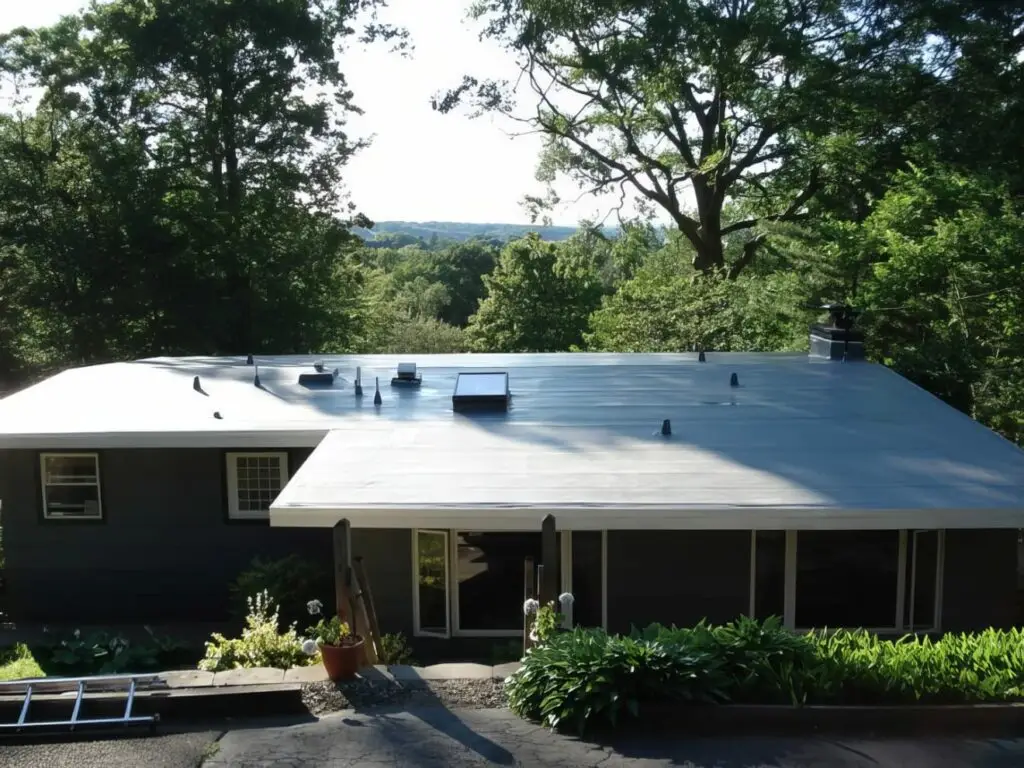
MODERN FLAT ROOF SOLUTIONS FOR LONG ISLAND PROPERTIES
Flat roofs offer unique advantages for Long Island commercial buildings and residential properties, but they require specialized knowledge and installation expertise.
Unlike pitched roofs that shed water through gravity, flat roofs rely on membrane waterproofing and proper drainage systems to prevent leaks and water damage.
Modern flat roofing technology has advanced significantly, offering superior performance and longevity compared to older built-up roofing systems. Today’s single-ply membranes provide excellent waterproofing, resist UV damage, withstand temperature extremes, and can last 20-30+ years with proper installation and maintenance.
The key to flat roof success lies in three critical areas: quality materials designed for flat applications, expert installation that creates watertight seams and properly sealed penetrations, and adequate drainage that prevents ponding water. Long Island’s coastal climate adds complexity—materials must resist salt air corrosion, withstand high winds, and handle the thermal cycling between summer heat and winter cold.
County Roofing Systems specializes exclusively in flat roofing systems. We understand the engineering principles behind proper flat roof design, the installation techniques that ensure long-term performance, and the maintenance requirements that maximize lifespan.
Our experience across hundreds of Long Island flat roofs means we anticipate potential problems and implement solutions proactively, giving you confidence in your roofing investment.

PREMIUM FLAT ROOFING SYSTEMS BUILT TO LAST
When your Long Island property needs a new flat roof, County Roofing Systems delivers complete installation services using materials engineered for coastal environments.
We manage every project aspect from material selection through final inspection, ensuring superior results that protect your investment.
Your flat roof installation begins with comprehensive substrate preparation. We inspect and address any structural concerns, ensure proper drainage slopes, install high-quality insulation for energy efficiency, and create a solid foundation for your new membrane.
Proper preparation is critical for flat roof longevity—shortcuts here lead to premature failures.
Material selection depends on your building type and requirements. TPO (thermoplastic polyolefin) offers excellent reflectivity and heat-welded seams ideal for commercial applications. EPDM (rubber membrane) provides proven durability and easier repairs for residential flat roofs.
PVC membranes deliver superior chemical resistance and strength for demanding environments. Modified bitumen systems offer excellent puncture resistance and traditional installation methods.
Our certified installation crews follow strict manufacturer specifications for your chosen system. We pay special attention to critical areas including parapet walls, roof edges, drains and scuppers, HVAC penetrations, and skylights.
Every seam receives proper welding or adhesive application, and we conduct thorough water testing before project completion.
Final inspection includes drainage verification, seam integrity testing, and detailed warranty documentation. We provide maintenance recommendations specific to your membrane type and building use, helping you maximize your flat roof’s serviceable life. Our installations regularly exceed 25-year lifespans because we never compromise on materials or installation quality.
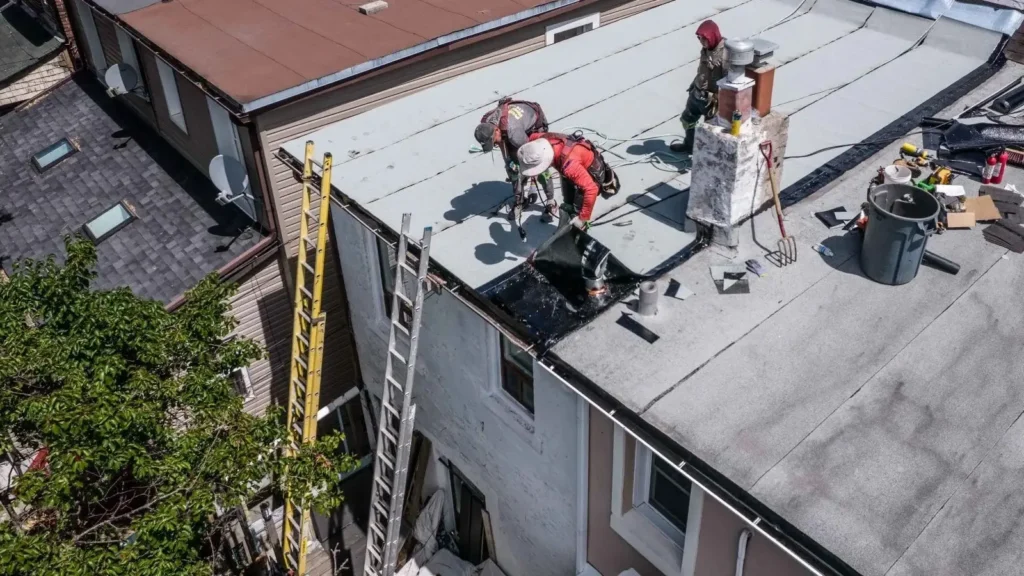
PROFESSIONAL FLAT ROOF REPAIR SERVICES
County Roofing Systems specializes in flat roof repairs that address problems effectively while extending your roof’s remaining life.
Flat roofs develop different issues than pitched systems, requiring contractors who understand membrane technology and repair techniques specific to flat applications.
Common flat roof problems we address include membrane blistering from trapped moisture, seam failures that allow water infiltration, ponding water from inadequate drainage, punctures and tears from foot traffic or debris, flashing failures around penetrations and edges, and alligatoring or cracking in older systems. We also handle storm damage, HVAC equipment installation repairs, and structural reinforcement needs.
Long Island’s coastal environment accelerates flat roof wear through salt air exposure, UV radiation, thermal cycling, and extreme weather events. Our repair services account for these factors using compatible materials and proven techniques.
We identify why damage occurred—not just visible symptoms—and implement lasting solutions that prevent recurrence.
Preventive maintenance extends flat roof life significantly and prevents costly emergency repairs. Our maintenance programs include biannual inspections, debris removal and drain cleaning, minor repairs before they worsen, detailed condition documentation, and priority emergency response.
Regular maintenance typically doubles flat roof lifespan while reducing total ownership costs.
Emergency repairs receive immediate attention because flat roof leaks can cause extensive interior damage quickly. Our rapid response minimizes damage to building contents, equipment, and structural components. Many emergency repairs can be completed within hours, protecting your property while planning permanent solutions if needed.
FINANCE YOUR HOME IMPROVEMENT PROJECT TODAY
0% Financing on
Roof Replacements
With nearly four decades serving homeowners under our belt, we know what is needed to make your roofing project a success. We’ll do everything we can to help fund your roof replacement project.
When you work with County Roofing, you get only the best. As little as 0% interest on approval for 5 years, easy pay, and the best craftsmanship in the industry.

OVER 35 YEARS IN THE ROOFING INDUSTRY
Long Island's Favorite Roofing Contractor
Keith Schmied founded County Roofing Systems more than three decades ago with a commitment to delivering roofing services with uncompromising quality and integrity.
That dedication has established County Roofing Systems as one of Long Island’s most trusted flat roofing specialists.
Keith maintains hands-on involvement in company operations, personally overseeing flat roof projects and ensuring every installation meets strict quality standards. His extensive knowledge of flat roofing systems and commercial applications guides the company’s technical approach.
Under his leadership, County Roofing Systems has become the go-to contractor for Long Island flat roofing projects, earning a reputation for expertise and reliability.
The company’s success reflects Keith’s fundamental principles: expert technical knowledge, honest communication, and treating every property with appropriate care. His team shares this commitment, approaching each flat roof project—whether new installation or emergency repair—with professionalism and meticulous attention to detail that flat roofing systems demand.
Call County Roofing Systems at (631) 400-7663 or complete the form below to schedule your free flat roof inspection and consultation.
Financing Your Home Improvement Project Has Never Been Easier
0% financing
No income check
Up to 15 years
Monthly payments as low as $149
Contact Us Today for Your In-Home Roofing Consultation: