Wind Resistant Shingles for Long Island Homes: 2025 Guide
Over 35 Years as a Roofer in Long Island
Shingle wind resistance is important when you own a home on Long Island, which is considered a hurricane prone area. If you’ve dealt with roof repairs after a bad storm, you know the havoc and heartache firsthand.
Homeowners seeking greater protection and peace of mind from their roofing materials should consider wind resistant shingles.
Strong winds can damage or even destroy your roof. Traditional asphalt roof shingles are more vulnerable to storm damage, which is why wind-resistant options are important. But CertainTeed guarantees wind resistance up to 130 MPH for its shingles. That’s strong enough to stand up to a Cat 4 hurricane.
Long Island and NYC regularly face high winds in every season. For homeowners in storm-prone regions, the higher upfront investment in wind-resistant shingles is often offset by long-term savings from fewer repairs. Read on to learn more about how you can protect your home and family with a wind-resistant CertainTeed roof.
How Do They Measure Shingle Wind Resistance?
Roofing materials companies use standardized tests to measure the wind resistance of asphalt shingles. Wind ratings are used to compare the wind resistance of different shingles, helping homeowners make informed choices.
These tests simulate extreme weather conditions to evaluate how well shingles perform under high-wind stress, providing homeowners with reassurance they can withstand the fierce nor’easters and windstorms common in Long Island.
One primary method is the ASTM D3161 test, which assesses the wind resistance of shingles by subjecting them to controlled wind speeds of 60, 90, or 110 miles per hour. This test is specifically designed for steep slope roofing products. Underwriters Laboratories certifies shingles for wind resistance and impact resistance, ensuring product safety and reliability.
During the test, shingles are installed on a testing deck and exposed to a consistent air stream that mimics real-life wind conditions. If the shingles remain intact without lifting or showing signs of damage, they pass the test for that specific wind speed rating. ASTM D3161 measures a shingle’s ability to withstand fan-induced wind speeds and includes three classifications, with the lowest classification, A, handling gusts up to 60 mph.
Another crucial test is the ASTM D7158, known as the “Standard Test Method for Wind Resistance of Sealed Asphalt Shingles (Uplift Force/Uplift Resistance Method).” This advanced test measures a shingle’s ability to resist uplift forces by simulating wind speeds up to 150 miles per hour.
Shingles are classified into wind-resistance categories: Class D (90 mph), Class G (120 mph), and Class H (150 mph). Wind resistance is classified according to standards published by ASTM International. By understanding these classifications, Long Island homeowners can select roofing materials that offer superior protection against strong winds, ensuring their homes stay secure during severe weather events. Choosing shingles with higher wind ratings is important for better protection and long-term durability.
All CertainTeed shingles have ASTM D3161 Class F Wind Resistance. This test uses a fan to test resistance to high winds. Class F shingles have withstood two hours of 110 MPH wind without damage.
The ASTM D7158 test measures how well shingles do against updrafts that can lift shingles off the deck in a heavy storm. CertainTeed’s shingles have D7158 Class H resistance. They stayed attached after two hours of a 150 MPH updraft.
Impact resistance is another important factor. A Class 4 impact rating indicates the shingle can resist significant damage from hail and flying debris common in storms.
You may not see any curling shingles or notice any roof leaks. But strong winds can take a toll on your roof even if it’s not immediately obvious. And with every storm those tiny breaches get larger and larger, until you start seeing leaks.
If you’re concerned about your roof, give us a call. Our team has experience with roof inspections and shingle damage after a bad storm. We spot issues that most roofing contractors would miss. That means we take care of little problems before they become big problems.
We’ll do a complete and thorough roof inspection. If we find no damage, you get the peace of mind of a clean bill of health. If we find problems, we’ll work with you to find solutions that fit your budget.
Some manufacturers even offer ‘infinite wind speed protection’ warranties when their shingles are installed with specific accessories, providing the highest level of wind resistance available.
Do I Need 130 MPH Wind Protection?
60 MPH wind speeds are pretty common in the LI/NYC area. The best shingles for high wind resistance are often rated to withstand wind speeds up to 130-150 mph, making them ideal for areas prone to severe storms.
Hurricane shingles and hurricane-rated shingles are specifically designed for extreme weather conditions and can withstand wind speeds up to 150 mph, providing superior protection in hurricane-prone regions.
We haven’t seen 100+ MPH winds since Hurricane Sandy in 2012, and before that since Hurricane Bob in 1991. Your CertainTeed roof already comes with a 110 MPH warranty.
Do you really need to protect your home with a 130 MPH wind resistant roof? Wind-resistant shingles can withstand higher wind speeds, often up to 150 mph, and are more resistant to uplift and tearing.
To qualify for the 130 MPH warranty, your roofing contractor must take additional steps. These will add to the final cost of your roof replacement.
Architectural shingles are multi-layered, heavier, and more robust than basic 3-tab shingles, generally having wind ratings of 110-130 mph. You must decide for yourself whether or not the extra protection is worth the price.
Ultimately, adding that additional protection to your home is up to you.
These shingles offer enhanced durability, providing superior strength and longevity, and are built to resist uplift and tearing during severe weather. Our roofing specialists will go over the pros, cons, and costs with you. Then we let you decide what is best for your home and budget without high-pressure sales tactics.
Why 130 MPH Wind Protection Makes Sense
Hurricane Gusts
Meteorologists measure wind speed by averaging together values taken over a 2-minute period. But you may have gusts that are over 30 MPH higher than the measured speed.
The stronger your installation, the more likely your shingles - and the roof deck - will be safe. To achieve their rated wind resistance, shingles must be properly installed by following manufacturer guidelines.
Correct nail placement is essential for maximizing wind resistance, as specialized nailing zones or enhanced nailing areas help ensure the shingles are securely fastened. The installation of impact-resistant shingles is crucial for their performance, requiring experienced roofers to ensure proper nailing and sealing.
Additional Security
Remember, weather damage is cumulative. The stronger your roof when installed, the longer it will stand up against wind and hail damage. Some wind resistant shingles are specifically designed with a tough fiberglass base to enhance wind resistance and overall durability. A 130 MPH wind resistant roof will last through more seasons of 50-80 MPH winds without worries about shingle uplift.
Additionally, impact-resistant shingles are engineered with a reinforced core to withstand high winds, hail, and debris.
Extra Protection
For a 130 MPH wind warranty, CertainTeed requires ridge cap shingles. But ridge cap shingles are a good idea anyway.
They stop water from seeping into your roof deck during heavy rains, and protect your shingles from wind uplift. Some wind-resistant shingles are designed to require fewer nails for secure installation, making the process more efficient without sacrificing wind resistance. Many manufacturers also offer a limited wind warranty, which specifies the conditions under which wind damage is covered.
Get Your Roof Inspected After a Wind Storm!
You may not see any curling shingles or notice any roof leaks. But strong winds can take a toll on your roof even if it’s not immediately obvious.
Roof wind damage can occur even when there are no visible signs, as wind alone can create subtle issues. Regular shingles are more vulnerable to wind uplift, where the wind creates suction that pulls the shingles upward, increasing the risk of damage. And with every storm those tiny breaches get larger and larger, until you start seeing leaks.
If you’re concerned about your roof, give us a call. Our team has experience with roof inspections and shingle damage after a bad storm. We spot issues that most roofing contractors would miss. That means we take care of little problems before they become big problems.
We’ll do a complete and thorough roof inspection. If we find no damage, you get the peace of mind of a clean bill of health. If we find problems, we’ll work with you to find solutions that fit your budget.
How Starter Shingles
Protect Your Roof Against Wind
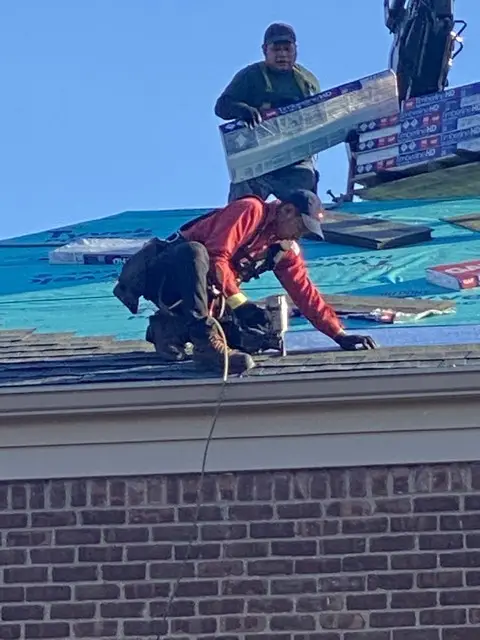
Starter shingles play a crucial role in safeguarding your roof against harsh Long Island storms.
These specialized shingles are installed along the eaves and rakes of your roof, serving as the first line of defense against wind and water damage. Starter shingles enhance both wind resistance and water tightness, ensuring your home remains protected during severe weather events.
Starter shingles significantly improve your roof’s ability to withstand strong winds. They provide an additional adhesive surface for the first row of regular shingles, creating a secure bond that prevents uplift caused by high-speed winds. Correct nail placement is essential for maximizing the wind resistance of starter shingles, as it ensures the shingles are properly anchored and less likely to be affected by strong gusts.
Without starter shingles, wind can easily catch the edges of your roof shingles, leading to peeling or complete blow-offs. By securely anchoring the roof’s perimeter, starter shingles minimize the risk of wind damage and help maintain the structural integrity of your roofing system.
Water infiltration is a major concern during storms, and starter shingles help prevent this by sealing the gaps at the roof’s edges. They feature an adhesive strip that creates a tight seal between the roof deck and the overlying shingles.
This seal blocks wind-driven rain from penetrating under the shingles, protecting the underlying roofing materials and preventing leaks. By keeping water out, starter shingles reduce the likelihood of moisture-related issues like rot, mold, and interior water damage.
Starter shingles are constructed for durability and protection. Some starter shingles feature a tough fiberglass base for added durability and wind resistance. They are essential for a wind-resistant and water-resistant roof. They provide enhanced protection where your roof is most vulnerable, ensuring that both wind and water are kept at bay. It’s vital that your Long Island roofing contractor pays close attention to every step of your roof installation.
Frequently Asked Questions
What Are Wind Resistance Ratings for Roofing Materials?
Wind resistance ratings indicate how well roofing materials can withstand high wind speeds without sustaining damage. Wind ratings help homeowners compare the wind resistance of different shingles, making it easier to choose the most suitable option for their needs.
These ratings are determined through standardized tests, such as ASTM D3161 and ASTM D7158, which classify shingles based on their ability to resist uplift and blow-off under specific wind speeds. Choosing shingles with higher wind ratings ensures better protection and long-term durability during severe weather conditions.
The best shingles for wind resistance are those that achieve the highest ratings in these tests, offering superior performance in hurricane-prone or high-wind areas.
How Do Windstorms Cause Damage to Roofs?
Windstorms can damage roofs by creating uplift pressure that loosens or removes shingles. Asphalt roof shingles are particularly vulnerable to wind uplift and damage during storms. High-speed winds can lift shingles from the edges, exposing the underlying layers to moisture.
Debris carried by the wind can also strike the roof surface, causing punctures or fractures that compromise the roof’s integrity. Shingles with enhanced durability are better able to withstand the forces of windstorms.
How Can I Tell if My Roof Has Wind Damage?
Signs of wind damage include missing or lifted shingles, granule loss, and visible cracks or tears. Roof wind damage can sometimes be subtle and may not be immediately visible, so careful inspection is necessary.
You might also notice leaks or water stains inside your home. It’s important to inspect your roof after a windstorm and consult a professional if you suspect any damage. To minimize the risk of wind damage, shingles must be properly installed.
Do Higher Wind Resistance Ratings Mean Better Protection?
Yes, shingles with higher wind resistance ratings offer better protection against strong winds. Shingles with high wind resistance are specifically engineered to withstand severe weather, including wind speeds of up to 130-150 mph, ensuring durability and reliability.
Choosing shingles rated for higher wind speeds than those typical in your area adds an extra layer of security, reducing the likelihood of wind-related roof damage. Opting for shingles with higher wind ratings provides added security and long-term protection for your home.
Many manufacturers also back their products with a limited wind warranty, which outlines specific coverage details and conditions related to wind resistance.
How Do Building Codes Affect Roof Wind Resistance Requirements?
Local building codes often specify minimum wind resistance ratings for roofing materials based on regional wind speeds. Complying with these codes ensures that your roof can withstand typical wind conditions in your area, providing safety and reducing potential damage.
What Role Does Roof Installation Play in Wind Resistance?
Proper roof installation is crucial for wind resistance. Shingles must be properly installed to achieve their rated wind resistance.
Incorrectly installed shingles are more susceptible to wind damage. Hiring a certified roofing professional ensures that shingles are installed according to manufacturer specifications, maximizing wind resistance.
Correct nail placement is essential for maximizing wind resistance, as enhanced nailing zones help ensure secure fastening. Some wind-resistant shingles are designed to require fewer nails for secure installation, improving efficiency without sacrificing wind resistance.